


A case of zootherapy with the tarantula Brachypelma vagans Ausserer, 1875 in traditional medicine of the Chol Mayan ethnic group in Mexico
- PMID: 21450096
- PMCID: PMC3072308
- DOI: 10.1186/1746-4269-7-12
A case of zootherapy with the tarantula Brachypelma vagans Ausserer, 1875 in traditional medicine of the Chol Mayan ethnic group in Mexico
Abstract
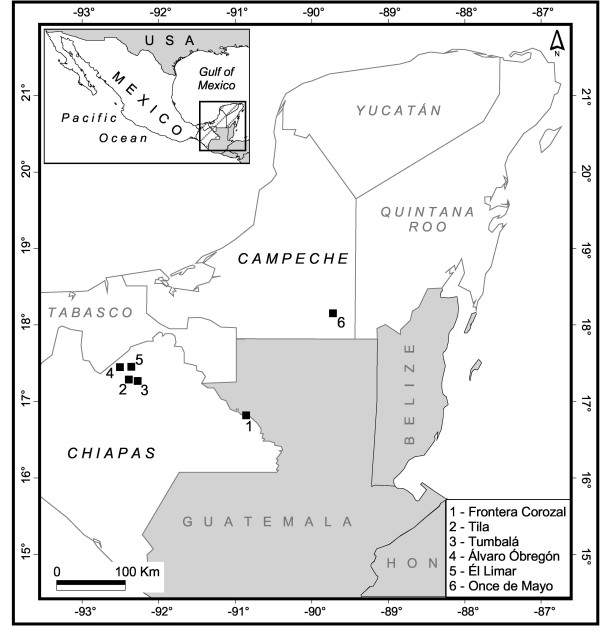
Background: In practically every human culture, the use of arthropods as medicinal resources has been reported. In Mexico, the Mayan people mainly use plants but occasionally also animals and minerals in their medicine. This article is the first to report the traditional use of the tarantula Brachypelma vagans by medicine men in the Chol community, an ancient indigenous group that inhabits the southeastern part of Mexico. We also describe the utility of such arachnids in traditional medicine.
Methods: This study was carried out in different Chol communities in the states of Chiapas and Campeche (southeastern Mexico) from 2003 until 2007. We interviewed the local medicine men, patients and non-Chol people in each village visited to collect information about the rituals involved and the effectiveness of this traditional medicine and also their opinion of this traditional medicine.
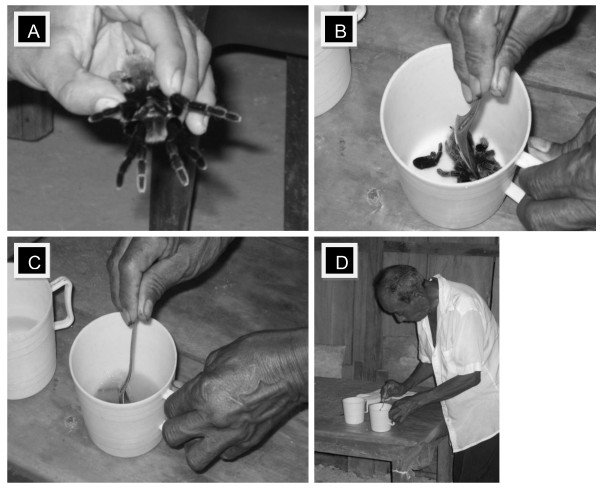
Results: In all independent villages, the people who present an illness called 'aire de tarantula' or tarantula wind with symptoms including chest pain, coughing and asthma, were treated by the medicine man (called 'hierbatero') with a tarantula-based beverage. From village to village, the beverage has a similar base composition but some variations occur in additional ingredients depending on the individual medicine man. Like in all traditional Mayan medicine, the ritual of the ceremony consists of drinking the tarantula-based beverage and this is principally accompanied by chants and burning of incense.
Conclusions: The recipe of the tarantula-based beverage and the procedure of this ritual ceremony were fairly constant in all the villages visited. Our work shows that despite the tarantula's bad image in several cultures, in others positive use is made of these spiders, as in modern medicine.
Figures
References
-
- Costa-Neto EM. Animal-based medicines: biological prospection and the sustainable use of zootherapeutic resources. Anais da Academia Brasileira de Ciências. 2005;77:33–43. - PubMed
-
- Marques JGW. A fauna medicinal dos índios Kuna de San Blas (Panamá) e a hipótese da universalidade zooterápica [abstract] Anais da 46a Reunião Anual da SBPC. 1994. p. 324.
-
- Adeola MO. Importance of wild Animals and their parts in the culture, religious festivals, and traditional medicine of Nigeria. Environmental Conservation. 1992;19:125–134. doi: 10.1017/S0376892900030605. - DOI
Publication types
MeSH terms
Substances
LinkOut - more resources
Full Text Sources
Medical
Research Materials
