


Increases in human papillomavirus detection during early HIV infection among women in Zimbabwe
- PMID: 21451006
- PMCID: PMC3068021
- DOI: 10.1093/infdis/jiq172
Increases in human papillomavirus detection during early HIV infection among women in Zimbabwe
Abstract
Background: Individuals who acquire human immunodeficiency virus (HIV) may experience an immediate disruption of genital tract immunity, altering the ability to mount a local and effective immune response. This study examined the impact of early HIV infection on new detection of human papillomavirus (HPV).
Methods: One hundred fifty-five Zimbabwean women with observation periods before and after HIV acquisition and 486 HIV-uninfected women were selected from a cohort study evaluating hormonal contraceptive use and risk of HIV acquisition. Study visits occurred at 3-month intervals. Cervical swab samples available from up to 6 months before, at, and up to 6 months after the visit when HIV was first detected were typed for 37 HPV genotypes or subtypes.
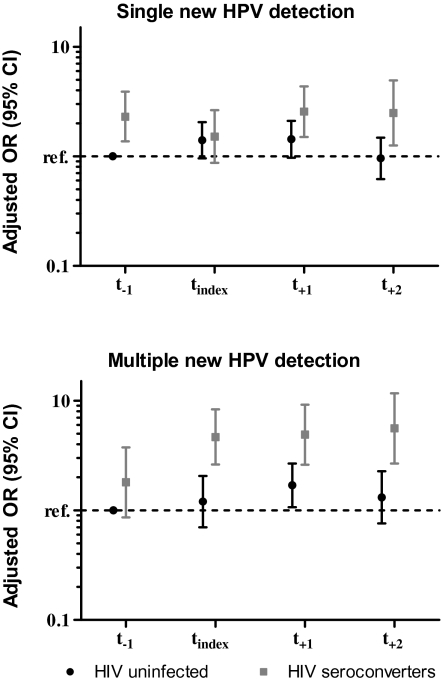
Results: We observed ∼5-fold higher odds of multiple (≥2) new HPV detections only after HIV acquisition, relative to HIV-negative women after adjusting for sexual behavior and concurrent genital tract infections. We also observed ∼2.5-fold higher odds of single new HPV detections at visits before and after HIV acquisition, relative to HIV-uninfected women in multivariable models.
Conclusions: These findings suggest that HIV infection has an immediate impact on genital tract immunity, as evidenced by the high risk of multiple new HPV detections immediately after HIV acquisition.
© The Author 2011. Published by Oxford University Press on behalf of the Infectious Diseases Society of America. All rights reserved.
Figures
References
-
- Sun XW, Kuhn L, Ellerbrock TV, Chiasson MA, Bush TJ, Wright TC., Jr Human papillomavirus infection in women infected with the human immunodeficiency virus. N Engl J Med. 1997;337:1343–9. - PubMed
-
- Levi JE, Fernandes S, Tateno AF, et al. Presence of multiple human papillomavirus types in cervical samples from HIV-infected women. Gynecol Oncol. 2004;92:225–31. - PubMed
-
- Jamieson DJ, Duerr A, Burk R, et al. Characterization of genital human papillomavirus infection in women who have or who are at risk of having HIV infection. Am J Obstet Gynecol. 2002;186:21–7. - PubMed
-
- Ahdieh L, Klein RS, Burk R, et al. Prevalence, incidence, and type-specific persistence of human papillomavirus in human immunodeficiency virus (HIV)-positive and HIV-negative women. J Infect Dis. 2001;184:682–90. - PubMed
-
- Clifford GM, Goncalves MA, Franceschi S HPV and HIV Study Group. Human papillomavirus types among women infected with HIV: a meta-analysis. AIDS. 2006;20:2337–44. - PubMed
Publication types
MeSH terms
Grants and funding
LinkOut - more resources
Full Text Sources
Other Literature Sources
Medical
