


The role of the medial prefrontal cortex in innate fear regulation in infants, juveniles, and adolescents
- PMID: 21451037
- PMCID: PMC3108443
- DOI: 10.1523/JNEUROSCI.5216-10.2011
The role of the medial prefrontal cortex in innate fear regulation in infants, juveniles, and adolescents
Abstract
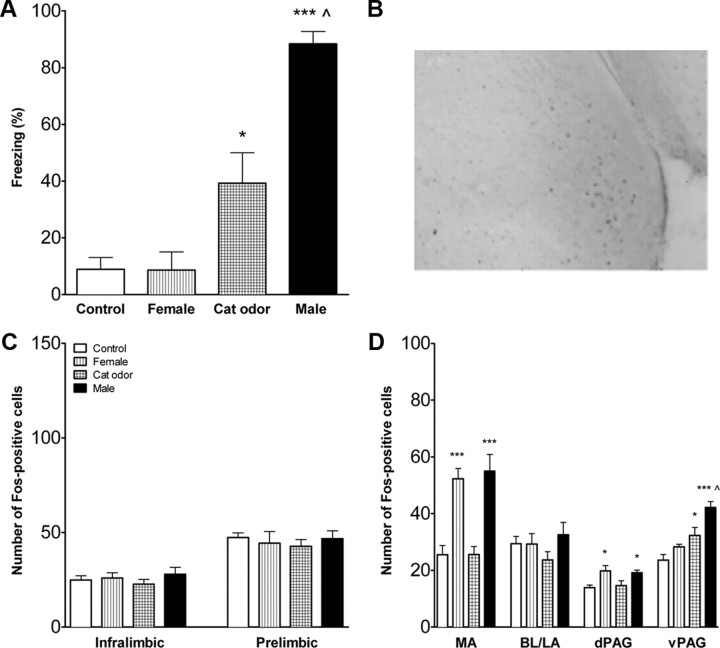
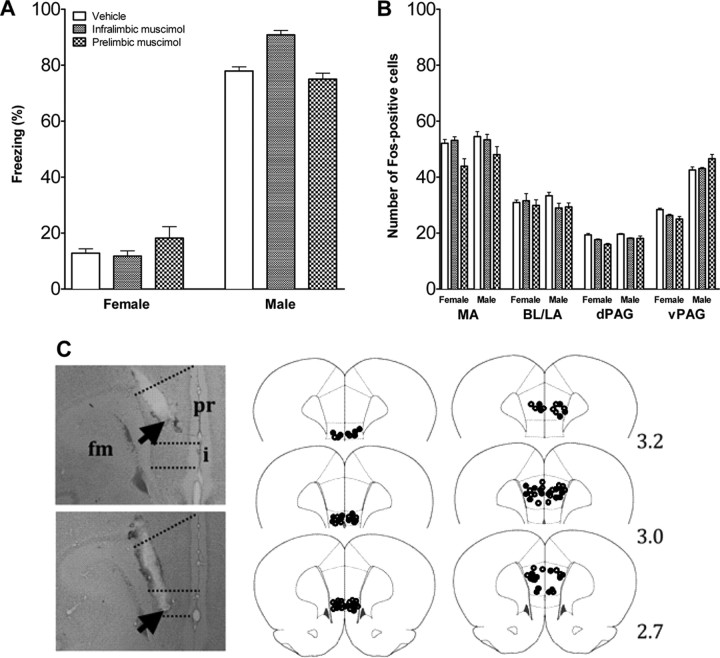
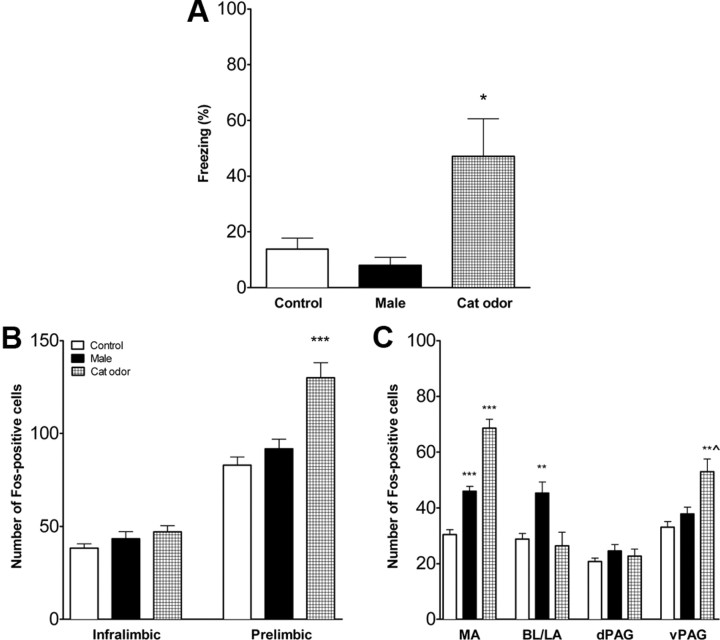
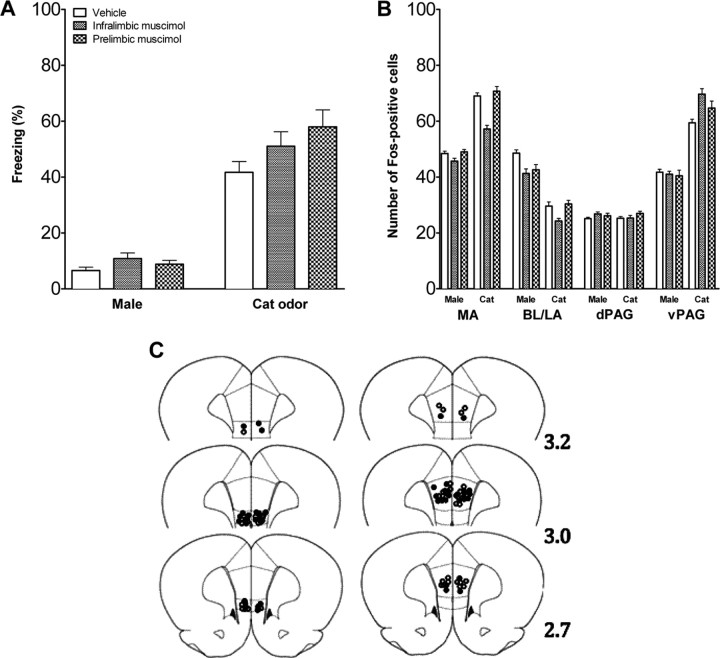
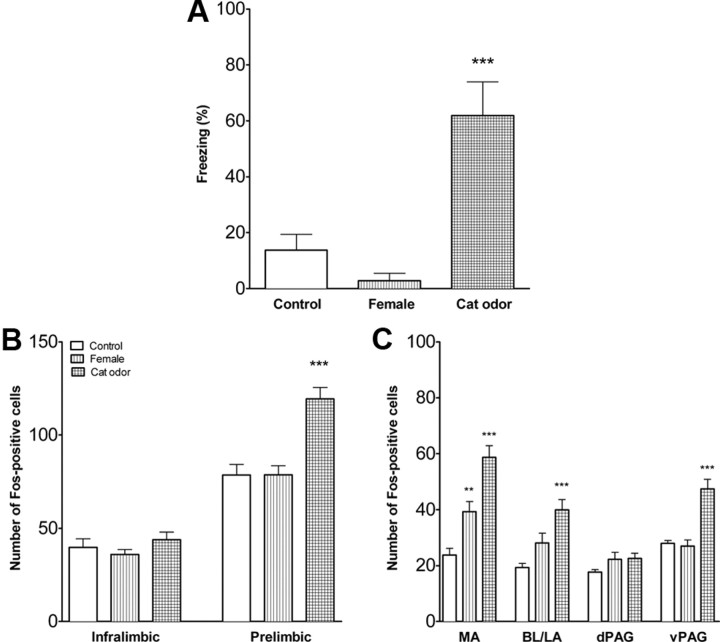
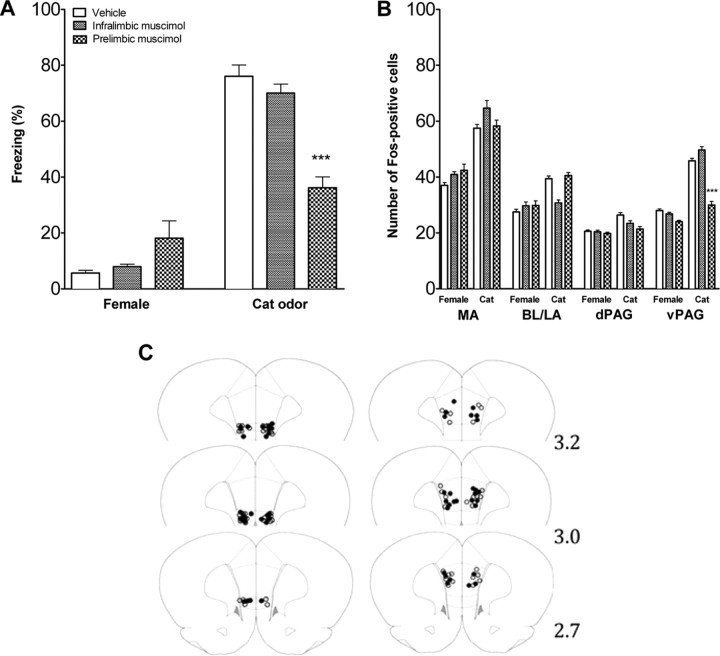
In adult animals, the medial prefrontal cortex (mPFC) plays a significant role in regulating emotions and projects to the amygdala and periaqueductal gray (PAG) to modulate emotional responses. However, little is known about the development of this neural circuit and its relevance to unlearned fear in pre-adulthood. To address these issues, we examined the mPFC of 14-d-old (infants), 26-d-old (juveniles), and 38- to 42-d-old (adolescents) rats to represent different developmental and social milestones. The expression patterns of the neuronal marker FOS were used to assess neurological activity. Muscimol, a GABA agonist, was used to inactivate the prelimbic and infralimbic mPFC subdivisions (400 ng in 200 nl). Animals were exposed to either a threatening or nonthreatening stimulus that was ecologically relevant and age specific. Freezing was measured as an indicator of innate fear behavior. The data indicated that the mPFC is neither active nor responsive to innate fear in infant rats. In juveniles, the prelimbic mPFC became responsive in processing aversive sensory stimulation but did not regulate freezing behavior. Finally, during adolescence, inactivation of the prelimbic mPFC significantly attenuated freezing and decreased FOS expression in the ventral PAG. Surprisingly, across all ages, there were no significant differences in FOS levels in the medial and basolateral/lateral amygdala when either mPFC subdivision was inactivated. Together, unlearned fear has a unique developmental course with different brain areas involved in unlearned fear in the immature animal than the adult. In particular, the mPFC neural circuitry is different in young animals and progressively develops more capacities as the animal matures.
Figures
References
-
- An X, Bandler R, Ongür D, Price JL. Prefrontal cortical projections to longitudinal columns in the midbrain periaqueductal gray in macaque monkeys. J Comp Neurol. 1998;401:455–479. - PubMed
-
- Apfelbach R, Blanchard CD, Blanchard RJ, Hayes RA, McGregor IS. The effects of predator odors in mammalian prey species: a review of field and laboratory studies. Neurosci Biobehav Rev. 2005;29:1123–1144. - PubMed
-
- Beach FA, Jaynes J. Studies of maternal retrieving in rats. I. Recognition of young. J Mammal. 1956;37:177–180.
-
- Benes FM, Taylor JB, Cunningham MC. Convergence and plasticity of monoaminergic systems in the medial prefrontal cortex during the postnatal period: Implications for the development of psychopathology. Cereb Cortex. 2000;10:1014–1027. - PubMed
-
- Boice R. Burrows of wild and albino rats: effects of domestication, outdoor raising, age, experience, and maternal state. J Comp Physiol Psychol. 1977;91:649–661. - PubMed
Publication types
MeSH terms
Grants and funding
LinkOut - more resources
Full Text Sources
