Implicit and explicit mechanisms of word learning in a narrative context: an event-related potential study
- PMID: 21452941
- PMCID: PMC3129368
- DOI: 10.1162/jocn_a_00013
Implicit and explicit mechanisms of word learning in a narrative context: an event-related potential study
Abstract
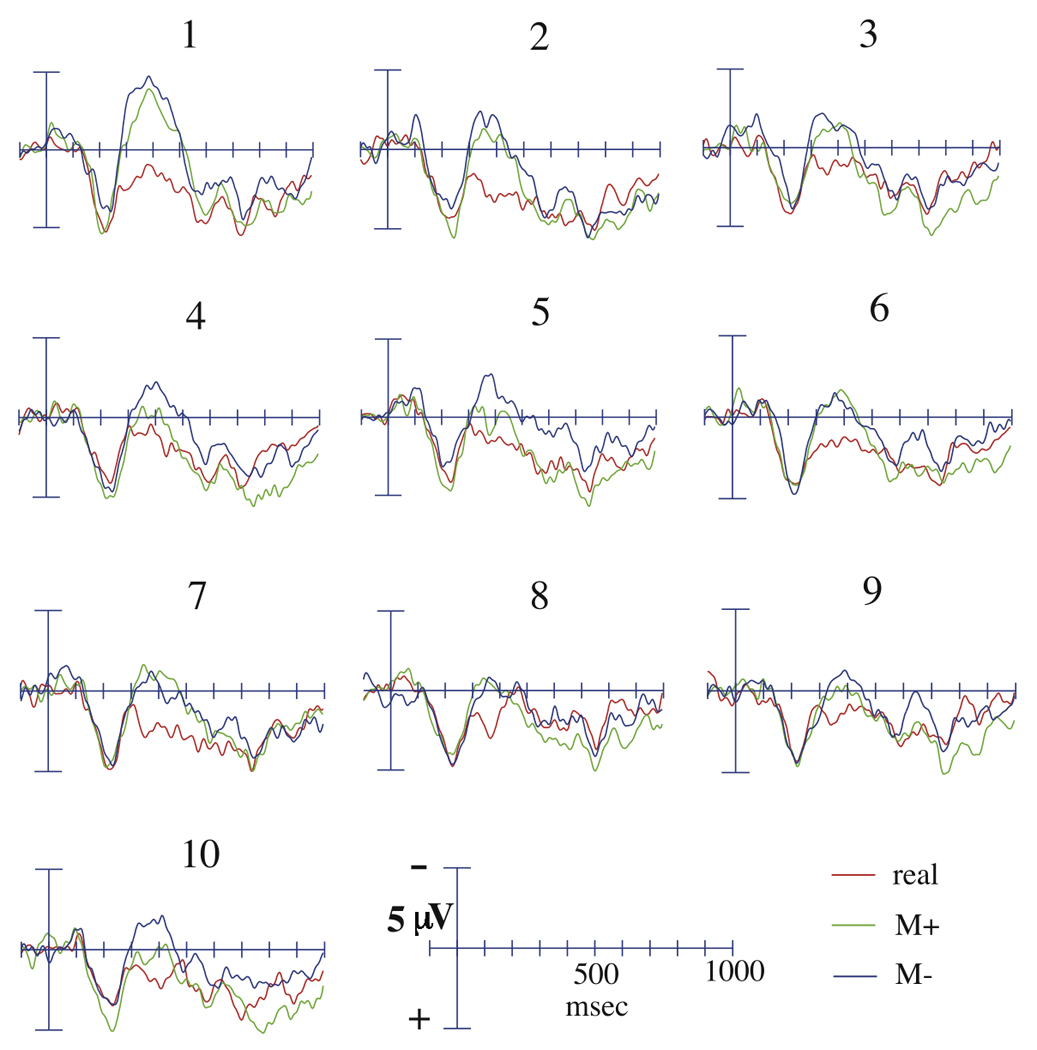
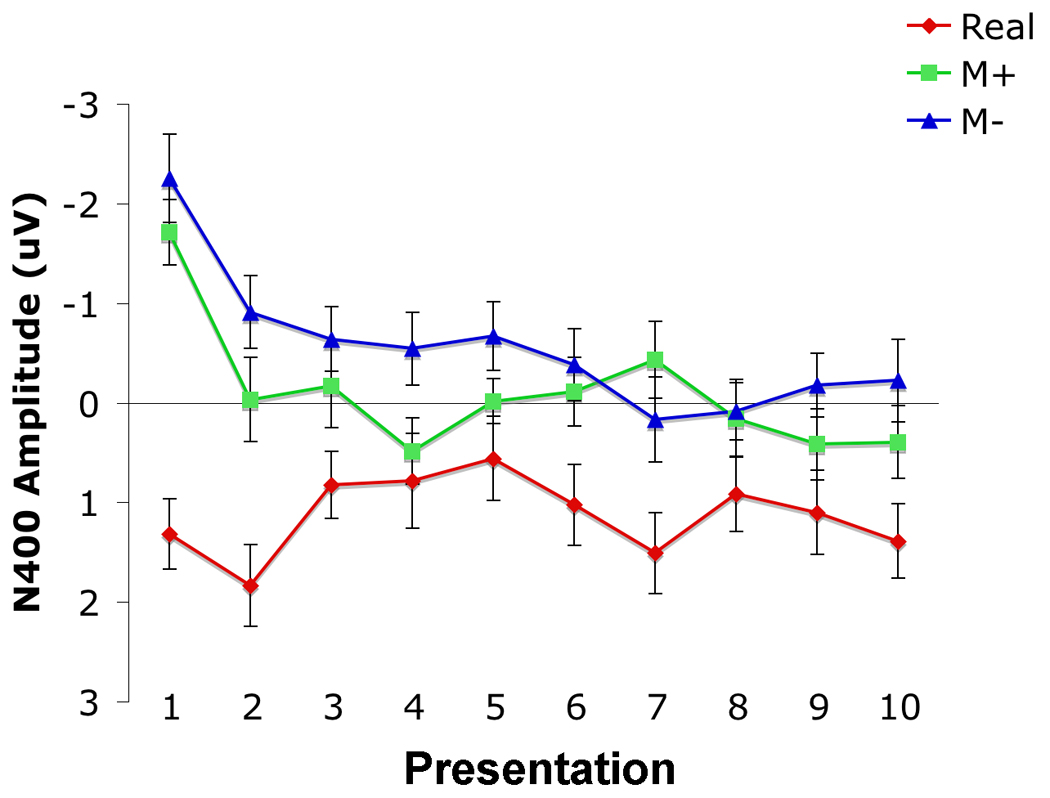
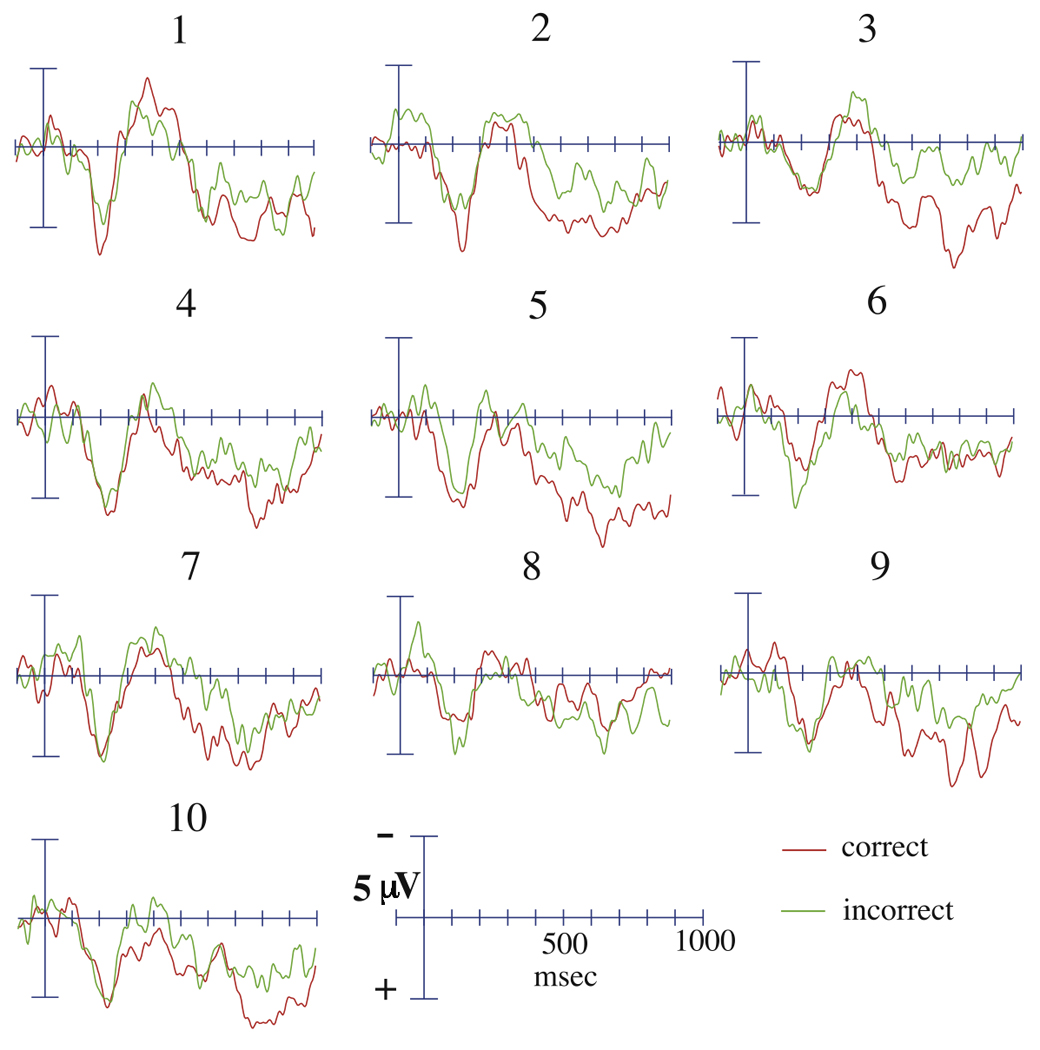
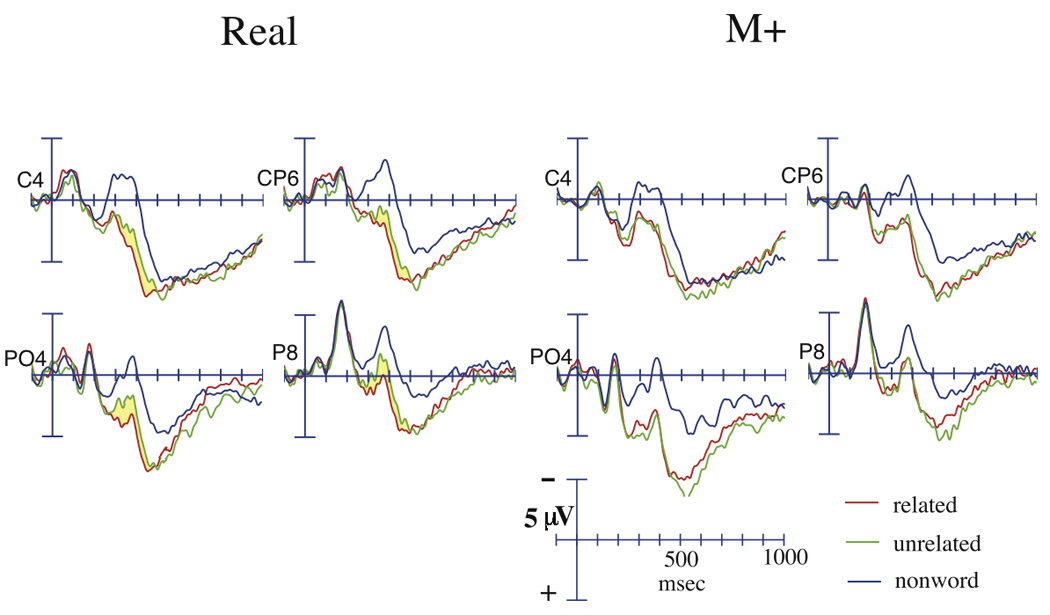
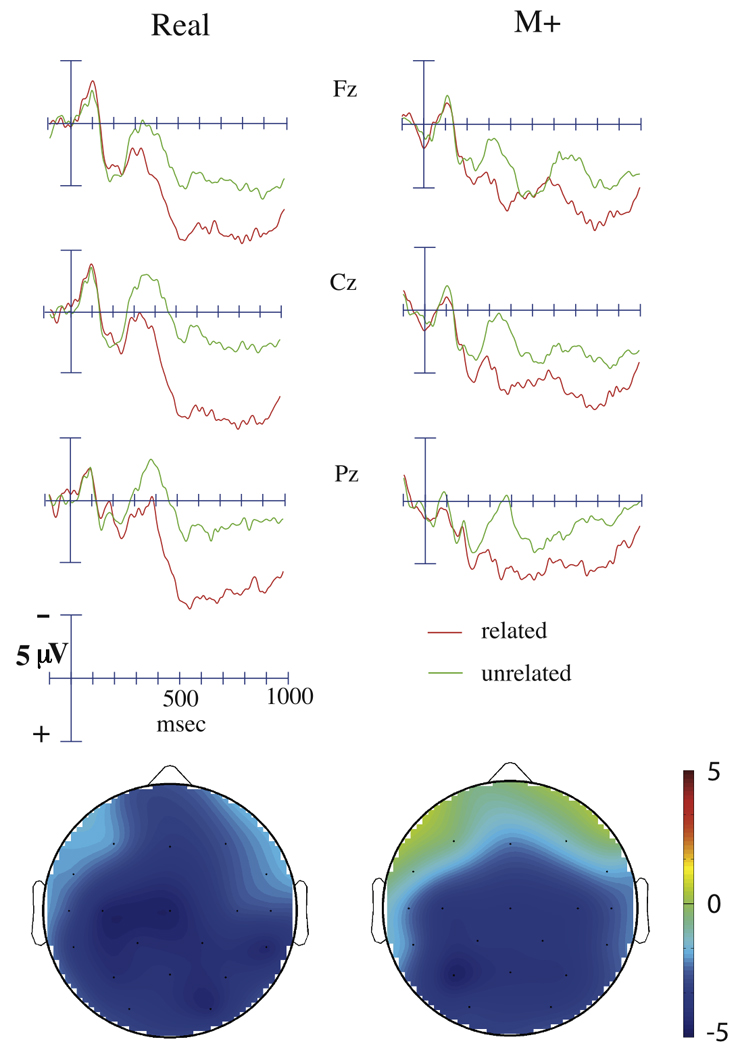
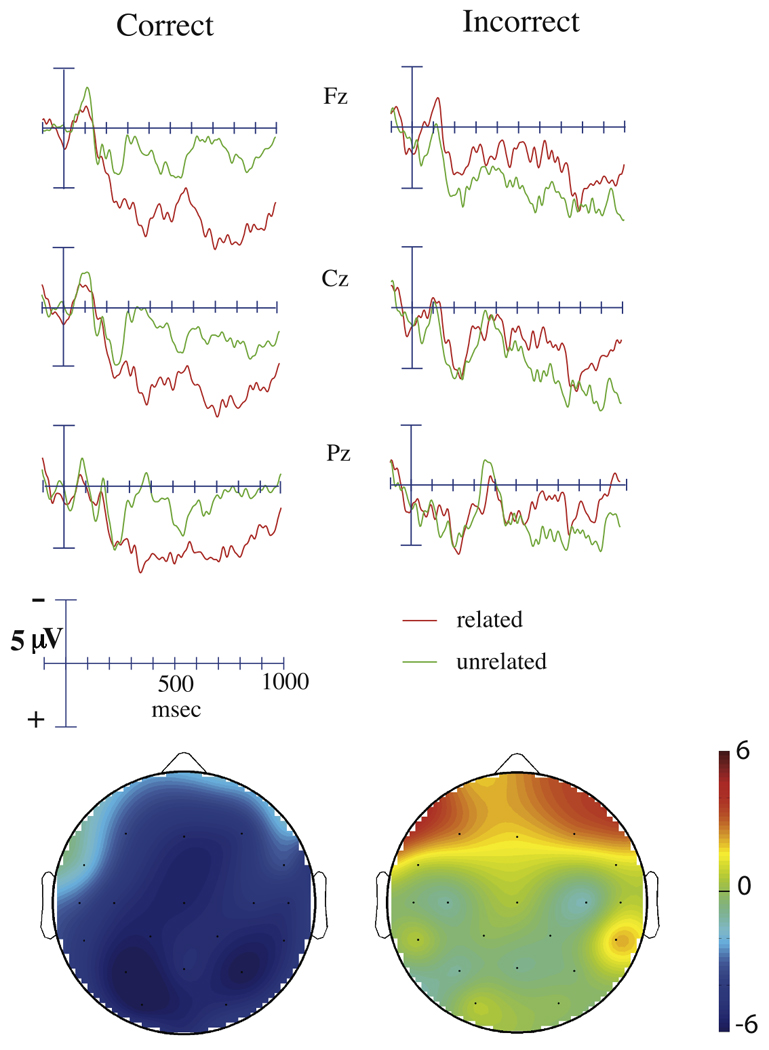
The vast majority of word meanings are learned simply by extracting them from context rather than by rote memorization or explicit instruction. Although this skill is remarkable, little is known about the brain mechanisms involved. In the present study, ERPs were recorded as participants read stories in which pseudowords were presented multiple times, embedded in consistent, meaningful contexts (referred to as meaning condition, M+) or inconsistent, meaningless contexts (M-). Word learning was then assessed implicitly using a lexical decision task and explicitly through recall and recognition tasks. Overall, during story reading, M- words elicited a larger N400 than M+ words, suggesting that participants were better able to semantically integrate M+ words than M- words throughout the story. In addition, M+ words whose meanings were subsequently correctly recognized and recalled elicited a more positive ERP in a later time window compared with M+ words whose meanings were incorrectly remembered, consistent with the idea that the late positive component is an index of encoding processes. In the lexical decision task, no behavioral or electrophysiological evidence for implicit priming was found for M+ words. In contrast, during the explicit recognition task, M+ words showed a robust N400 effect. The N400 effect was dependent upon recognition performance, such that only correctly recognized M+ words elicited an N400. This pattern of results provides evidence that the explicit representations of word meanings can develop rapidly, whereas implicit representations may require more extensive exposure or more time to emerge.
Figures
References
-
- Bentin S, Peled B-S. The contribution of task-related factors to ERP repetition effects at short and long lags. Memory & Cognition. 1990;18(4):359–366. - PubMed
-
- Bentin S, Mouchetant-Rostaing Y, Giard MH, Echallier JF, Pernier J. ERP manifestations of processing printed words at different psycholinguistic levels: time course and scalp distribution. Journal of Cognitive Neuroscience. 1999;11:235–260. 1999. - PubMed
-
- Borovsky A, Elman J, Kutas M. Getting the Gist is not Enough: An ERP Investigation of Word Learning from Context; Paper presented at the Proceedings of the Cognitive Science Society.2008.
-
- Breitenstein C, Jansen A, Deppe M, Foerster A-F, Sommer J, Wolbers T, et al. Hippocampus activity differentiates good from poor learners of a novel lexicon. NeuroImage. 2005;25(3):958–968. - PubMed
MeSH terms
Grants and funding
LinkOut - more resources
Full Text Sources