


Vertebrates used for medicinal purposes by members of the Nyishi and Galo tribes in Arunachal Pradesh (North-East India)
- PMID: 21453496
- PMCID: PMC3079603
- DOI: 10.1186/1746-4269-7-13
Vertebrates used for medicinal purposes by members of the Nyishi and Galo tribes in Arunachal Pradesh (North-East India)
Abstract
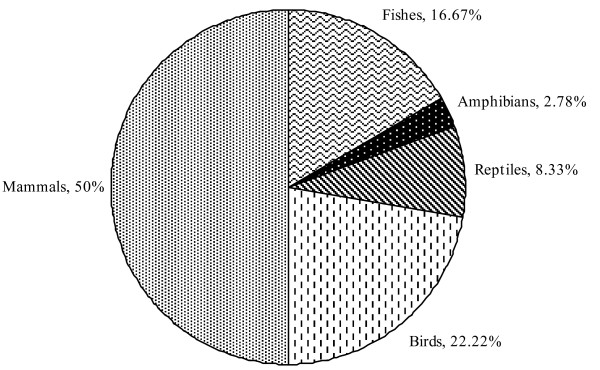
Arunachal Pradesh, the easternmost part of India, is endowed with diverse natural resources and inhabited by a variety of ethnic groups that have developed skills to exploit the biotic resources of the region for food and medicines. Information on animals and animal parts as components of folk remedies used by local healers and village headmen of the Nyishi and Galo tribes in their respective West Siang and Subansiri districts were obtained through interviews and structured questionnaires. Of a total of 36 vertebrate species used in treatments of ailments and diseases, mammals comprised 50%; they were followed by birds (22%), fishes (17%), reptiles (8%) and amphibians (3%). Approximately 20 common complaints of humans as well as foot and mouth disease of cattle were targets of zootherapies. Most commonly treated were fevers, body aches and pains, tuberculosis, malaria, wounds and burns, typhoid, smallpox, dysentery and diarrhoea, jaundice, and early pregnancy pains. Very few domestic animal species (e.g., goat and cattle) were used zootherapeutically. More frequently it was wild animals, including endangered or protective species like hornbill, pangolin, clouded leopard, tiger, bear, and wolf, whose various parts were either used in folk remedies or as food. Some of the animal-based traditional medicines or animal parts were sold at local markets, where they had to compete with modern, western pharmaceuticals. To record, document, analyze and test the animal-derived local medicines before they become replaced by western products is one challenge; to protect the already dwindling populations of certain wild animal species used as a resource for the traditional animal-derived remedies, is another.
Figures




References
-
- Chivian E. In: Biodiversity and human health. 1. Grifo F, Rosenthal J, editor. Washington DC, Island Press; 1997. Global environmental degradation and biodiversity loss: Implications for human health; pp. 7–38.
-
- Rolston H. The land ethics at the turn of the millennium. Biodiversity and Conservation. 2000;9:1045–1058. doi: 10.1023/A:1008918517655. - DOI
-
- Chardonnet P, Des Clers B, Fischer J, Gerhold R, Jori F, Lamarque F. The value of wildlife. Revue Scientifique. 2002;21:15–51. - PubMed
-
- Saito Y. Ecological designs: promises and challenges. Environmental Ethics. 2002;24:243–261.
Publication types
MeSH terms
LinkOut - more resources
Full Text Sources
