


Synthesis, characterization, and in vitro transfection activity of charge-reversal amphiphiles for DNA delivery
- PMID: 21456532
- PMCID: PMC3878859
- DOI: 10.1021/bc1004526
Synthesis, characterization, and in vitro transfection activity of charge-reversal amphiphiles for DNA delivery
Abstract
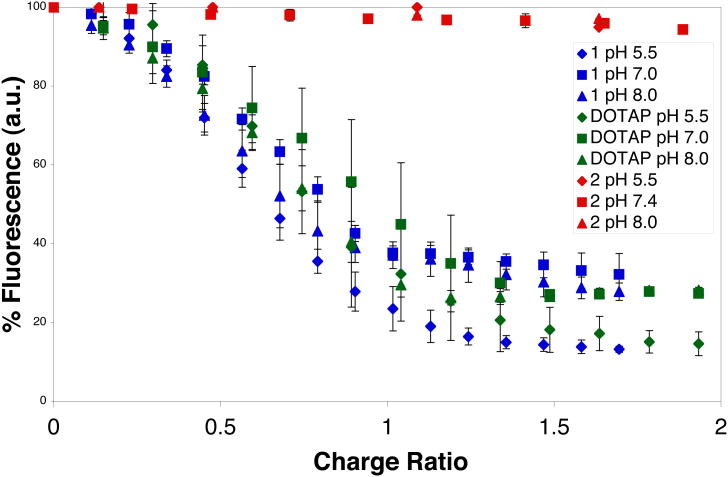
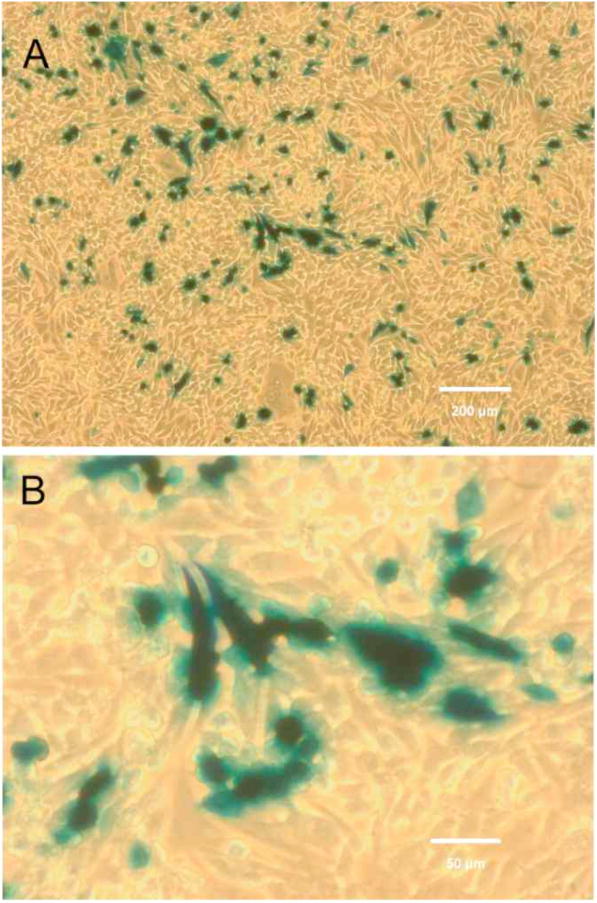
A series of charge-reversal lipids were synthesized that possess varying chain lengths and end functionalities. These lipids were designed to bind and then release DNA based on a change in electrostatic interaction with DNA. Specifically, a cleavable ester linkage is located at the ends of the hydrocarbon chains. The DNA release from the amphiphile was tuned by altering the length and position of the ester linkage in the hydrophobic chains of the lipids through the preparation of five new amphiphiles. The amphiphiles and corresponding lipoplexes were characterized by DSC, TEM, and X-ray, as well as evaluated for DNA binding and DNA transfection. For one specific charge-reversal lipid, stable lipoplexes of approximately 550 nm were formed, and with this amphiphile, effective in vitro DNA transfection activities was observed.
Figures






References
-
- Deregowski P, Canalis E. Gene delivery by retroviruses. Methods in Molecular Biology. 2008;455:157–162. - PubMed
-
- Flotte TR. Gene therapy progress and prospects: Recombinant adeno-associated virus (rAAV) vectors. Gene Therapy. 2004;11:805–810. - PubMed
-
- Lundstrom K. Gene therapy applications of viral vectors. Technology in Cancer Research & Treatment. 2004;3:467–477. - PubMed
-
- Flotte TR. Gene therapy: The first two decades and the current state-of-the-art. J Cellular Physiology. 2007;213:301–305. - PubMed
-
- Ozawa K. Gene therapy using AAV vectors. Drug Del System. 2007;22:643–650.
Publication types
MeSH terms
Substances
Grants and funding
LinkOut - more resources
Full Text Sources
Other Literature Sources
