


Targeted modulation of reactive oxygen species in the vascular endothelium
- PMID: 21457736
- PMCID: PMC3134152
- DOI: 10.1016/j.jconrel.2011.03.022
Targeted modulation of reactive oxygen species in the vascular endothelium
Abstract
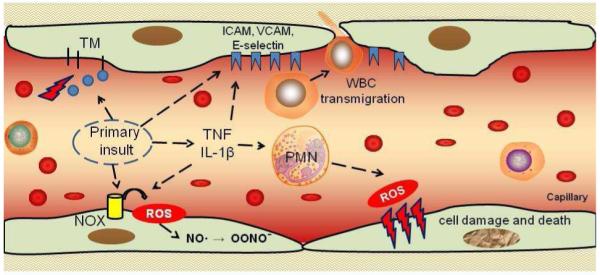
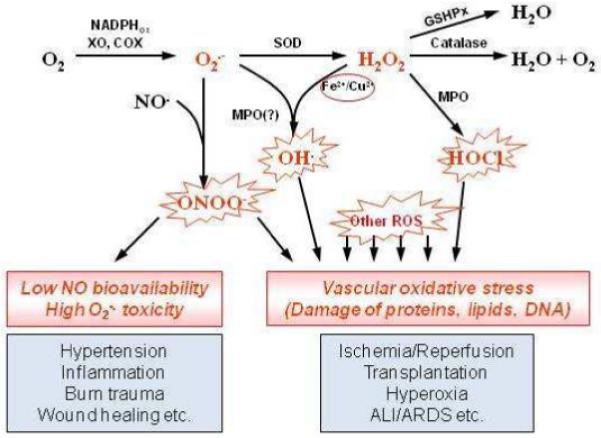
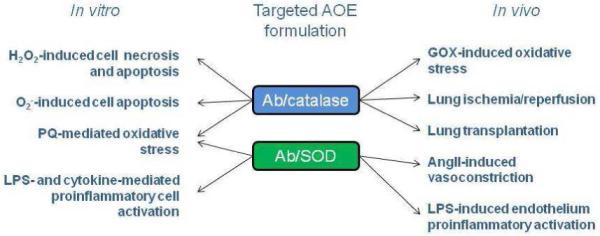
'Endothelial cells lining vascular luminal surface represent an important site of signaling and injurious effects of reactive oxygen species (ROS) produced by other cells and endothelium itself in ischemia, inflammation and other pathological conditions. Targeted delivery of ROS modulating enzymes conjugated with antibodies to endothelial surface molecules (vascular immunotargeting) provides site-specific interventions in the endothelial ROS, unattainable by other formulations including PEG-modified enzymes. Targeting of ROS generating enzymes (e.g., glucose oxidase) provides ROS- and site-specific models of endothelial oxidative stress, whereas targeting of antioxidant enzymes SOD and catalase offers site-specific quenching of superoxide anion and H(2)O(2). These targeted antioxidant interventions help to clarify specific role of endothelial ROS in vascular and pulmonary pathologies and provide basis for design of targeted therapeutics for treatment of these pathologies. In particular, antibody/catalase conjugates alleviate acute lung ischemia/reperfusion injury, whereas antibody/SOD conjugates inhibit ROS-mediated vasoconstriction and inflammatory endothelial signaling. Encapsulation in protease-resistant, ROS-permeable carriers targeted to endothelium prolongs protective effects of antioxidant enzymes, further diversifying the means for targeted modulation of endothelial ROS.
Copyright © 2011 Elsevier B.V. All rights reserved.
Figures
References
-
- Thomas SR, Witting PK, Drummond GR. Redox control of endothelial function and dysfunction: molecular mechanisms and therapeutic opportunities. Antioxid Redox Signal. 2008;10(10):1713–1765. - PubMed
-
- Tanaka KA, Key NS, Levy JH. Blood coagulation: hemostasis and thrombin regulation. Anesth Analg. 2009;108(5):1433–1446. - PubMed
-
- Boffa MB, Koschinsky ML. Curiouser and curiouser: recent advances in measurement of thrombin-activatable fibrinolysis inhibitor (TAFI) and in understanding its molecular genetics, gene regulation, and biological roles. Clin Biochem. 2007;40(7):431–442. - PubMed
Publication types
MeSH terms
Substances
Grants and funding
LinkOut - more resources
Full Text Sources
Medical
