


A systematic review of the empirical literature evaluating IRBs: what we know and what we still need to learn
- PMID: 21460582
- PMCID: PMC3235475
- DOI: 10.1525/jer.2011.6.1.3
A systematic review of the empirical literature evaluating IRBs: what we know and what we still need to learn
Abstract
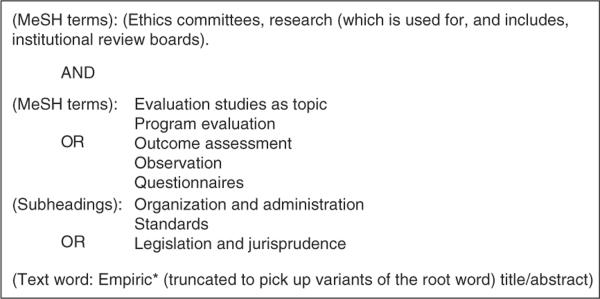
Institutional review boards (IRBs) are integral to the U.S. system of protection of human research participants. Evaluation of IRBs, although difficult, is essential. To date, no systematic review of IRB studies has been published. We conducted a systematic review of empirical studies of U.S. IRBs to determine what is known about the function of IRBs and to identify gaps in knowledge. A structured search in PubMed identified forty-three empirical studies evaluating U.S. IRBs. Studies were included if they reported an empirical investigation of the structure, process, outcomes, effectiveness, or variation of U.S. IRBs. The authors reviewed each study to extract information about study objectives, sample and methods, study results, and conclusions. Empirical evidence collected in forty-three published studies shows that for review of a wide range of types of research, U.S. IRBs differ in their application of the federal regulations, in the time they take to review studies, and in the decisions made. Existing studies show evidence of variation in multicenter review, inconsistent or ambiguous interpretation of the federal regulations, and inefficiencies in review. Despite recognition of a need to evaluate effectiveness of IRB review, no identified published study included an evaluation of IRB effectiveness. Multiple studies evaluating the structure, process, and outcome of IRB review in the United States have documented inconsistencies and inefficiencies. Efforts should be made to address these concerns. Additional research is needed to understand how IRBs accomplish their objectives, what issues they find important, what quality IRB review is, and how effective IRBs are at protecting human research participants.
Figures
References
-
- Association for the Accreditation of Human Research Protection Programs, Inc. (AAHRPP) www.aahrpp.org.
-
- Anderson E. A qualitative study of non-affiliated, non-scientist institutional review board members. Accountability in Research. 2006;13(2):135–155. - PubMed
-
- Bell J. Evaluation of NIH Implementation of Section 491 of the Public Health Service Act, Mandating a Program of Protection for Research Subjects. National Institutes of Health; Bethesda, MD: 1998.
-
- Bramstedt K, Kassimatis K. A study of warning letters issued to institutional review boards by the United States Food And Drug Administration. Clinical Investigational Medicine. 2004;27(6):316–323. - PubMed
-
- Burman W, Breese P, Weis S, Bock N, Bernardo J, Vernon A, et al. The effects of local review on informed consent documents from a multicenter clinical trials consortium. Controlled Clinical Trials. 2003;24:245–255. - PubMed
Publication types
MeSH terms
Grants and funding
LinkOut - more resources
Full Text Sources
