N-acetylcysteine and N-nitroarginine methyl ester attenuate Carboplatin-induced ototoxicity in dissociated spiral ganglion neuron cultures
- PMID: 21461057
- PMCID: PMC3062221
- DOI: 10.3342/ceo.2011.4.1.11
N-acetylcysteine and N-nitroarginine methyl ester attenuate Carboplatin-induced ototoxicity in dissociated spiral ganglion neuron cultures
Abstract
Objectives: Carboplatin, a platinum-containing anti-cancer drug used to treat a variety of cancers, induces ototoxicity. Since, reactive oxygen species (ROS) and nitric oxide (NO) seem to be responsible for this toxicity, the antioxidant, N-acetyl-L-cysteine (L-NAC), and NO synthetase inhibitor, N-nitro-L-arginine methyl ester (L-NAME) were predicted to have protective effects against carboplatin ototoxicity. The aim of this study was to test for the protective effects of L-NAC and L-NAME on cochlear hair cells and spiral ganglion neurons (SGNs).
Methods: Cochlear organotypic cultures and dissociated spiral ganglion neuron cultures, from mice postnatal day 5 cultures were used in this study. The cultures were treated with carboplatin alone or in combination with L-NAC or L-NAME, and carboplatin-induced damage was monitored.
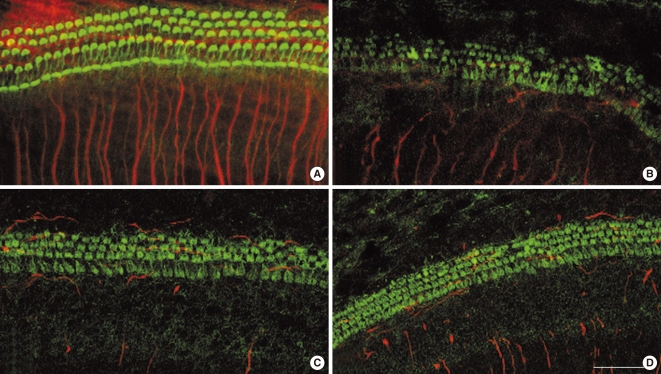
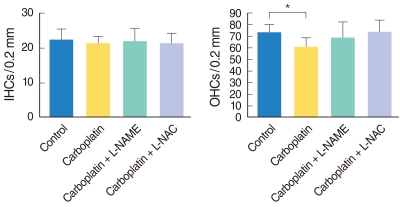
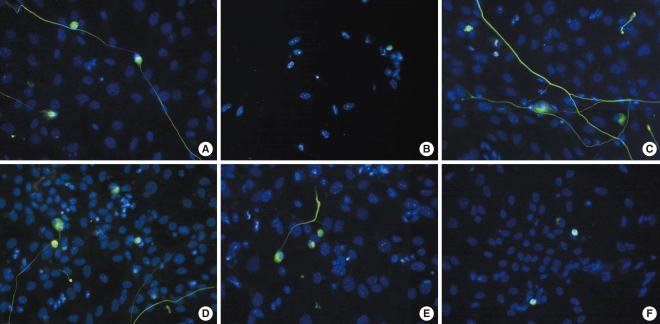
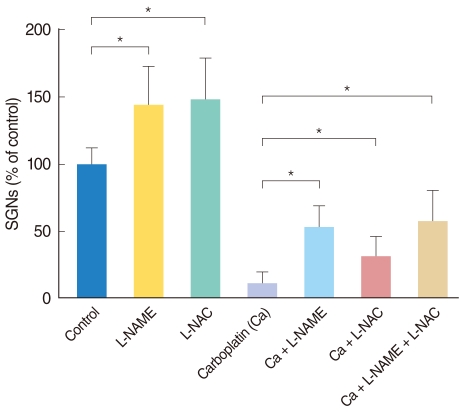
Results: Treatment with carboplatin induced a significant loss of outer hair cells, while inner hair cells were preserved in the cochlear organotypic cultures. Addition of L-NAC or L-NAME reduced the amount of carboplatin-induced hair cell damage; the differences did not reach statistical significance. However, carboplatin significantly decreased the number of surviving SGNs in dissociated cultures. The toxic effects were significantly reduced by addition of L-NAC or L-NAME. In addition, carboplatin induced the loss of neurites from the SGN somata, and this was not blocked with L-NAC or L-NAME.
Conclusion: The results of this study suggest that ROS and NO are involved in carboplatin-induced damage to hair cells and SGNs, and administration of L-NAC/L-NAME can be used to attenuate the toxicity.
Keywords: Carboplatin; Inner hair cell; Mouse; Nitric oxide; Ototoxicity; Outer hair cell; Spiral ganglion neuron.
Conflict of interest statement
No potential conflict of interest relevant to this article was reported.
Figures
References
-
- Ahmed SM, Cohen EE. Treatment of squamous cell carcinoma of the head and neck in the metastatic and refractory settings: advances in chemotherapy and the emergence of small molecule epidermal growth factor receptor kinase inhibitors. Curr Cancer Drug Targets. 2007 Nov;7(7):666–673. - PubMed
-
- Goffin J, Lacchetti C, Ellis PM, Ung YC, Evans WK Lung Cancer Disease Site Group of Cancer Care Ontarios Program in Evidence-Based Care. First-line systemic chemotherapy in the treatment of advanced non-small cell lung cancer: a systematic review. J Thorac Oncol. 2010 Feb;5(2):260–274. - PubMed
-
- Marchetti C, Pisano C, Facchini G, Bruni GS, Magazzino FP, Losito S, et al. First-line treatment of advanced ovarian cancer: current research and perspectives. Expert Rev Anticancer Ther. 2010 Jan;10(1):47–60. - PubMed
-
- Esteban-Fernandez D, Verdaguer JM, Ramirez-Camacho R, Palacios MA, Gomez-Gomez MM. Accumulation, fractionation, and analysis of platinum in toxicologically affected tissues after cisplatin, oxaliplatin, and carboplatin administration. J Anal Toxicol. 2008 Mar;32(2):140–146. - PubMed