Resveratrol attenuates azidothymidine-induced cardiotoxicity by decreasing mitochondrial reactive oxygen species generation in human cardiomyocytes
- PMID: 21461578
- PMCID: PMC3075855
- DOI: 10.3892/mmr.2010.390
Resveratrol attenuates azidothymidine-induced cardiotoxicity by decreasing mitochondrial reactive oxygen species generation in human cardiomyocytes
Abstract
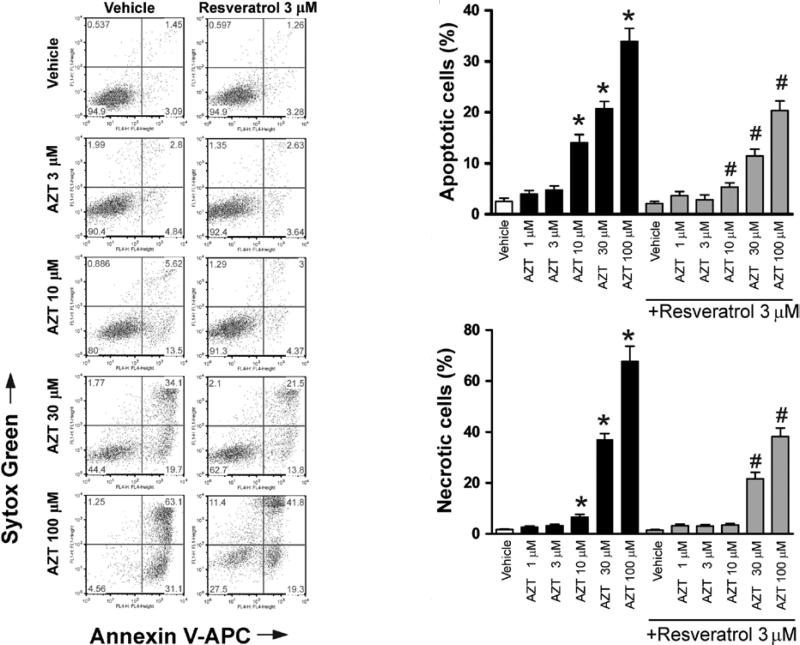
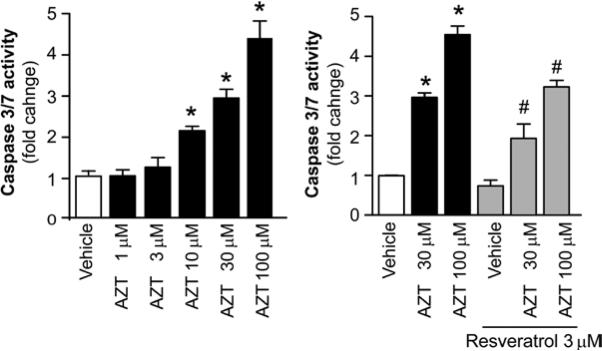
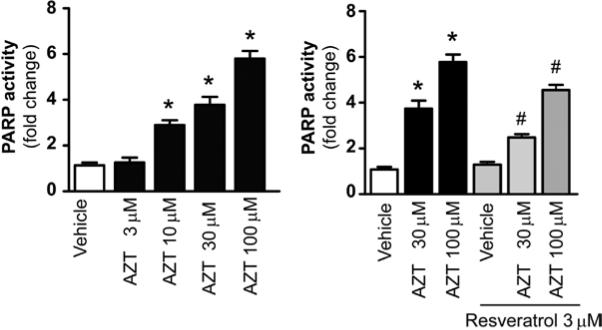
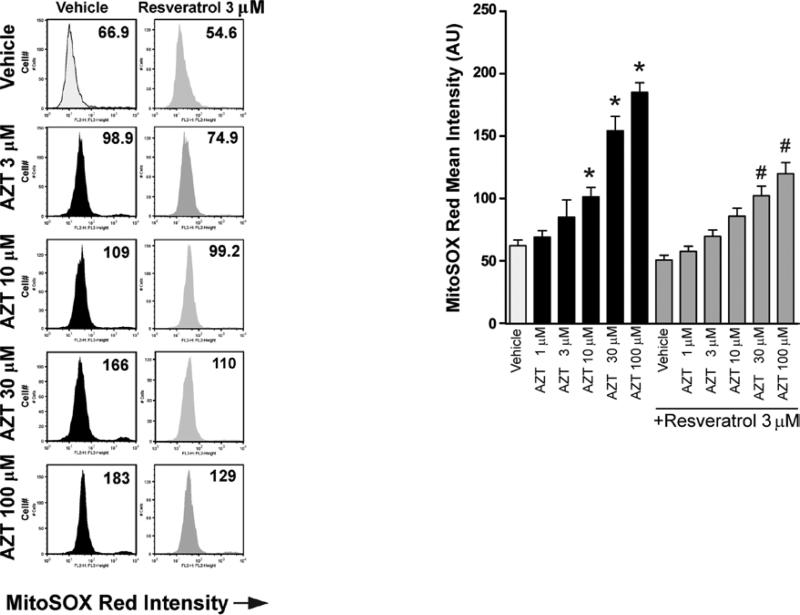
Nucleotide reverse transcriptase inhibitors, such as zidovudine (azidothymidine, AZT) and stavudine, represent a class of approved antiretroviral agents for highly active antiretroviral therapy, which prolongs the life expectancy of patients infected with human-immunodeficiency virus. Unfortunately, the use of these drugs is associated with known toxicities in the liver, skeletal muscle, heart and other organs, which may involve increased reactive oxygen species (ROS) generation, among other mechanisms. Resveratrol is a polyphenolic plant-derived antioxidant abundantly found in certain grapes, roots, berries, peanuts and red wine. This study, using primary human cardiomyocytes, evaluated the effects of AZT and pre-treatment with resveratrol on mitochondrial ROS generation and the cell death pathways. AZT induced concentration-dependent cell death, involving both caspase-3 and -7 and poly(ADP-ribose) polymerase activation, coupled with increased mitochondrial ROS generation in human cardiomyocytes. These effects of AZT on mitochondrial ROS generation and cell death may be attenuated by resveratrol pre-treatment. The results demonstrate that mitochondrial ROS generation plays a pivotal role in the cardiotoxicity of AZT in human cardiomyocytes, and resveratrol may provide a potential strategy to attenuate these pathological alterations, which are associated with widely used antiretroviral therapy.
Figures
References
-
- Currie PF, Boon NA. Immunopathogenesis of HIV-related heart muscle disease: current perspectives. AIDS. 2003;17(Suppl 1):21–28. - PubMed
-
- De la Asuncion JG, Del Olmo ML, Gomez-Cambronero LG, Sastre J, Pallardo FV, Vina J. AZT induces oxidative damage to cardiac mitochondria: protective effect of vitamins C and E. Life Sci. 2004;76:47–56. - PubMed
-
- Lewis W, Papoian T, Gonzalez B, et al. Mitochondrial ultra-structural and molecular changes induced by zidovudine in rat hearts. Lab Invest. 1991;65:228–236. - PubMed
-
- Lewis W, Simpson JF, Meyer RR. Cardiac mitochondrial DNA polymerase-gamma is inhibited competitively and noncompetitively by phosphorylated zidovudine. Circ Res. 1994;74:344–348. - PubMed
-
- Mak IT, Goldfarb MG, Weglicki WB, Haudenschild CC. Cardiac pathologic effects of azidothymidine (AZT) in Mg-deficient mice. Cardiovasc Toxicol. 2004;4:169–177. - PubMed
Publication types
MeSH terms
Substances
Grants and funding
LinkOut - more resources
Full Text Sources
Medical
Research Materials