


Early social experience affects behavioral and physiological responsiveness to stressful conditions in infant rhesus macaques (Macaca mulatta)
- PMID: 21462233
- PMCID: PMC3100413
- DOI: 10.1002/ajp.20953
Early social experience affects behavioral and physiological responsiveness to stressful conditions in infant rhesus macaques (Macaca mulatta)
Abstract
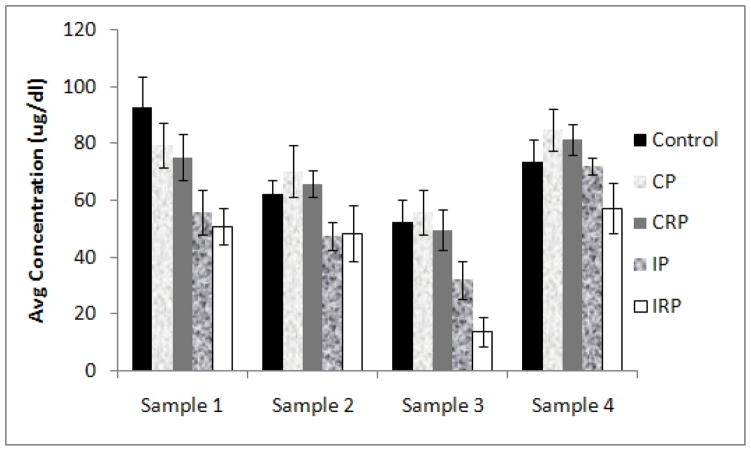
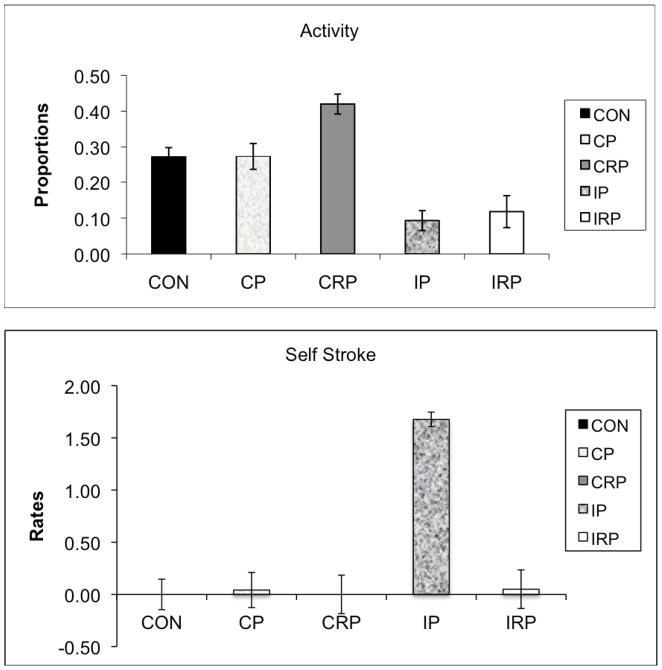
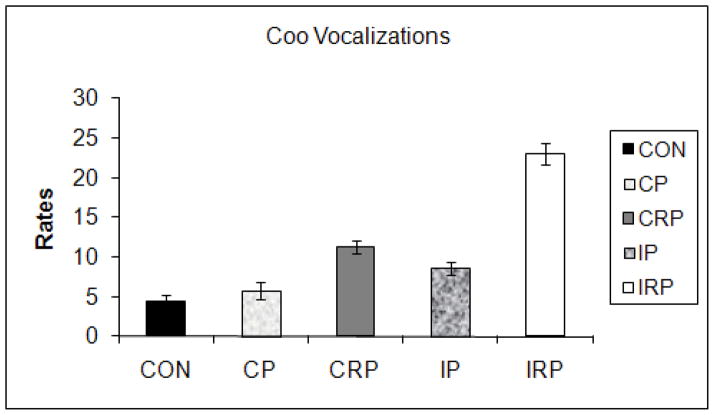
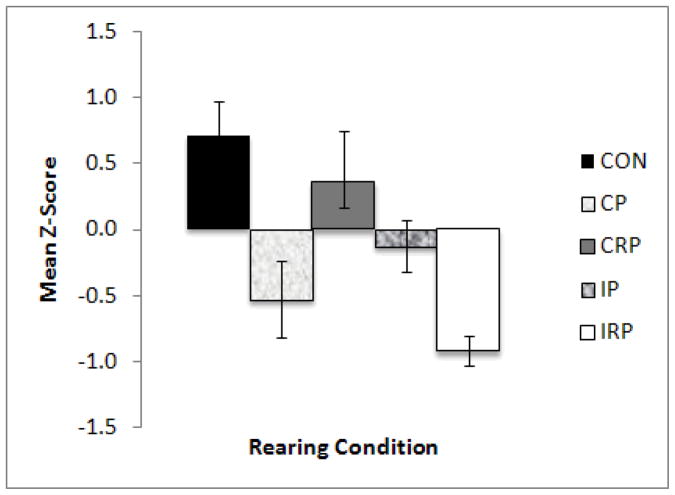
Studies on early development have demonstrated the profound effects of early social experience on the behavioral development and physiology of young rhesus macaques. Given these relationships, we hypothesized that rhesus macaques exposed to different nursery-rearing conditions may develop unique biobehavioral profiles. If this is true, the assessment of temperament may allow us to pinpoint successful rearing environments, thus improving the overall health of nonhuman primates that are raised in captive environments. We conducted biobehavioral assessments in order to examine differences in the development of infants raised under four different peer-rearing conditions (continuous pairing (CP), intermittent pairing, CP with partner rotation, and intermittent rotational pairing) and compared these animals with data from a mother-reared control group. Overall, continuous rotationally paired animals were most similar to mother-reared controls on most behavioral and temperament measures, suggesting that more socially complex rearing environments (greater number of social partners) favor a more active behavioral style. Cortisol profiles of mother-reared controls were similar to both CP groups, and these three groups had higher cortisol concentrations than the intermittent rotational-pairing group. In addition, intermittently paired infants displayed a significantly higher frequency of self-stroke behavior during a human intruder challenge, an abnormal behavior also known as floating limb which has been shown to be a precursor of self-biting. Overall, the data are consistent with the idea that social complexity in the nursery, as operationalized in our continuous rotational pairing, leads to a biobehavioral profile that is most similar to that of infants raised by their mothers in large, socially complex, cages.
© 2011 Wiley-Liss, Inc.
Figures
References
-
- Bellanca RU, Crockett CM. Factors predicting increased incidence of abnormal behavior in male pigtailed macaques. American Journal of Primatology. 2002;58(2):57–69. - PubMed
-
- Bentson K, Crockett C, Wahl K, Runeson E, Bellanca R, Lee G, Thom J, Montgomery H, Yi M, McComas J. Floating limb behaviors and self biting are associated in laboratory monkeys. American journal of primatology. 2010;72(8):725–733. - PubMed
-
- Bentson K, Montgomery H, Bellanca R, Lee G, Thom J, Crockett C. Floating limb activity is associated with self-biting in four monkey species (Macaca mulatta, M. fascicularis, M. nemestrina, and Papio cynocephalus) American Journal of Primatology. 2005;66(Suppl):181.
Publication types
MeSH terms
Substances
Grants and funding
LinkOut - more resources
Full Text Sources
Miscellaneous
