


Platelet-rich plasma versus platelet-poor plasma in the management of chronic diabetic foot ulcers: a comparative study
- PMID: 21470370
- PMCID: PMC7950579
- DOI: 10.1111/j.1742-481X.2011.00797.x
Platelet-rich plasma versus platelet-poor plasma in the management of chronic diabetic foot ulcers: a comparative study
Abstract
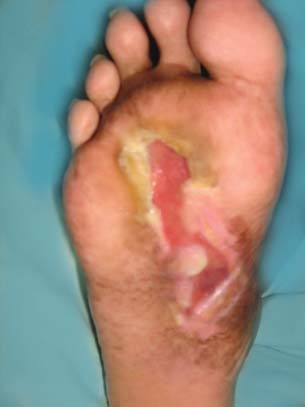
Non healing diabetic foot ulcers and the resulting potential amputations present significant costs to the health care system and reduce patient quality of life. The goal of diabetic foot ulcer treatment is to obtain wound closure as expeditiously as possible. The use of platelet-rich plasma (PRP) to enhance wound healing has increased dramatically over the last decade. However, controversies exist in the literature regarding the added benefit of this procedure. The aim of this study is to investigate the efficiency of platelet releasate on the healing of chronic diabetic ulcers in comparison with platelet-poor plasma (PPP). This study included 24 patients with chronic diabetic ulcers. They were systematically randomised into two groups: PRP group (n = 12) and PPP group (n = 12). The results showed that healing in PRP group was significantly faster (P < 0·005). PRP enhances healing of chronic diabetic foot ulcers.
© 2011 The Authors. © 2011 Blackwell Publishing Ltd and Medicalhelplines.com Inc.
Figures
References
-
- Mustoe TA. Dermal ulcer healing: advances in understanding. Presented at meeting: tissue repair and ulcer/wound healing: molecular mechanisms, therapeutic targets and future directions; 2005. Mar 17–18; Paris, France. URL http://www.pasteur.fr/applications/euroconf/tissuerepair/mustoe_abstract...
-
- Mustoe TA. Understanding chronic wounds: a unifying hypothesis on their pathogenesis and implications for therapy. Am J Surg 2004;187: S65–70. - PubMed
-
- Crovetti G, Martinelli G, Issi M, Barone M, Guizzardi M, Campanati B, Maroni M, Carabelli A. Platelet gel for healing cutaneous chronic wounds. Transfus Apher Sci 2004;30:145–51. - PubMed
-
- Cross KJ, Mustoe TA. Growth factors in wound healing. Surg Clin North Am 2003;83:531–45. - PubMed
-
- Steed DL. Clinical evaluation of recombinant human platelet‐derived growth factors for the treatment of lower extremity diabetic ulcers. Diabetic Ulcer study group. J Vasc Surg 1995;21:71–8. - PubMed
Publication types
MeSH terms
LinkOut - more resources
Full Text Sources
Medical
Research Materials
