


Molecular epidemiology of Coxiella burnetii from ruminants in Q fever outbreak, the Netherlands
- PMID: 21470457
- PMCID: PMC3377418
- DOI: 10.3201/eid1704.101562
Molecular epidemiology of Coxiella burnetii from ruminants in Q fever outbreak, the Netherlands
Abstract
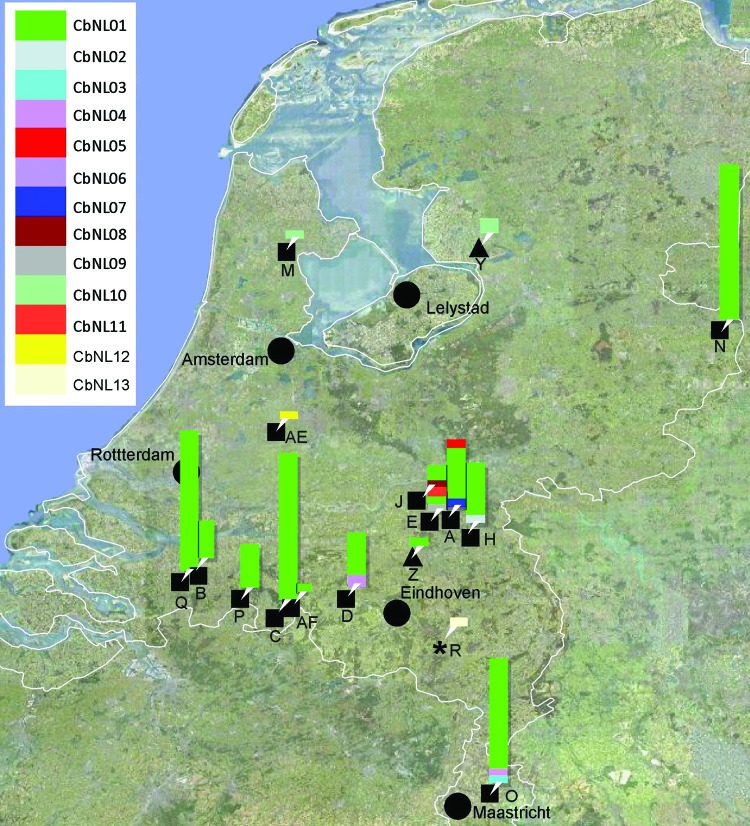
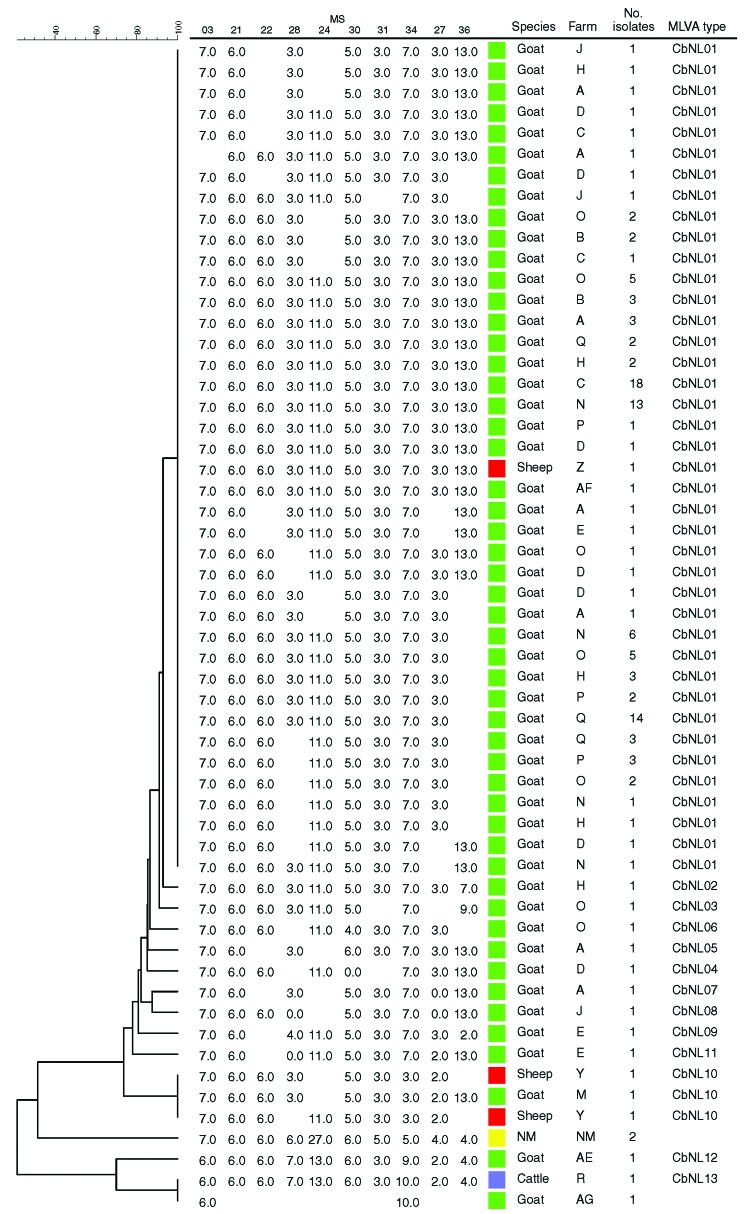
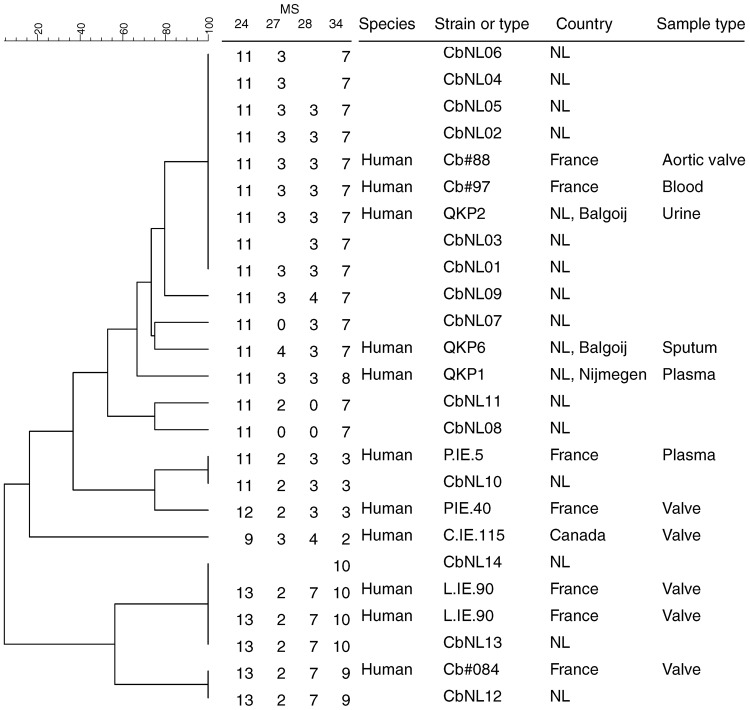
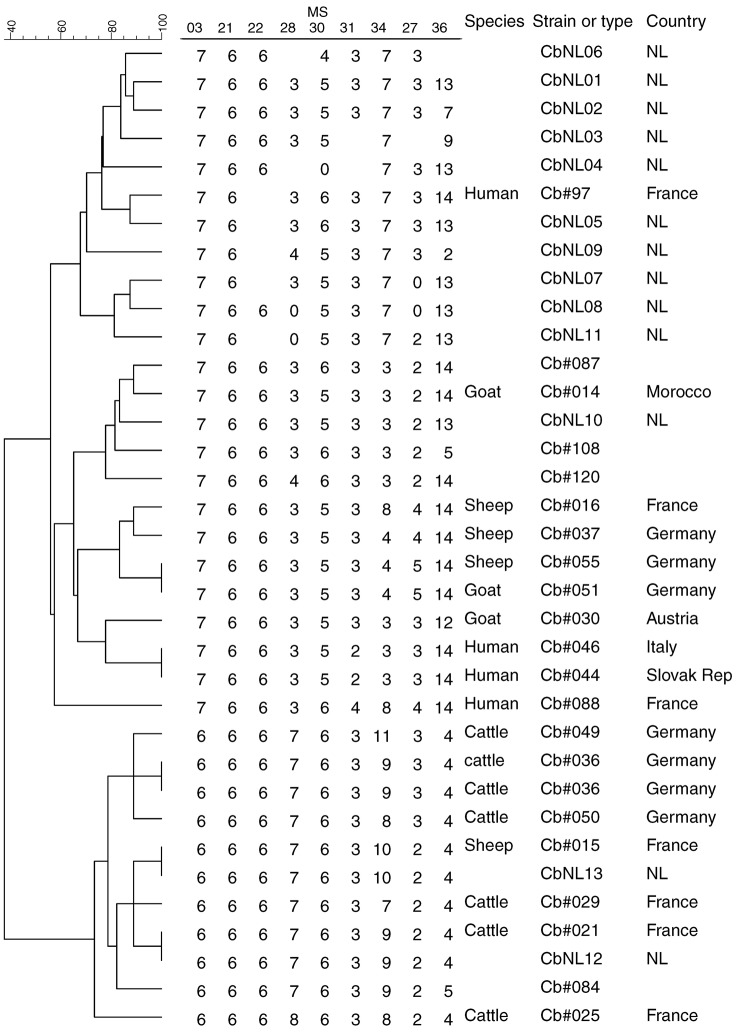
Q fever is a zoonosis caused by the bacterium Coxiella burnetii. One of the largest reported outbreaks of Q fever in humans occurred in the Netherlands starting in 2007; epidemiologic investigations identified small ruminants as the source. To determine the genetic background of C. burnetii in domestic ruminants responsible for the human Q fever outbreak, we genotyped 126 C. burnetii-positive samples from ruminants by using a 10-loci multilocus variable-number tandem-repeat analyses panel and compared them with internationally known genotypes. One unique genotype predominated in dairy goat herds and 1 sheep herd in the human Q fever outbreak area in the south of the Netherlands. On the basis of 4 loci, this genotype is similar to a human genotype from the Netherlands. This finding strengthens the probability that this genotype of C. burnetii is responsible for the human Q fever epidemic in the Netherlands.
Figures
Similar articles
-
Genotyping of Coxiella burnetii from domestic ruminants in northern Spain.BMC Vet Res. 2012 Dec 10;8:241. doi: 10.1186/1746-6148-8-241. BMC Vet Res. 2012. PMID: 23227921 Free PMC article.
-
Molecular typing of Coxiella burnetii from animal and environmental matrices during Q fever epidemics in the Netherlands.BMC Vet Res. 2012 Sep 18;8:165. doi: 10.1186/1746-6148-8-165. BMC Vet Res. 2012. PMID: 22988998 Free PMC article.
-
Epidemic genotype of Coxiella burnetii among goats, sheep, and humans in the Netherlands.Emerg Infect Dis. 2012 May;18(5):887-9. doi: 10.3201/eid1805.111907. Emerg Infect Dis. 2012. PMID: 22516554 Free PMC article. No abstract available.
-
Q fever and seroprevalence of Coxiella burnetii in domestic ruminants.Vet Ital. 2018 Dec 31;54(4):265-279. doi: 10.12834/VetIt.1113.6046.3. Vet Ital. 2018. PMID: 30681125 Review.
-
Coxiella burnetii infections in sheep or goats: an opinionated review.Vet Microbiol. 2015 Dec 14;181(1-2):119-29. doi: 10.1016/j.vetmic.2015.07.011. Epub 2015 Jul 15. Vet Microbiol. 2015. PMID: 26315774 Review.
Cited by
-
QTest: A new way to easily sample, store, and ship samples to perform Q fever PCR analysis on bulk tank milk.JDS Commun. 2021 Sep 23;2(6):409-414. doi: 10.3168/jdsc.2021-0144. eCollection 2021 Nov. JDS Commun. 2021. PMID: 36337110 Free PMC article.
-
Genotyping of Coxiella burnetii from domestic ruminants in northern Spain.BMC Vet Res. 2012 Dec 10;8:241. doi: 10.1186/1746-6148-8-241. BMC Vet Res. 2012. PMID: 23227921 Free PMC article.
-
Genotyping of Coxiella burnetii in sheep and goat abortion samples.BMC Microbiol. 2018 Dec 4;18(1):204. doi: 10.1186/s12866-018-1353-y. BMC Microbiol. 2018. PMID: 30514233 Free PMC article.
-
Serological, Molecular Prevalence and Genotyping of Coxiella burnetii in Dairy Cattle Herds in Northeastern Algeria.Vet Sci. 2022 Jan 22;9(2):40. doi: 10.3390/vetsci9020040. Vet Sci. 2022. PMID: 35202293 Free PMC article.
-
Q Fever Outbreak among Workers at a Waste-Sorting Plant.PLoS One. 2015 Sep 23;10(9):e0138817. doi: 10.1371/journal.pone.0138817. eCollection 2015. PLoS One. 2015. PMID: 26398249 Free PMC article.
References
Publication types
MeSH terms
LinkOut - more resources
Full Text Sources
Other Literature Sources