


A disulfide bridge network within the soluble periplasmic domain determines structure and function of the outer membrane protein RCSF
- PMID: 21471196
- PMCID: PMC3099694
- DOI: 10.1074/jbc.M111.230185
A disulfide bridge network within the soluble periplasmic domain determines structure and function of the outer membrane protein RCSF
Abstract
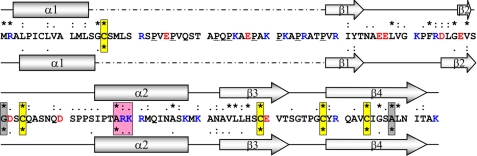
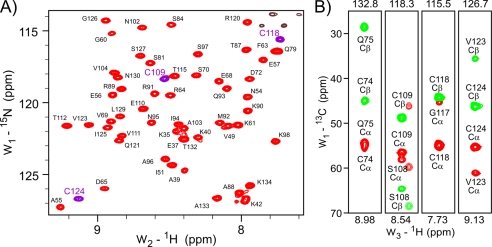
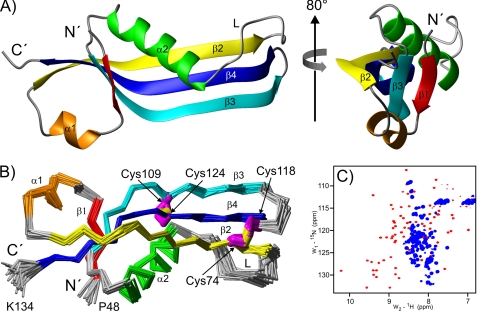
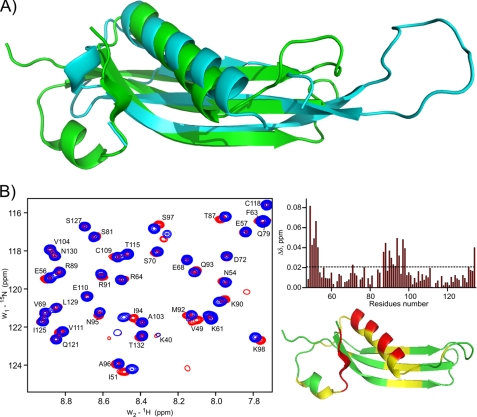
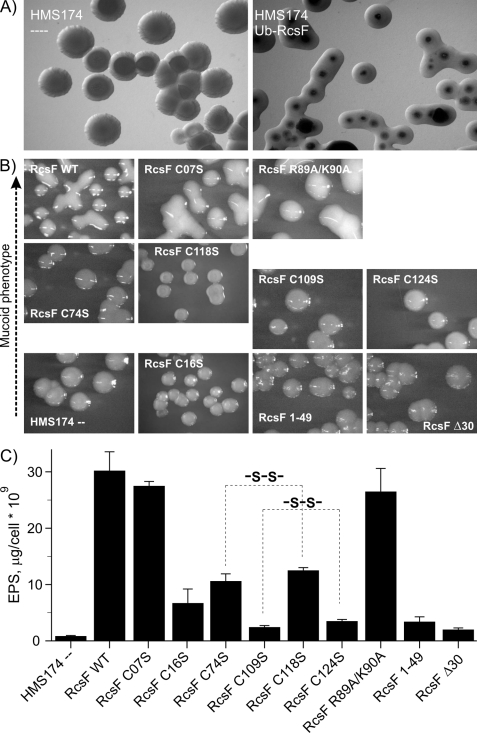
RcsF, a proposed auxiliary regulator of the regulation of capsule synthesis (rcs) phosphorelay system, is a key element for understanding the RcsC-D-A/B signaling cascade, which is responsible for the regulation of more than 100 genes and is involved in cell division, motility, biofilm formation, and virulence. The RcsC-D-A/B system is one of the most complex bacterial signal transduction pathways, consisting of several membrane-bound and soluble proteins. RcsF is a lipoprotein attached to the outer membrane and plays an important role in activating the RcsC-d-A/B pathway. The exact mechanism of activation of the rcs phosphorelay by RcsF, however, remains unknown. We have analyzed the sequence of RcsF and identified three structural elements: 1) an N-terminal membrane-anchored helix (residues 3-13), 2) a loop (residues 14-48), and 3) a C-terminal folded domain (residues 49-134). We have determined the structure of this C-terminal domain and started to investigate its interaction with potential partners. Important features of its structure are two disulfide bridges between Cys-74 and Cys-118 and between Cys-109 and Cys-124. To evaluate the importance of this RcsF disulfide bridge network in vivo, we have examined the ability of the full-length protein and of specific Cys mutants to initiate the rcs signaling cascade. The results indicate that the Cys-74/Cys-118 and the Cys-109/Cys-124 residues correlate pairwise with the activity of RcsF. Interaction studies showed a weak interaction with an RNA hairpin. However, no interaction could be detected with reagents that are believed to activate the rcs phosphorelay, such as lysozyme, glucose, or Zn(2+) ions.
Figures
References
-
- Majdalani N., Gottesman S. (2005) Annu. Rev. Microbiol. 59, 379–405 - PubMed
-
- Andresen L., Kõiv V., Alamäe T., Mäe A. (2007) FEMS Microbiol. Lett. 273, 229–238 - PubMed
-
- Francez-Charlot A., Laugel B., Van Gemert A., Dubarry N., Wiorowski F., Castanié-Cornet M. P., Gutierrez C., Cam K. (2003) Mol. Microbiol. 49, 823–832 - PubMed
-
- West A. H., Stock A. M. (2001) Trends Biochem. Sci. 26, 369–376 - PubMed
Publication types
MeSH terms
Substances
Associated data
- Actions
LinkOut - more resources
Full Text Sources
Molecular Biology Databases
