


Neuronal GPCR controls innate immunity by regulating noncanonical unfolded protein response genes
- PMID: 21474712
- PMCID: PMC3125668
- DOI: 10.1126/science.1203411
Neuronal GPCR controls innate immunity by regulating noncanonical unfolded protein response genes
Abstract
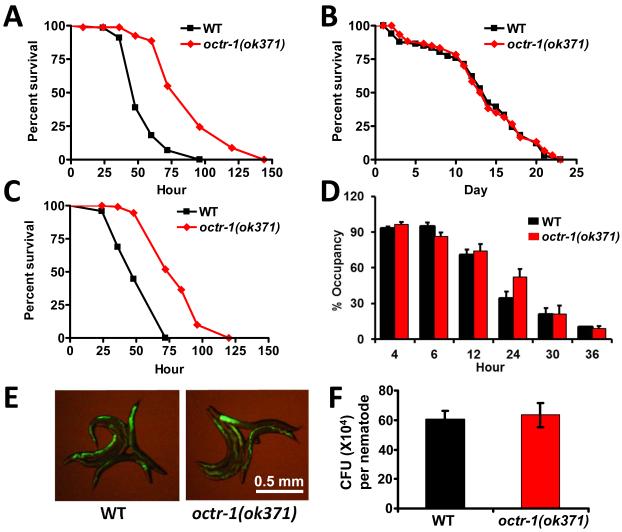
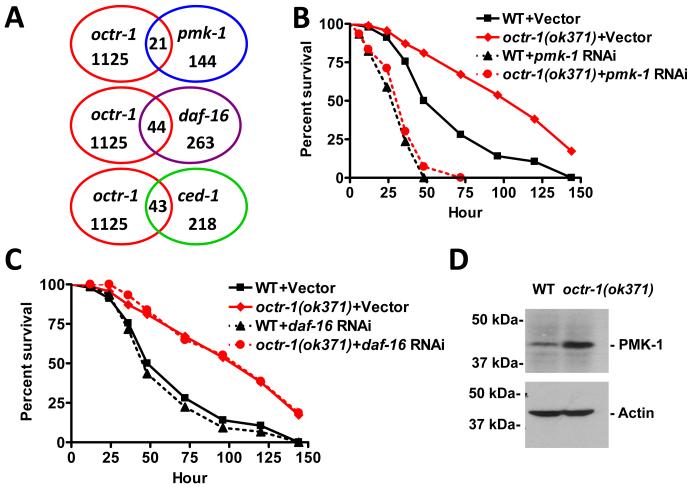
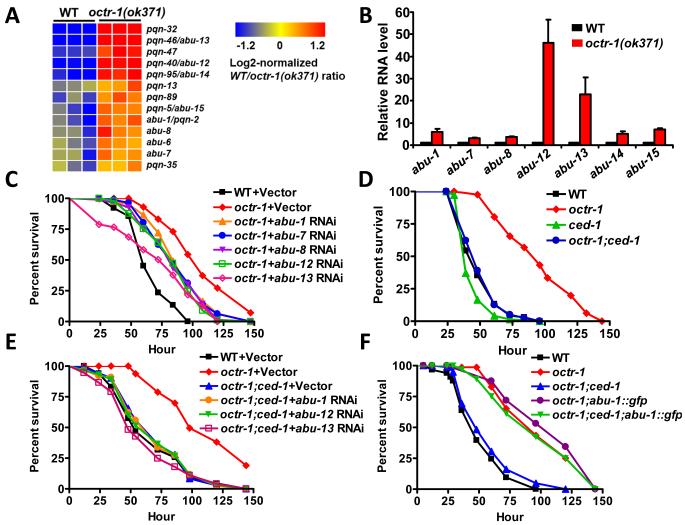
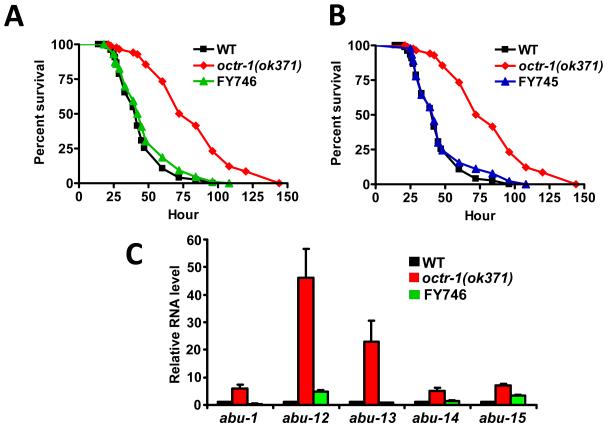
The unfolded protein response (UPR), which is activated when unfolded or misfolded proteins accumulate in the endoplasmic reticulum, has been implicated in the normal physiology of immune defense and in several human diseases, including diabetes, cancer, neurodegenerative disease, and inflammatory disease. In this study, we found that the nervous system controlled the activity of a noncanonical UPR pathway required for innate immunity in Caenorhabditis elegans. OCTR-1, a putative octopamine G protein-coupled catecholamine receptor (GPCR, G protein-coupled receptor), functioned in sensory neurons designated ASH and ASI to actively suppress innate immune responses by down-regulating the expression of noncanonical UPR genes pqn/abu in nonneuronal tissues. Our findings suggest a molecular mechanism by which the nervous system may sense inflammatory responses and respond by controlling stress-response pathways at the organismal level.
Figures
Comment in
-
Cell biology. Ancient neurons regulate immunity.Science. 2011 May 6;332(6030):673-4. doi: 10.1126/science.1206353. Science. 2011. PMID: 21551052 Free PMC article.
References
Publication types
MeSH terms
Substances
Grants and funding
LinkOut - more resources
Full Text Sources
Other Literature Sources
Molecular Biology Databases
Research Materials
Miscellaneous
