


Awareness and use of contraceptives among saudi women attending primary care centers in Al-qassim, saudi arabia
- PMID: 21475521
- PMCID: PMC3068803
Awareness and use of contraceptives among saudi women attending primary care centers in Al-qassim, saudi arabia
Abstract
Background: The overall rapid change in the socio-demographic pattern of the Saudi Arabian community, especially the changes concerned with women's education and work will be an important factor in changing fertility beliefs and behaviors with more tendencies to birth spacing and, consequently, the use of contraceptives.
Objectives: The study aimed to identify the perception of Saudi women regarding the use of contraceptives
Methods: A cross-sectional study was conducted among Saudi women attending primary care centers of Al-Qassim Region. A structured questionnaire was developed to cover the research objectives. The dependant variable was the utilization of contraceptive methods and the socioeconomic variables were the independent variables.
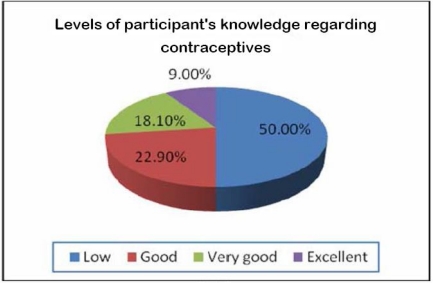
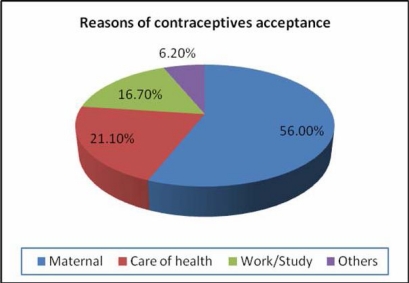
Results: The results identified the low knowledge level of the participant women regarding the variety of contraceptive methods. Most participants and their husbands showed acceptance to the use of contraceptives for birth spacing. They preferred birth interval of 2-3 years. They intended to have from 5 to 10 children. There was a significant increase in contraceptive use among working women, 30 years and older, with a higher level of education, and those having a large number of children. Multiple regression models revealed that the significant determinants of the use of contraceptives were women's working and education. The study recommended sustained efforts to increase awareness and motivation for proper contraceptive use.
Keywords: Al-Qassim; Birth interval; Contraceptives; Saudi Arabia.
References
-
- Farrag OA, Rahman MS, Rahman J, Chatterjee TK, Al-Sibai MH. Attitude towards fertility control in the Eastern Province of Saudi Arabia. Saudi Med J. 1983;4(2):111–6.
-
- World Population Prospects, Int . Highlights. United Nations; New York: 2006. 2007. revision.
-
- Adinma B. An overview of the global policy consensus on women’s sexual and reproductive rights: The Nigerian perspective. Trop J Obstet Gynaecol. 2002;(Suppl. 1):9–12.
-
- Information and Knowledge for Optimal Health (INFO) Project . Center for Communication Programs, The Johns Hopkins University Bloomberg School of Public Health; 111 Market Place, Suite 310, Baltimore, Maryland 21202, USA. Volume XXXI, Number 2, Spring 2003, Series M, Number 17, Special Topics.
-
- Cleland J, Bernstein S, Ezeh A, Faundes A, Glasier A, Innis J. Family planning: the unfinished agenda. Lancet. 2006;368:1810–1827. - PubMed
LinkOut - more resources
Full Text Sources