The effects of a high-caloric protein-rich oral nutritional supplement in patients with chronic heart failure and cachexia on quality of life, body composition, and inflammation markers: a randomized, double-blind pilot study
- PMID: 21475692
- PMCID: PMC3060643
- DOI: 10.1007/s13539-010-0008-0
The effects of a high-caloric protein-rich oral nutritional supplement in patients with chronic heart failure and cachexia on quality of life, body composition, and inflammation markers: a randomized, double-blind pilot study
Abstract
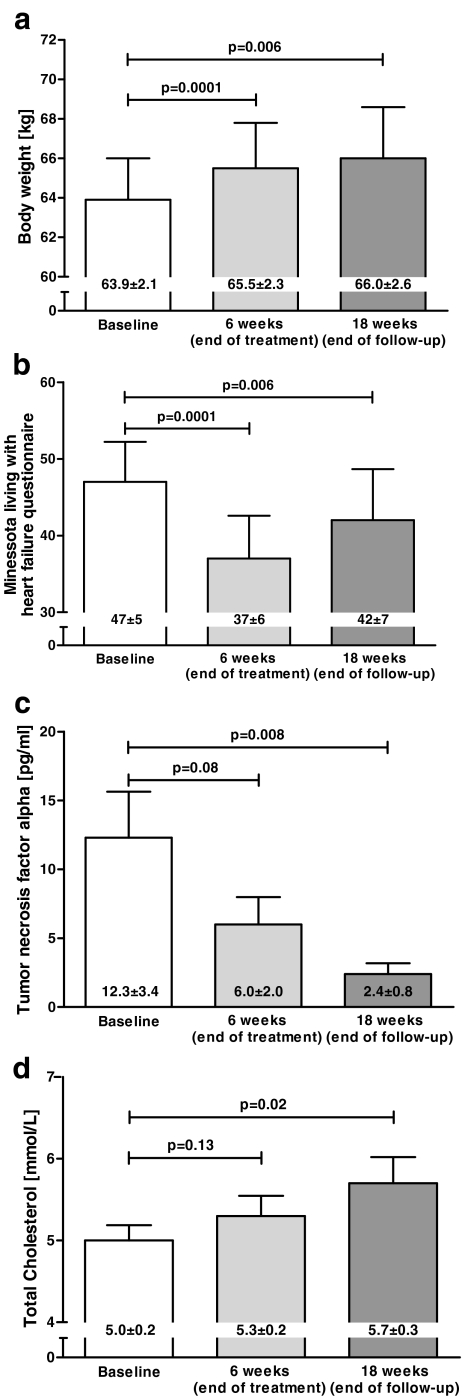
The prevalence of cardiac cachexia in chronic heart failure is approximately 5% to 15% and 18-month mortality rates can reach 50%. Treatment with angiotensin-converting enzyme inhibitors and beta-blockers may confer some benefit but no proven therapy exists. We tested the effects of an oral nutritional supplement in cachectic patients with heart failure. This was a prospective, randomized, double-blind, placebo-controlled pilot study which randomized 29 patients to a high-caloric (600 kcal) high-protein (20 g) oral nutritional supplement or placebo for a duration of 6 weeks in addition to the patients' usual food intake. At baseline, 6 weeks, and 18 weeks, we measured body weight, quality of life, body composition, heart function, laboratory parameters, and exercise performance. Edema-free body weight increased in 19 of 20 patients receiving intervention at 6 weeks and in 17 of 19 patients at 18 weeks with an average weight gain of 2.0 ± 1.7 kg (3.1 ± 2.4%, p = 0.0001) and 2.3 ± 3.1 kg (3.6 ± 4.7%, p = 0.007) at 6 and 18 weeks, respectively. Most of the weight gain was fat tissue with an absolute gain of 1.5 ± 1.7 kg (p = 0.003) and 1.6 ± 2.7 kg (p = 0.008). A significant improvement in quality of life and decrease in serum levels of tumor necrosis factor-α were observed (p < 0.05 for both). We demonstrated the feasibility of oral nutritional supplement in cachectic patients with heart failure and significant clinical benefit in terms of body size and body composition, laboratory parameters, and quality of life (www.clinicaltrials.gov identifier NCT00654719).
Figures