


A novel family of RGD-containing disintegrins (Tablysin-15) from the salivary gland of the horsefly Tabanus yao targets αIIbβ3 or αVβ3 and inhibits platelet aggregation and angiogenesis
- PMID: 21475772
- PMCID: PMC3499621
- DOI: 10.1160/TH11-01-0029
A novel family of RGD-containing disintegrins (Tablysin-15) from the salivary gland of the horsefly Tabanus yao targets αIIbβ3 or αVβ3 and inhibits platelet aggregation and angiogenesis
Abstract
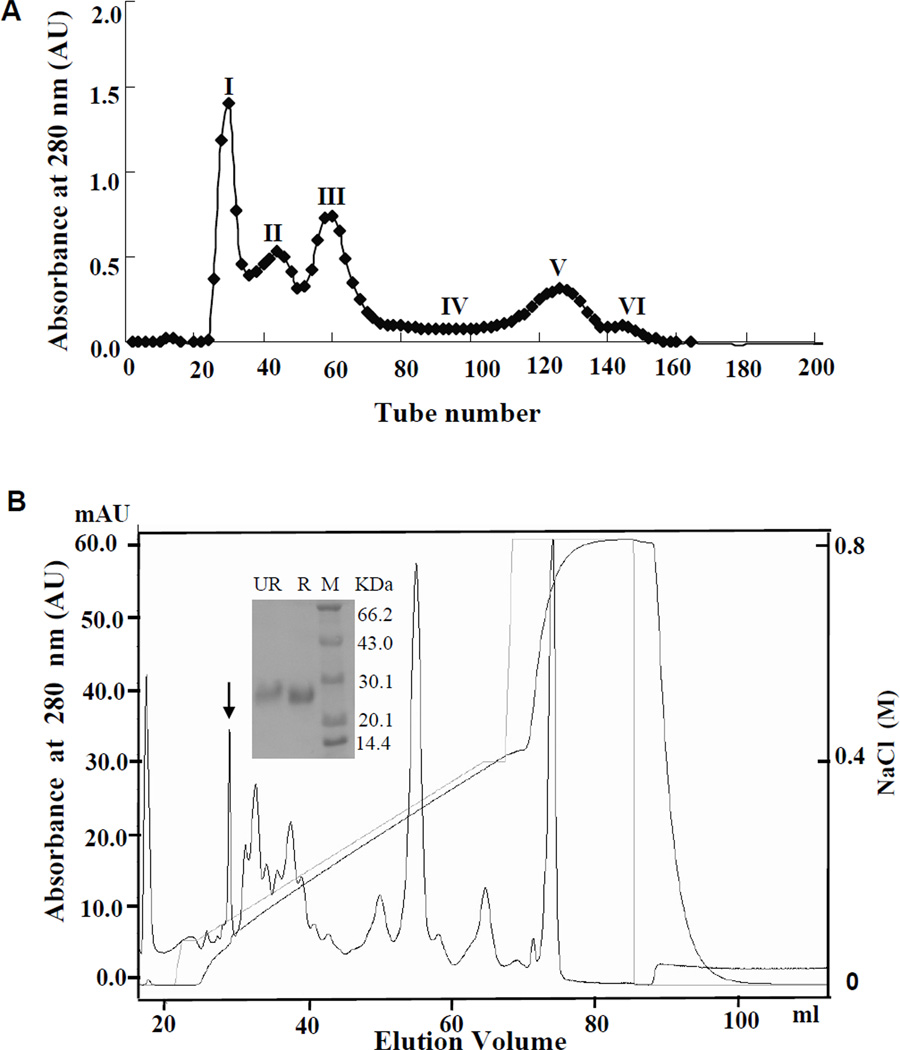
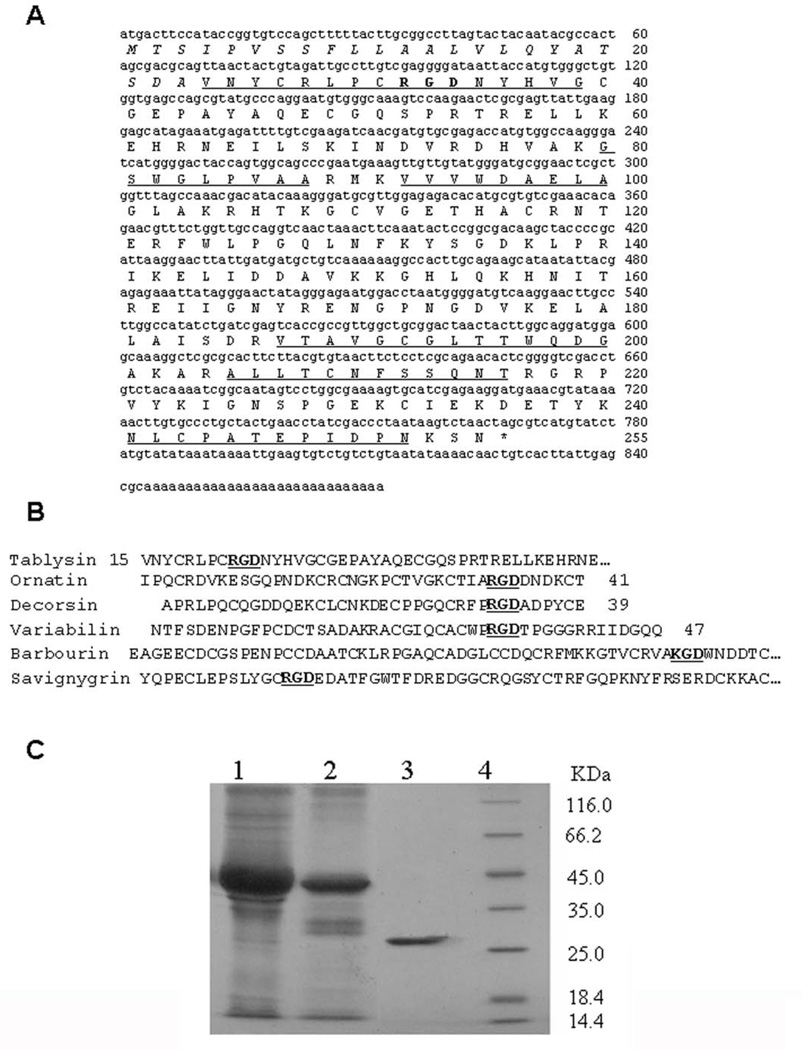
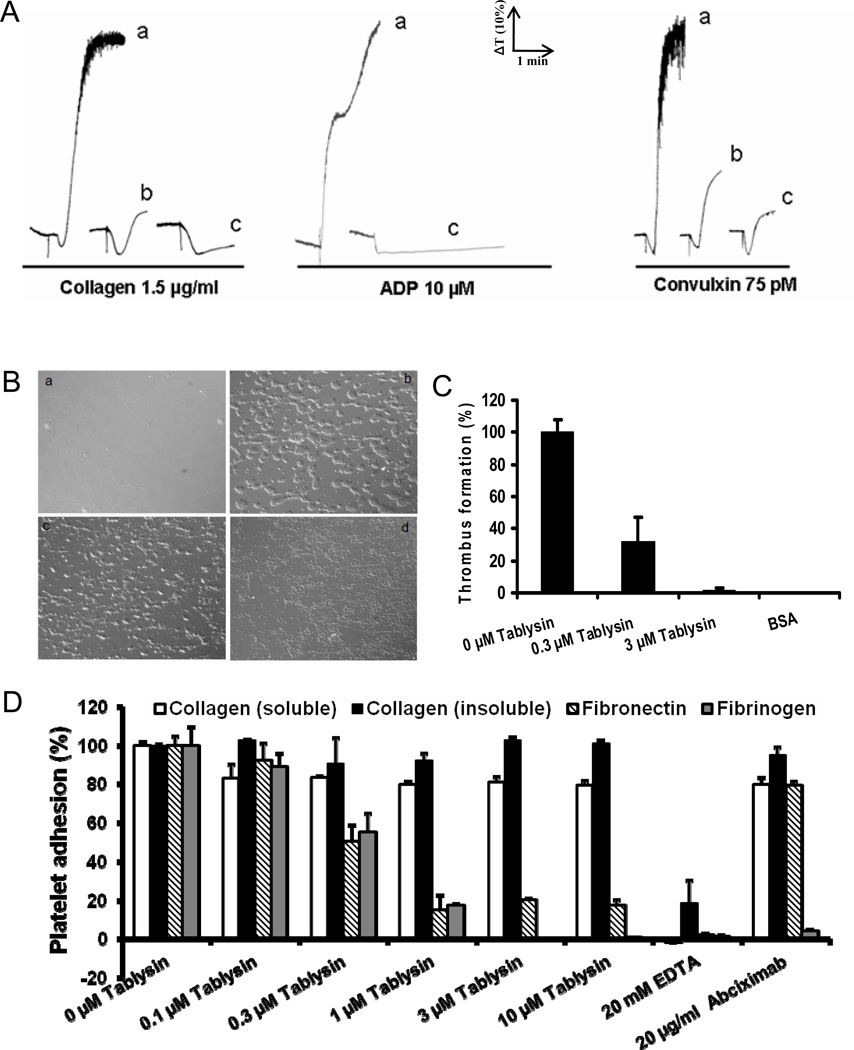
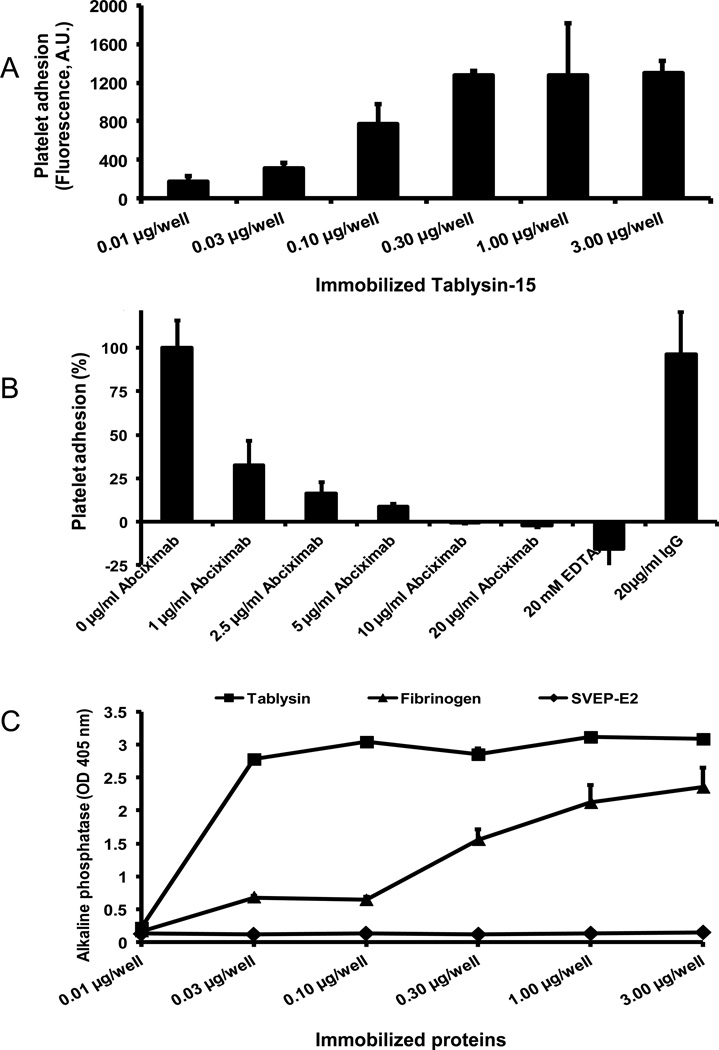
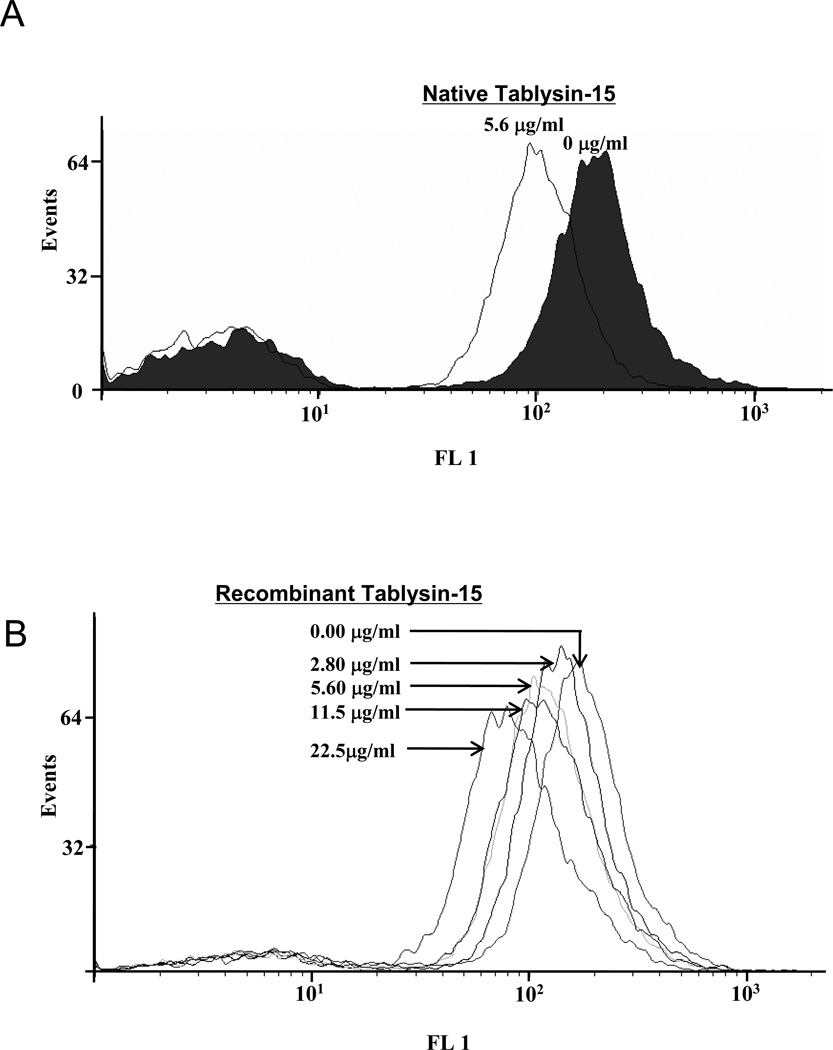
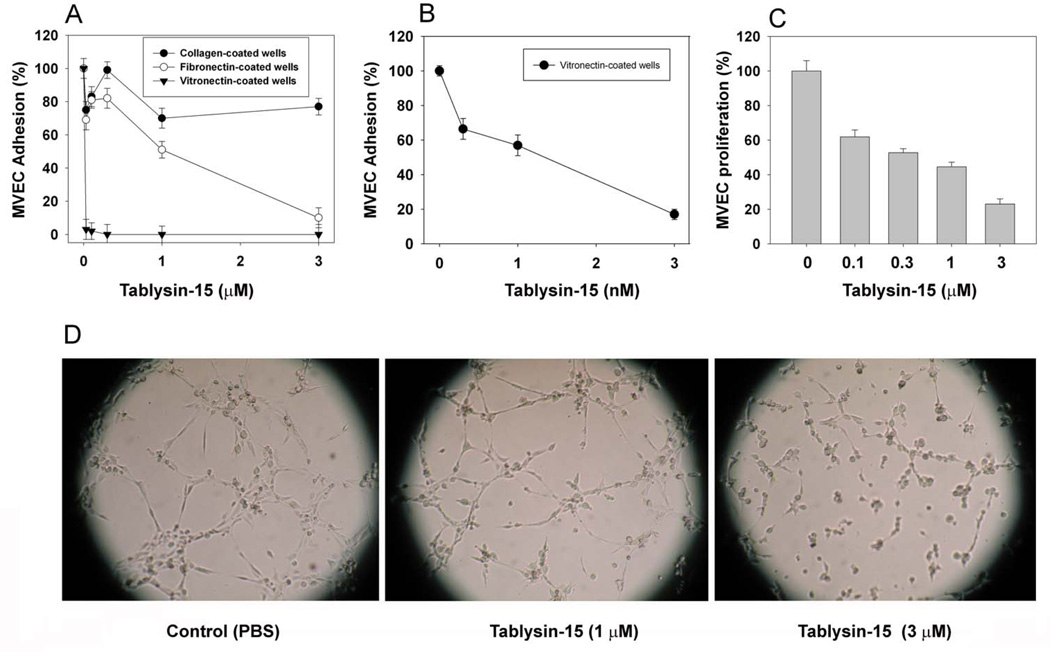
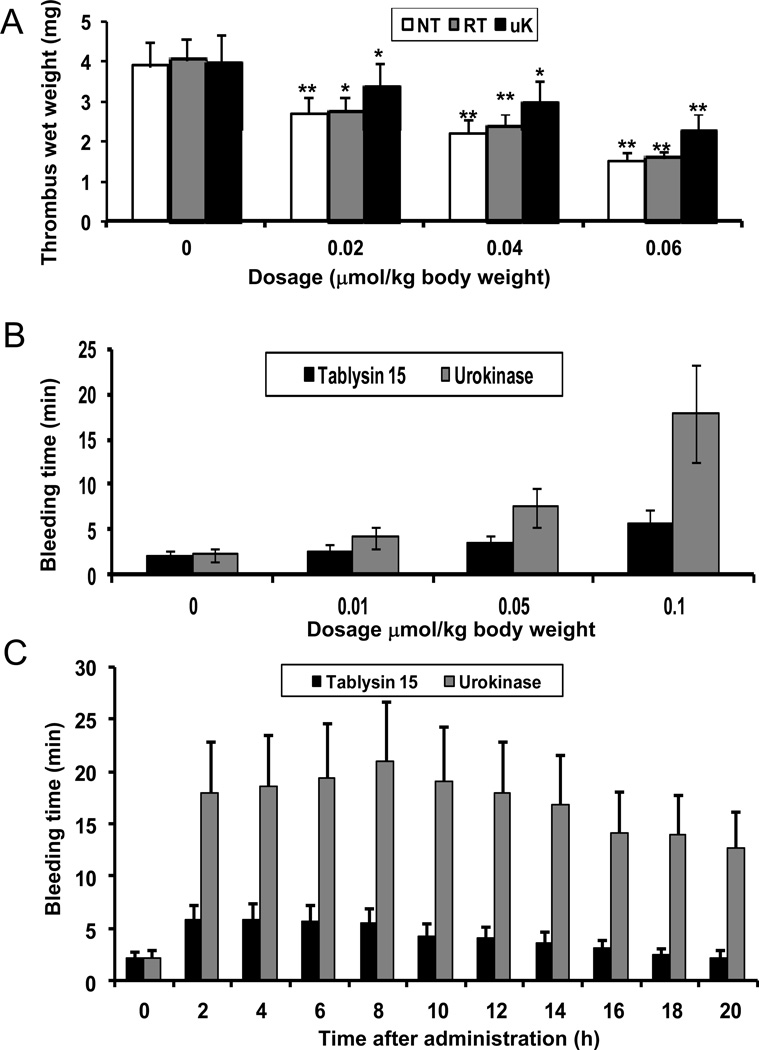
A novel family of RGD-containing molecules (Tablysin-15) has been molecularly characterised from the salivary gland of the haematophagous horsefly Tabanus yao. Tablysin-15 does not share primary sequence homology to any disintegrin discovered so far, and displays an RGD motif in the N-terminus of the molecule. It is also distinct from disintegrins from Viperidae since its mature form is not released from a metalloproteinase precursor. Tablysin-15 exhibits high affinity binding for platelet αIIbβ3 and endothelial cell αVβ3 integrins, but not for α5β1 or α2β1. Accordingly, it blocks endothelial cell adhesion to vitronectin (IC50 ~1 nM) and marginally to fibronectin (IC50 ~1 μM), but not to collagen. It also inhibits fibroblast growth factor (FGF)-induced endothelial cell proliferation, and attenuates tube formation in vitro. In platelets, Tablysin-15 inhibits aggregation induced by collagen, ADP and convulxin, and prevents static platelet adhesion to immobilised fibrinogen. In addition, solid-phase assays and flow cytometry demonstrates that αIIbβ3 binds to Tablysin-15. Moreover, immobilised Tablysin-15 supports platelet adhesion by a mechanism which was blocked by anti-integrin αIIbβ3 monoclonal antibody (e.g. abciximab) or by EDTA. Furthermore, Tablysin-15 dose-dependently attenuates thrombus formation to collagen under flow. Consistent with these findings, Tablysin-15 displays antithrombotic properties in vivo suggesting that it is a useful tool to block αIIbβ3, or as a prototype to develop antithrombotics. The RGD motif in the unique sequence of Tablysin-15 represents a novel template for studying the structure-function relationship of the disintegrin family of inhibitors.
Conflict of interest statement
Conflict-of-interest disclosure: The authors have no conflicting financial interests.
Figures
References
-
- Hood JD, Cheresh DA. Role of integrins in cell invasion and migration. Nat Rev Cancer. 2002 Feb;2(2):91–100. - PubMed
-
- Zannetti A, Del Vecchio S, Iommelli F, et al. Imaging of alpha(v)beta(3) expression by a bifunctional chimeric RGD peptide not cross-reacting with alpha(v)beta(5) Clin Cancer Res. 2009 Aug 15;15(16):5224–5233. - PubMed
-
- Markland FS. Snake venoms and the hemostatic system. Toxicon. 1998 Dec;36(12):1749–1800. - PubMed
Publication types
MeSH terms
Substances
Grants and funding
LinkOut - more resources
Full Text Sources
Other Literature Sources
