doi: 10.1371/currents.RRN1225.
Circadian Abnormalities in Motor Activity in a BAC Transgenic Mouse Model of Huntington's Disease
Affiliations
- PMID: 21479110
- PMCID: PMC3072044
- DOI: 10.1371/currents.RRN1225
Item in Clipboard
Circadian Abnormalities in Motor Activity in a BAC Transgenic Mouse Model of Huntington's Disease
PLoS Curr.
.
Abstract
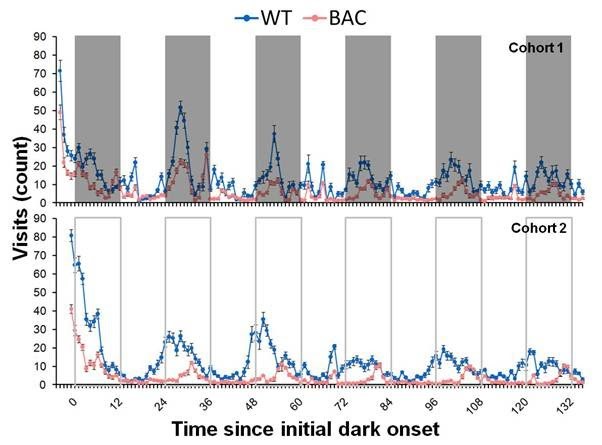
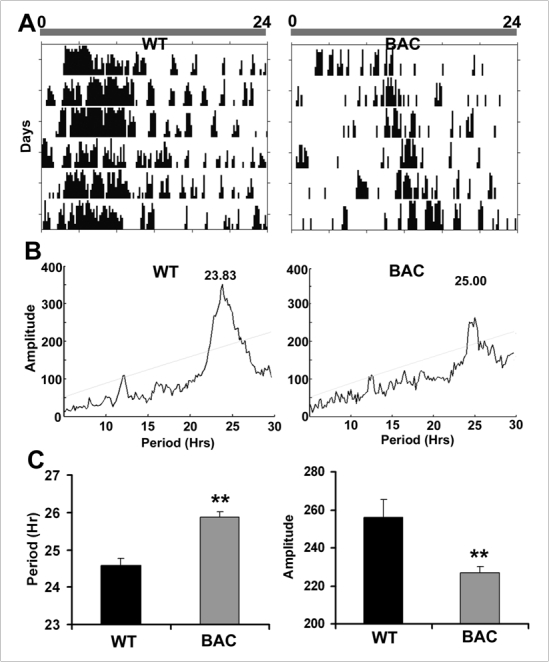
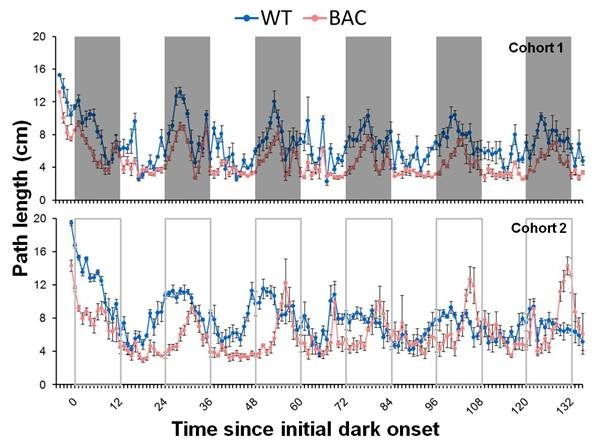
Huntington's disease (HD) is a progressive neurodegenerative disease marked by psychiatric and motor problems. Recently, these findings have been extended to deficits in sleep and circadian function that can be observed in HD patients and in HD mouse models, with abnormal sleep patterns correlating with symptom severity in patients. Here, we studied the behavior of the BAC HD mouse model using an 24/7 automated system; the results indicate significant lengthening of the circadian period in the mutant mice. These results reinforce previous findings in HD models and symptomatic HD patients, indicating that circadian dysfunction is a core feature of HD.
References
-
- Goodman AO, Barker RA (2010) How vital is sleep in Huntington's disease? J Neurol 257: 882-897 - PubMed
-
- Bode FJ, Stephan M, Wiehager S, Nguyen HP, Bjorkqvist M, et al. (2009) Increased numbers of motor activity peaks during light cycle are associated with reductions in adrenergic alpha(2)-receptor levels in a transgenic Huntington's disease rat model. Behav Brain Res 205: 175-182. - PubMed
-
- Aziz NA, Anguelova GV, Marinus J, Lammers GJ, Roos RA (2010) Sleep and circadian rhythm alterations correlate with depression and cognitive impairment in Huntington's disease. Parkinsonism Relat Disord 16: 345-350. - PubMed
-
- Wiegand M, Möller A, Schreiber W, Lauer C, Krieg J (1991) Brain morphology and sleep EEG in patients with Huntington's disease. European Archives of Psychiatry and Clinical Neuroscience 240: 148-152. - PubMed
LinkOut - more resources
Full Text Sources