


The effects of larval nutrition on reproductive performance in a food-limited adult environment
- PMID: 21479211
- PMCID: PMC3068141
- DOI: 10.1371/journal.pone.0017399
The effects of larval nutrition on reproductive performance in a food-limited adult environment
Abstract
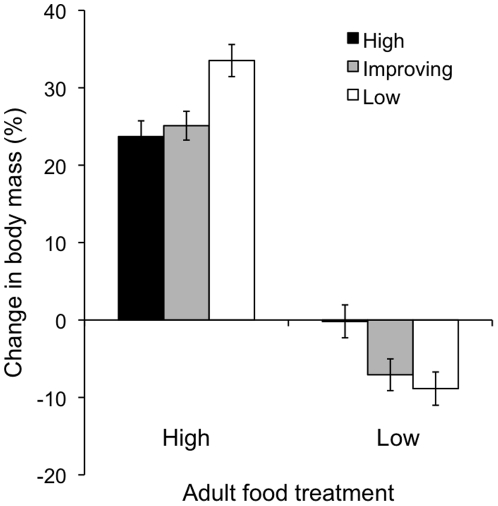
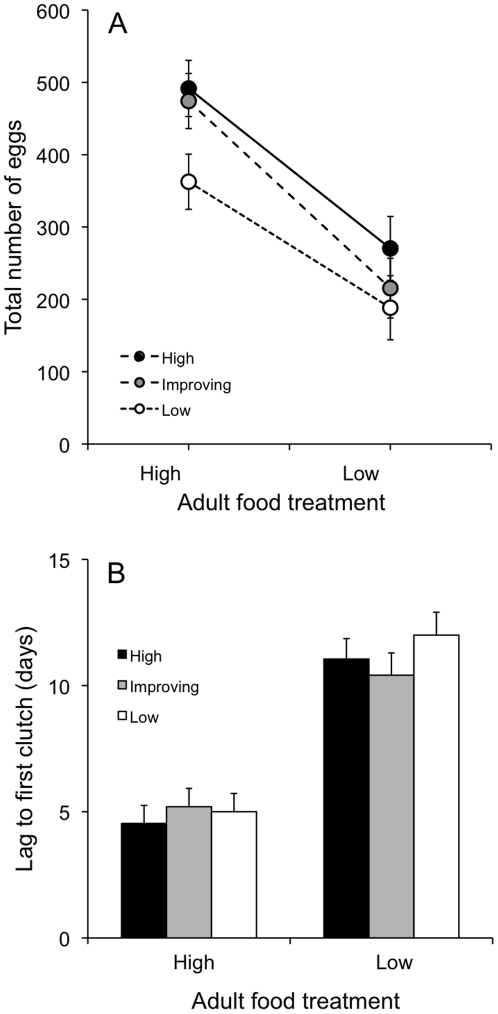
It is often assumed that larval food stress reduces lifetime fitness regardless of the conditions subsequently faced by adults. However, according to the environment-matching hypothesis, a plastic developmental response to poor nutrition results in an adult phenotype that is better adapted to restricted food conditions than one having developed in high food conditions. Such a strategy might evolve when current conditions are a reliable predictor of future conditions. To test this hypothesis, we assessed the effects of larval food conditions (low, improving and high food) on reproductive fitness in both low and high food adults environments. Contrary to this hypothesis, we found no evidence that food restriction in larval ladybird beetles produced adults that were better suited to continuing food stress. In fact, reproductive rate was invariably lower in females that were reared at low food, regardless of whether adults were well fed or food stressed. Juveniles that encountered improving conditions during the larval stage compensated for delayed growth by accelerating subsequent growth, and thus showed no evidence of a reduced reproductive rate. However, these same individuals lost more mass during the period of starvation in adults, which indicates that accelerated growth results in an increased risk of starvation during subsequent periods of food stress.
Conflict of interest statement
Figures

References
-
- Day T, Rowe L. Developmental thresholds and the evolution of reaction norms for age and size at life-history transitions. Am Nat. 2002;159:338–350. - PubMed
-
- Rowe L, Ludwig D. Size and timing of metamorphosis in complex life cycles: Time constraints and variation. Ecology. 1991;72:413–427.
-
- Honek A. Instraspecific variation in body size and fecundity in insects: a general relationship. Oikos. 1993;66:483–492.
-
- Andersson M. Princeton: Princeton University Press.; 1994. Sexual Selection.624
-
- Abrams PA, Rowe L. The effects of predation on the age and size of maturity of prey. Evolution. 1996;50:1052–1061. - PubMed
Publication types
MeSH terms
LinkOut - more resources
Full Text Sources
Medical
