


A signature of immune function genes associated with recurrence-free survival in breast cancer patients
- PMID: 21479927
- PMCID: PMC3431022
- DOI: 10.1007/s10549-011-1470-x
A signature of immune function genes associated with recurrence-free survival in breast cancer patients
Abstract
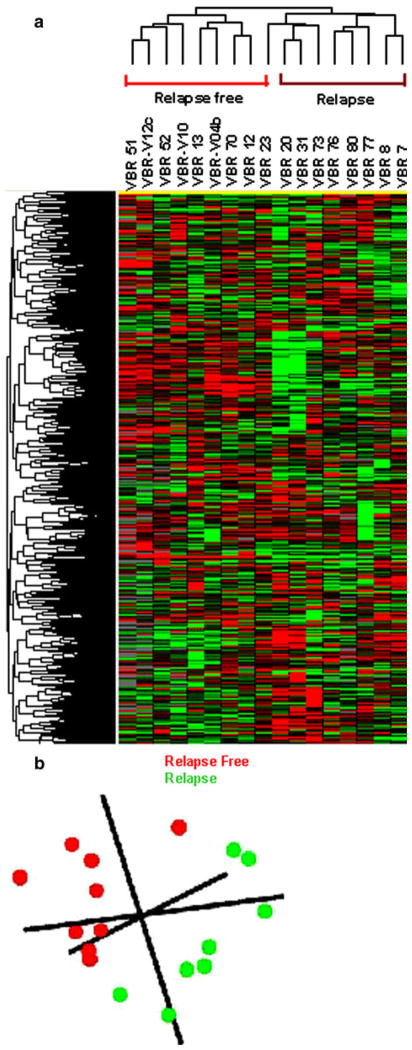
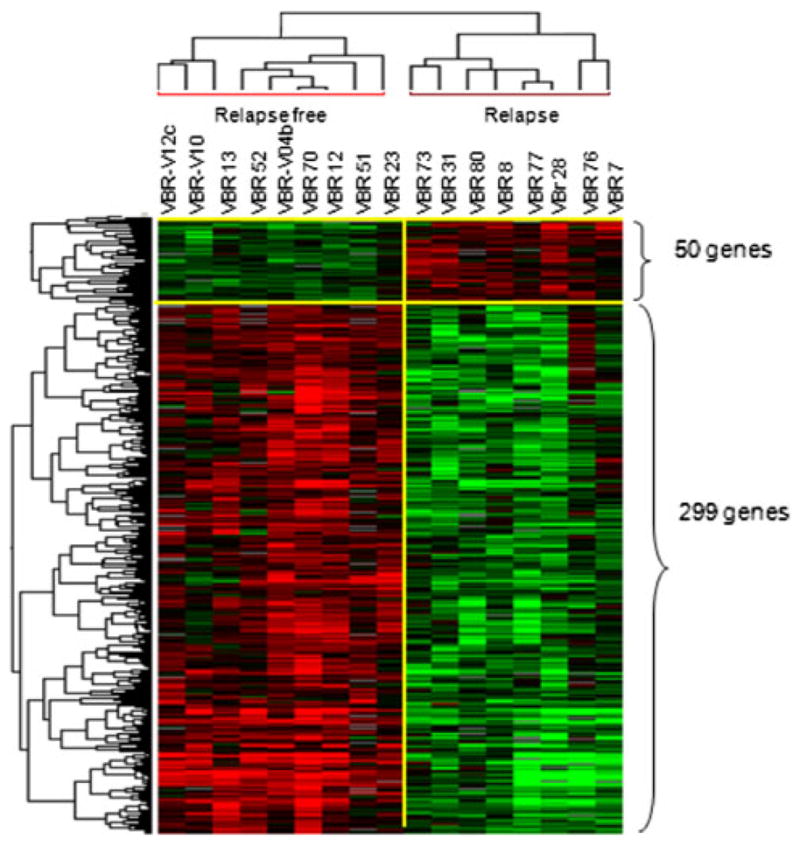
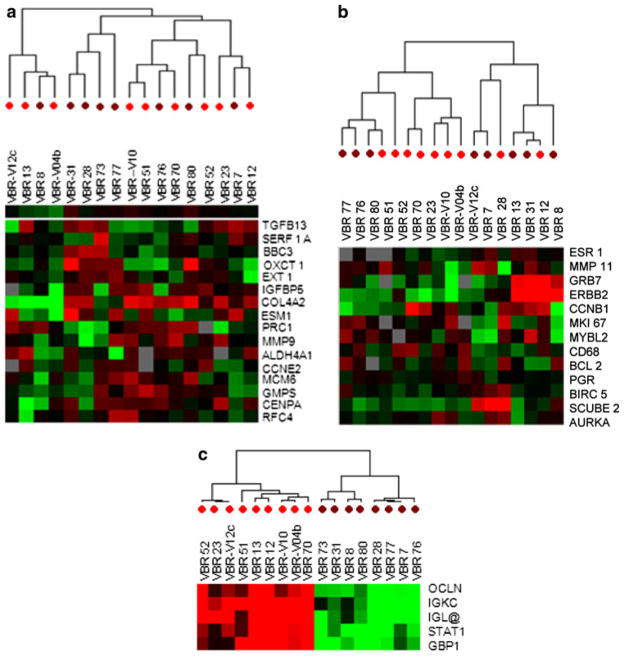
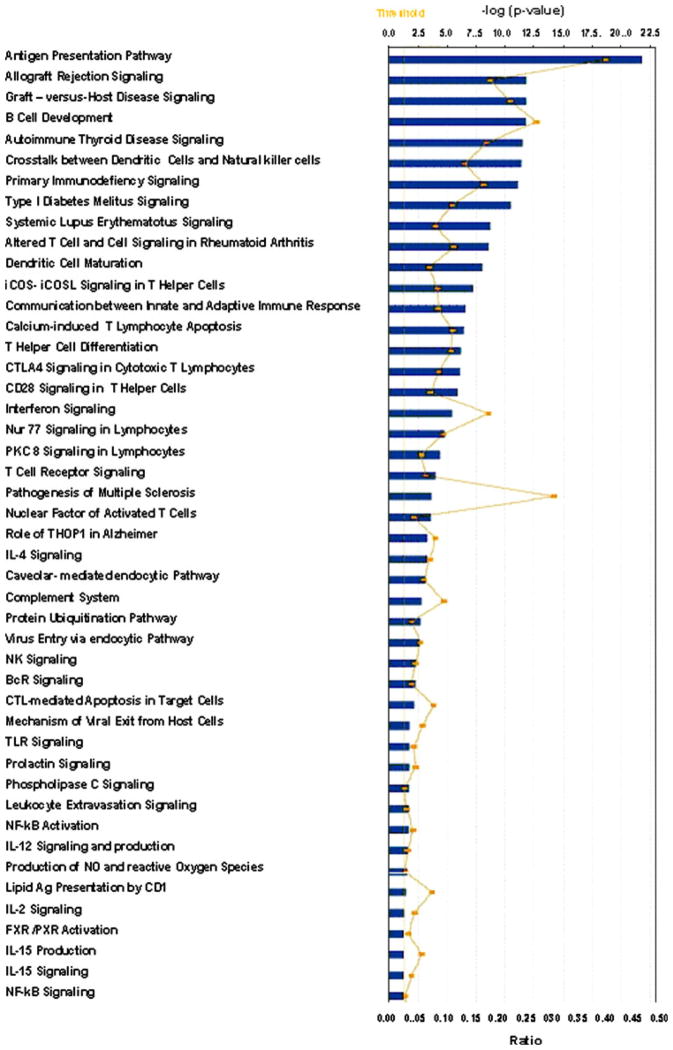
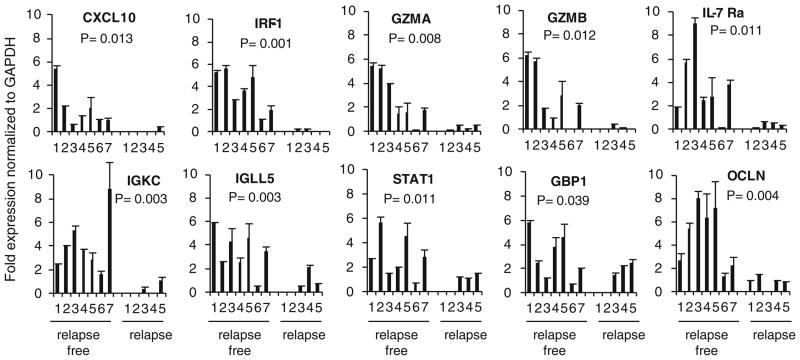
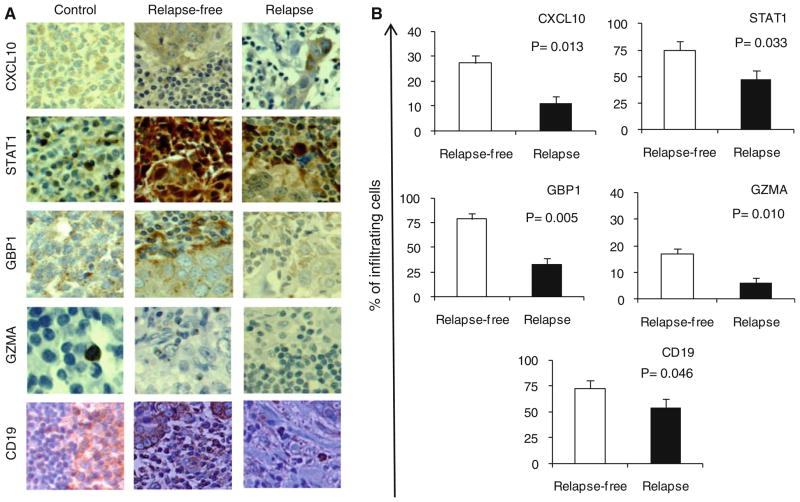
The clinical significance of tumor-infiltrating immune cells has been reported in a variety of human carcinomas including breast cancer. However, molecular signature of tumor-infiltrating immune cells and their prognostic value in breast cancer patients remain elusive. We hypothesized that a distinct network of immune function genes at the tumor site can predict a low risk versus high risk of distant relapse in breast cancer patients regardless of the status of ER, PR, or HER-2/neu in their tumors. We conducted retrospective studies in a diverse cohort of breast cancer patients with a 1-5 year tumor relapse versus those with up to 7 years relapse-free survival. The RNAs were extracted from the frozen tumor specimens at the time of diagnosis and subjected to microarray analysis and real-time RT-PCR. Paraffin-embedded tissues were also subjected to immunohistochemistry staining. We determined that a network of immune function genes involved in B cell development, interferon signaling associated with allograft rejection and autoimmune reaction, antigen presentation pathway, and cross talk between adaptive and innate immune responses were exclusively upregulated in patients with relapse-free survival. Among the 299 genes, five genes which included B cell response genes were found to predict with >85% accuracy relapse-free survival. Real-time RT-PCR confirmed the 5-gene prognostic signature that was distinct from an FDA-cleared 70-gene signature of MammaPrint panel and from the Oncotype DX recurrence score assay panel. These data suggest that neoadjuvant immunotherapy in patients with high risk of relapse may reduce tumor recurrence by inducing the immune function genes.
Figures
Comment in
-
Molecular signatures of tumor‑infiltrating immune cells are candidate prognostic biomarkers in breast cancer patients.Biomark Med. 2011 Oct;5(5):653-4. Biomark Med. 2011. PMID: 22111108 No abstract available.
References
-
- van ‘t Veer LJ, Dai H, van de Vijver MJ, He YD, Hart AA, Mao M, Peterse HL, van der Kooy K, Marton MJ, Witteveen AT, Schreiber GJ, Kerkhoven RM, Roberts C, Linsley PS, Bernards R, Friend SH. Gene expression profiling predicts clinical outcome of breast cancer. Nature. 2002;415:530–536. - PubMed
-
- van de Vijver MJ, He YD, van’t Veer LJ, Dai H, Hart AA, Voskuil DW, Schreiber GJ, Peterse JL, Roberts C, Marton MJ, Parrish M, Atsma D, Witteveen A, Glas A, Delahaye L, van der Velde T, Bartelink H, Rodenhuis S, Rutgers ET, Friend SH, Bernards R. A gene-expression signature as a predictor of survival in breast cancer. N Engl J Med. 2002;347:1999–2009. - PubMed
-
- Wang Y, Klijn JG, Zhang Y, Sieuwerts AM, Look MP, Yang F, Talantov D, Timmermans M, Meijer-van Gelder ME, Yu J, Jatkoe T, Berns EM, Atkins D, Foekens JA. Gene-expression profiles to predict distant metastasis of lymph-node-negative primary breast cancer. Lancet. 2005;365:671–679. - PubMed
-
- Sørlie T, Perou CM, Tibshirani R, Aas T, Geisler S, Johnsen H, Hastie T, Eisen MB, van de Rijn M, Jeffrey SS, Thorsen T, Quist H, Matese JC, Brown PO, Botstein D, Eystein Lønning P, Børresen-Dale AL. Gene expression patterns of breast carcinomas distinguish tumor subclasses with clinical implications. Proc Natl Acad Sci U S A. 2001;98:10869–10874. - PMC - PubMed
Publication types
MeSH terms
Substances
Grants and funding
LinkOut - more resources
Full Text Sources
Other Literature Sources
Medical
Research Materials
Miscellaneous
