


Molecular aspects of epithelial γδ T cell regulation
- PMID: 21481636
- PMCID: PMC3109268
- DOI: 10.1016/j.it.2011.03.005
Molecular aspects of epithelial γδ T cell regulation
Abstract
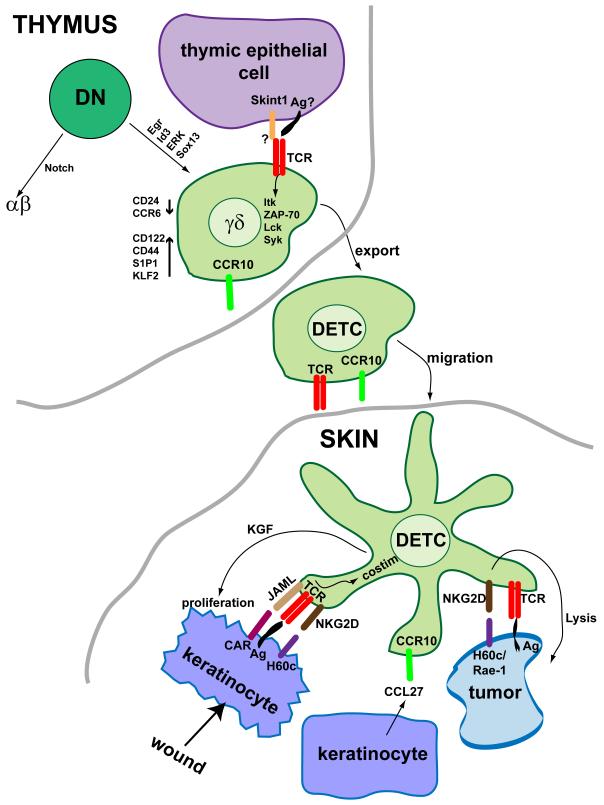
γδ T cells lie at the interface between innate and adaptive immunity, sharing features with both arms of the immune system. The vast majority of γδ T cells reside in epithelial layers of tissues such as skin, gut, lung, tongue and reproductive tract where they provide a first line of defense against environmental attack. The existence of epithelium-resident γδ T cells has been known for over 20 years but our understanding of the molecular events regulating development and function of these cells is incomplete. We review recent advances in the field, with particular emphasis on the γδ T cell population resident in mouse epidermis. These studies have enhanced our knowledge and understanding of the life cycle of this enigmatic population of cells.
Copyright © 2011 Elsevier Ltd. All rights reserved.
Figures
References
-
- Allison JP, Havran WL. The immunobiology of T cells with invariant γδ antigen receptors. Annu Rev Immunol. 1991;9:679–705. - PubMed
-
- Havran WL, et al. Epithelial cells and their neighbors. III. Interactions between intraepithelial lymphocytes and neighboring epithelial cells. Am J Physiol Gastrointest Liver Physiol. 2005;289:G627–630. - PubMed
-
- Raulet DH. The structure, function, and molecular genetics of the γ/δ T cell receptor. Annu Rev Immunol. 1989;7:175–207. - PubMed
-
- Havran WL, et al. Recognition of self antigens by skin-derived T cells with invariant γδ antigen receptors. Science. 1991;252:1430–1432. - PubMed
Publication types
MeSH terms
Substances
Grants and funding
LinkOut - more resources
Full Text Sources
