


Autism, Alzheimer disease, and fragile X: APP, FMRP, and mGluR5 are molecular links
- PMID: 21482951
- PMCID: PMC3090060
- DOI: 10.1212/WNL.0b013e3182166dc7
Autism, Alzheimer disease, and fragile X: APP, FMRP, and mGluR5 are molecular links
Abstract
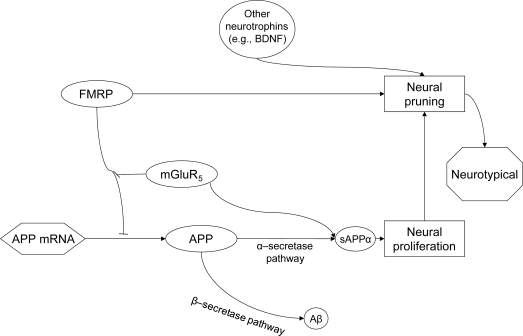
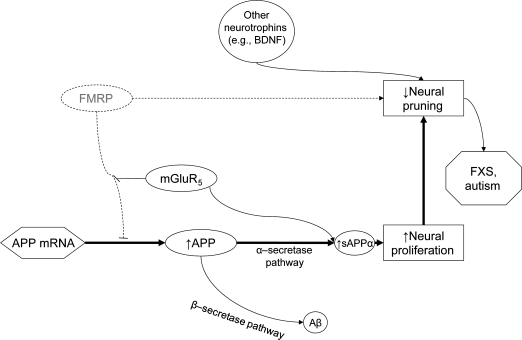
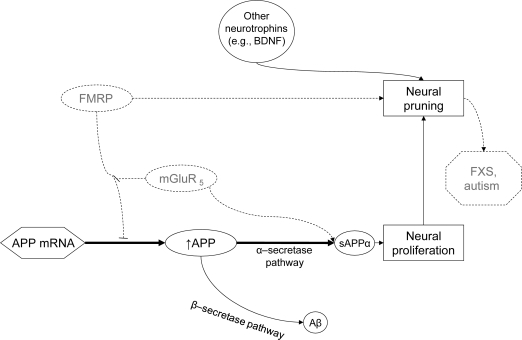
The present review highlights an association between autism, Alzheimer disease (AD), and fragile X syndrome (FXS). We propose a conceptual framework involving the amyloid-β peptide (Aβ), Aβ precursor protein (APP), and fragile X mental retardation protein (FMRP) based on experimental evidence. The anabolic (growth-promoting) effect of the secreted α form of the amyloid-β precursor protein (sAPPα) may contribute to the state of brain overgrowth implicated in autism and FXS. Our previous report demonstrated that higher plasma sAPPα levels associate with more severe symptoms of autism, including aggression. This molecular effect could contribute to intellectual disability due to repression of cell-cell adhesion, promotion of dense, long, thin dendritic spines, and the potential for disorganized brain structure as a result of disrupted neurogenesis and migration. At the molecular level, APP and FMRP are linked via the metabotropic glutamate receptor 5 (mGluR5). Specifically, mGluR5 activation releases FMRP repression of APP mRNA translation and stimulates sAPP secretion. The relatively lower sAPPα level in AD may contribute to AD symptoms that significantly contrast with those of FXS and autism. Low sAPPα and production of insoluble Aβ would favor a degenerative process, with the brain atrophy seen in AD. Treatment with mGluR antagonists may help repress APP mRNA translation and reduce secretion of sAPP in FXS and perhaps autism.
Figures
References
-
- Hagerman RJ, Leehey M, Heinrichs W, et al. Intention tremor, parkinsonism, and generalized brain atrophy in male carriers of fragile X. Neurology 2001;57:127–130 - PubMed
-
- Hagerman RJ. Lessons from fragile X regarding neurobiology, autism, and neurodegeneration. J Dev Behav Pediatr 2006;27:63–74 - PubMed
-
- Bear MF, Huber KM, Warren ST. The mGluR theory of fragile X mental retardation. Trends Neurosci 2004;27:370–377 - PubMed
-
- Chiu S, Wegelin JA, Blank J, et al. Early acceleration of head circumference in children with fragile x syndrome and autism. J Dev Behav Pediatr 2007;28:31–35 - PubMed
Publication types
MeSH terms
Substances
Grants and funding
LinkOut - more resources
Full Text Sources
Other Literature Sources
Medical
