


Validation of a clinical-radiographic score to assess the probability of pulmonary tuberculosis in suspect patients with negative sputum smears
- PMID: 21483690
- PMCID: PMC3071732
- DOI: 10.1371/journal.pone.0018486
Validation of a clinical-radiographic score to assess the probability of pulmonary tuberculosis in suspect patients with negative sputum smears
Abstract
Background: Clinical suspects of pulmonary tuberculosis in which the sputum smears are negative for acid fast bacilli represent a diagnostic challenge in resource constrained settings. Our objective was to validate an existing clinical-radiographic score that assessed the probability of smear-negative pulmonary tuberculosis (SNPT) in high incidence settings in Peru.
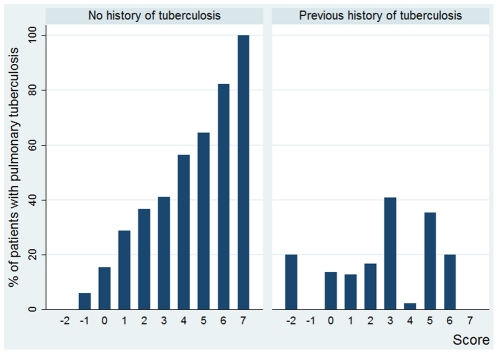
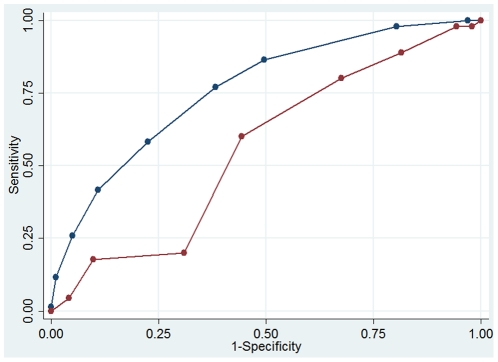
Methodology/principal findings: We included in two referral hospitals in Lima patients with clinical suspicion of pulmonary tuberculosis and two or more negative sputum smears. Using a published but not externally validated score, patients were classified as having low, intermediate or high probability of pulmonary tuberculosis. The reference standard for the diagnosis of tuberculosis was a positive sputum culture in at least one of 2 liquid (MGIT or Middlebrook 7H9) and 1 solid (Ogawa) media. Prevalence of tuberculosis was calculated in each of the three probability groups. 684 patients were included. 184 (27.8%) had a diagnosis of pulmonary tuberculosis. The score did not perform well in patients with a previous history of pulmonary tuberculosis. In patients without, the prevalence of tuberculosis was 5.1%, 31.7% and 72% in the low, intermediate and high probability group respectively. The area under de ROC curve was 0.76 (95% CI 0.72-0.80) and scores ≥6 had a positive LR of 10.9.
Conclusions/significance: In smear negative suspects without previous history of tuberculosis, the clinical-radiographic score can be used as a tool to assess the probability of pulmonary tuberculosis and to guide the decision to initiate or defer treatment or to requesting additional tests.
Conflict of interest statement
Figures
References
-
- Siddiqi K, Lambert ML, Walley J. Clinical diagnosis of smear-negative pulmonary tuberculosis in low-income countries: the current evidence. Lancet Infect Dis. 2003;3:288–296. - PubMed
-
- Gilpin C, Kim SJ, Lumb R, Rieder HL, Van Deun A. Critical appraisal of current recommendations and practices for tuberculosis sputum smear microscopy. Int J Tuberc Lung Dis. 2007;11:946–952. - PubMed
-
- Palomino JC, Cardoso S, Ritacco V. Tuberculosis 2007: from basic science to patient care. 2007;5 Available: http://www.tuberculosistextbook.com/tuberculosis2007.pdf. Accessed 2010 Jan.
-
- Samb B, Sow PS, Kony S, Maynart-Badiane M, Diouf G et al. Risk factors for negative sputum acid-fast bacilli smears in pulmonary tuberculosis: results from Dakar, Senegal, a city with low HIV seroprevalence. Int J Tuberc Lung Dis. 1999;3:330–336. - PubMed
-
- World Health Organization. Improving the diagnosis and treatment of smear-negative pulmonary and extrapulmonary tuberculosis among adults and adolescents: recommendations for HIV-prevalent and resource-constrained settings. 2007;20 Available: http://whqlibdoc.who.int/hq/2007/WHO_HTM_TB_2007.379_eng.pdf. Accessed: 2010 Nov.
Publication types
MeSH terms
LinkOut - more resources
Full Text Sources
