


The effect of induced anxiety on cognition: threat of shock enhances aversive processing in healthy individuals
- PMID: 21484411
- PMCID: PMC3169349
- DOI: 10.3758/s13415-011-0030-5
The effect of induced anxiety on cognition: threat of shock enhances aversive processing in healthy individuals
Abstract
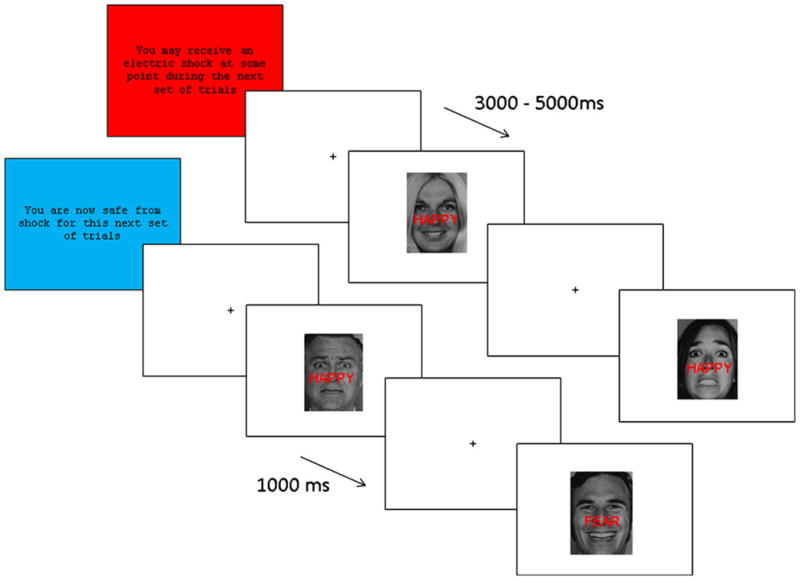
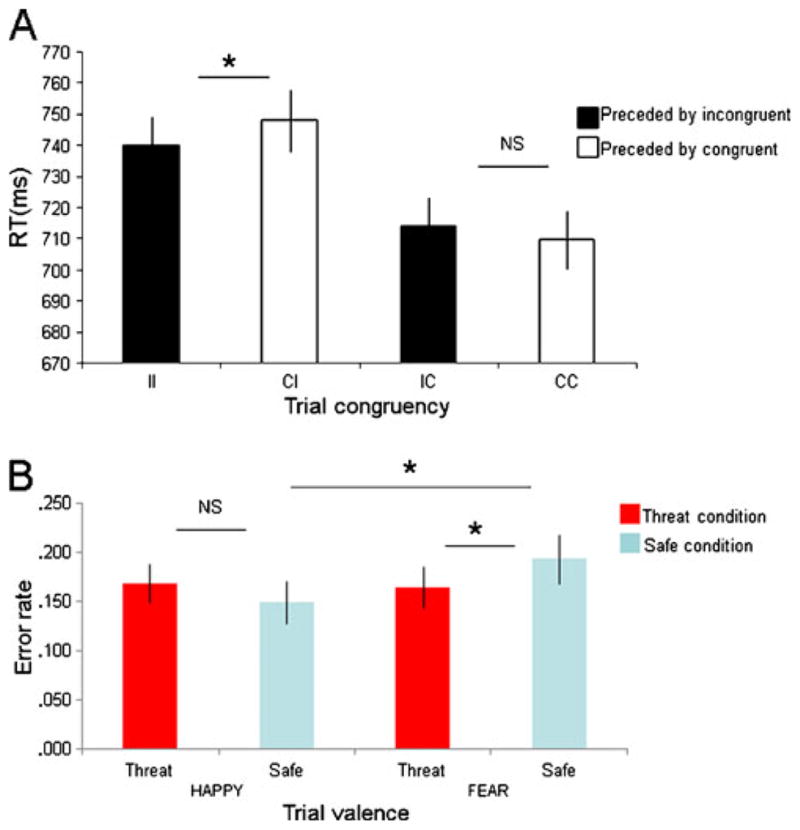
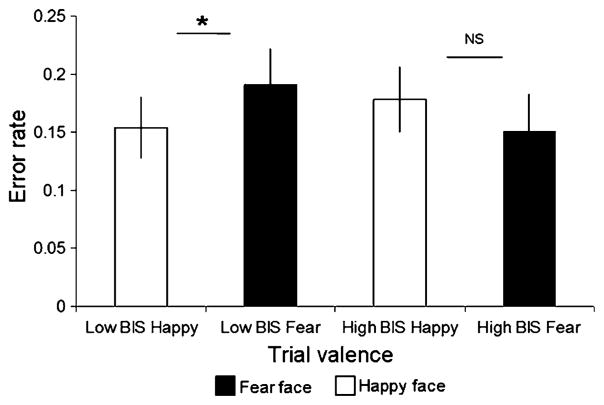
Individuals with anxiety disorders demonstrate altered cognitive performance including (1) cognitive biases towards negative stimuli (affective biases) and (2) increased cognitive rigidity (e.g., impaired conflict adaptation) on affective Stroop tasks. Threat of electric shock is frequently used to induce anxiety in healthy individuals, but the extent to which this manipulation mimics the cognitive impairment seen in anxiety disorders is unclear. In this study, 31 healthy individuals completed an affective Stroop task under safe and threat-of-shock conditions. We showed that threat (1) enhanced aversive processing and abolished a positive affective bias but (2) had no effect on conflict adaptation. Threat of shock thus partially models the effects of anxiety disorders on affective Stroop tasks. We suggest that the affective state of anxiety-which is common to both threat and anxiety disorders-modulates the neural inhibition of subcortical aversive processing, whilst pathologies unique to anxiety disorders modulate conflict adaptation.
Figures
References
-
- Alloy LB, Abramson LY. Judgment of contingency in depressed and nondepressed students: Sadder but wiser? Journal of Experimental Psychology General. 1979;108:441–485. - PubMed
-
- Altemus M. Sex differences in depression and anxiety disorders: Potential biological determinants. Hormones and Behavior. 2006;50:534–538. - PubMed
-
- Amodio DM, Master SL, Yee CM, Taylor SE. Neurocognitive components of the behavioral inhibition and activation systems: Implications for theories of self-regulation. Psychophysiology. 2008;45:11–19. - PubMed
-
- Barrós-Loscertales A, Meseguer V, Sanjuán A, Belloch V, Parcet MA, Torrubia R, et al. Behavioral inhibition system activity is associated with increased amygdala and hippocampal gray matter volume: A voxel-based morphometry study. Neuroimage. 2006;33:1011–1015. - PubMed
-
- Beck JG, Barlow DH, Sakheim DK, Abrahamson DJ. Shock threat and sexual arousal: The role of selective attention, thought content, and affective states. Psychophysiology. 1987;24:165–172. - PubMed
MeSH terms
Grants and funding
LinkOut - more resources
Full Text Sources
Medical
