


Drug wanting: behavioral sensitization and relapse to drug-seeking behavior
- PMID: 21490129
- PMCID: PMC3082449
- DOI: 10.1124/pr.109.001933
Drug wanting: behavioral sensitization and relapse to drug-seeking behavior
Abstract
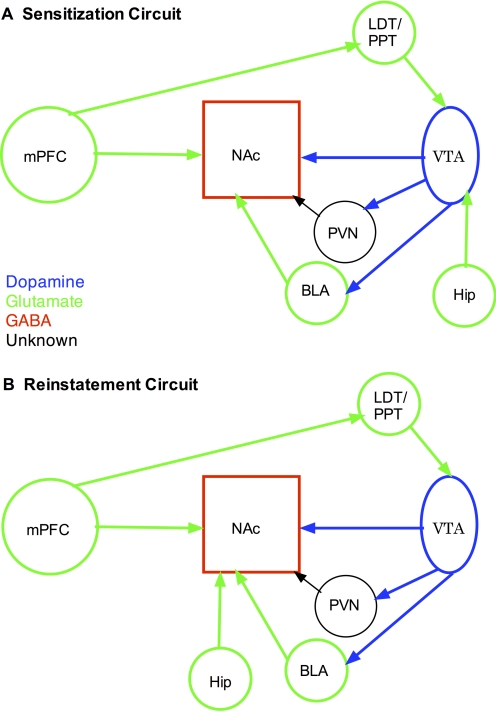
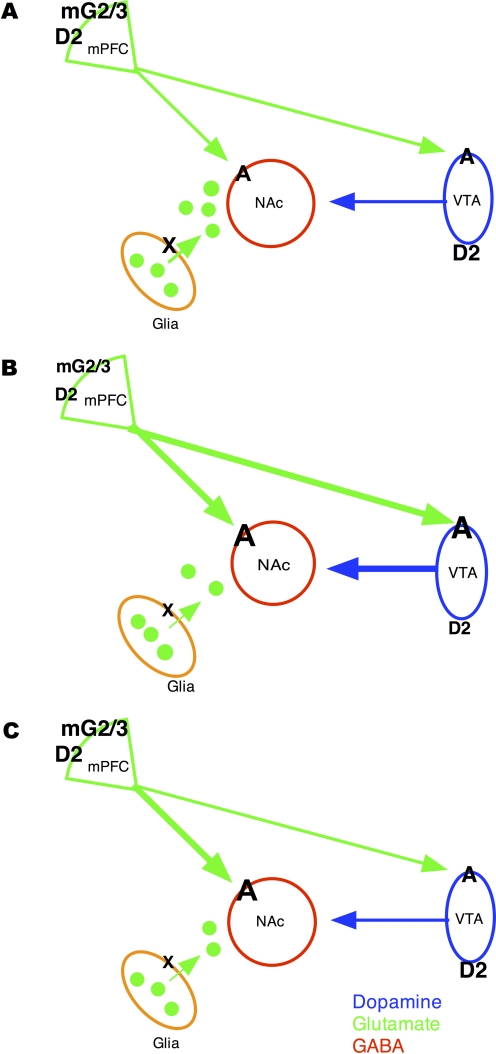
Repeated exposure to drugs of abuse enhances the motor-stimulant response to these drugs, a phenomenon termed behavioral sensitization. Animals that are extinguished from self-administration training readily relapse to drug, conditioned cue, or stress priming. The involvement of sensitization in reinstated drug-seeking behavior remains controversial. This review describes sensitization and reinstated drug seeking as behavioral events, and the neural circuitry, neurochemistry, and neuropharmacology underlying both behavioral models will be described, compared, and contrasted. It seems that although sensitization and reinstatement involve overlapping circuitry and neurotransmitter and receptor systems, the role of sensitization in reinstatement remains ill-defined. Nevertheless, it is argued that sensitization remains a useful model for determining the neural basis of addiction, and an example is provided in which data from sensitization studies led to potential pharmacotherapies that have been tested in animal models of relapse and in human addicts.
Figures
References
-
- Ahmed SH, Cador M. (2006) Dissociation of psychomotor sensitization from compulsive cocaine consumption. Neuropsychopharmacology 31:563–571 - PubMed
-
- Ahmed SH, Walker JR, Koob GF. (2000) Persistent increase in the motivation to take heroin in rats with a history of drug escalation. Neuropsychopharmacology 22:413–421 - PubMed
-
- Aked J, Coizet V, Clark D, Overton PG. (2005) Local injection of a glutamate uptake inhibitor into the ventral tegmental area produces sensitization to the behavioural effects of d-amphetamine. Neuroscience 134:361–367 - PubMed
-
- Alleweireldt AT, Hobbs RJ, Taylor AR, Neisewander JL. (2006) Effects of SCH-23390 infused into the amygdala or adjacent cortex and basal ganglia on cocaine seeking and self-administration in rats. Neuropsychopharmacology 31:363–374 - PubMed
-
- Altman J, Everitt BJ, Glautier S, Markou A, Nutt D, Oretti R, Phillips GD, Robbins TW. (1996) The biological, social and clinical bases of drug addiction: commentary and debate. Psychopharmacology (Berl) 125:285–345 - PubMed
Publication types
MeSH terms
Grants and funding
LinkOut - more resources
Full Text Sources
Other Literature Sources
Medical
