


Priapism in sickle cell anemia: emerging mechanistic understanding and better preventative strategies
- PMID: 21490762
- PMCID: PMC3066554
- DOI: 10.1155/2011/297364
Priapism in sickle cell anemia: emerging mechanistic understanding and better preventative strategies
Abstract
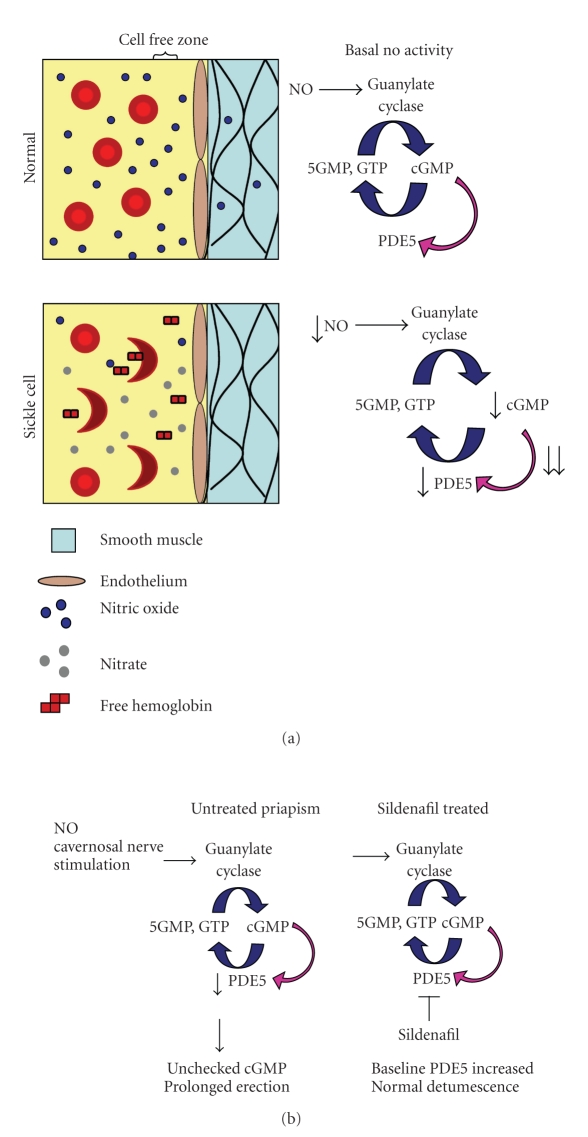
Sickle cell anemia is a common and disabling disorder profoundly affecting mortality as well as quality of life. Up to 35% of men with sickle cell disease are affected by painful, prolonged erections termed ischemic priapism. A priapic episode may result in fibrosis and permanent erectile dysfunction. The severity of sickle cell disease manifestations is variable dependent on a number of contributing genetic factors; however, priapism tends to cluster with other severe vascular complications including pulmonary hypertension, leg ulceration, and overall risk of death. The mechanisms underlying priapism in sickle cell disease have begun to be elucidated including hemolysis-mediated dysregulation of the nitric oxide signaling pathway and dysregulation of adenosine-mediated vasodilation. A better understanding of these mechanisms is leading toward novel preventative strategies. This paper will focus on the mechanisms underlying development of ischemic priapism in sickle cell disease, current acute and preventative treatment strategies, and future directions for improved management of this disorder.
Figures
References
-
- Motulsky AG. Frequency of sickling disorders in U.S. blacks. New England Journal of Medicine. 1973;288(1):31–33. - PubMed
-
- Orkin SH, Higgs DR. Sickle cell disease at 100 years. Science. 2010;329(5989):291–292. - PubMed
-
- Kumar V, Abbas AK, Fausto N, Aster J. Robbins and Cotran Pathologic Basis of Disease. Philadelphia, Pa, USA: Saunders; 2004.
-
- Bennett N, Mulhall J. Sickle cell disease status and outcomes of African-American men presenting with priapism. Journal of Sexual Medicine. 2008;5(5):1244–1250. - PubMed
-
- Adeyoju AB, Olujohungbe ABK, Morris J, et al. Priapism in sickle-cell disease; incidence, risk factors and complications—an international multicentre study. British Journal of Urology International. 2002;90(9):898–902. - PubMed
LinkOut - more resources
Full Text Sources
