


Protease Inhibitor Resistance Is Uncommon in HIV-1 Subtype C Infected Patients on Failing Second-Line Lopinavir/r-Containing Antiretroviral Therapy in South Africa
- PMID: 21490784
- PMCID: PMC3066558
- DOI: 10.1155/2011/769627
Protease Inhibitor Resistance Is Uncommon in HIV-1 Subtype C Infected Patients on Failing Second-Line Lopinavir/r-Containing Antiretroviral Therapy in South Africa
Abstract
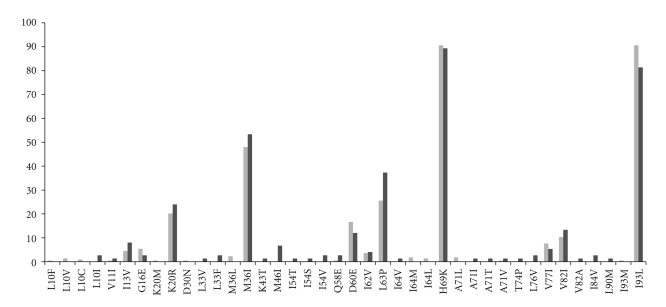
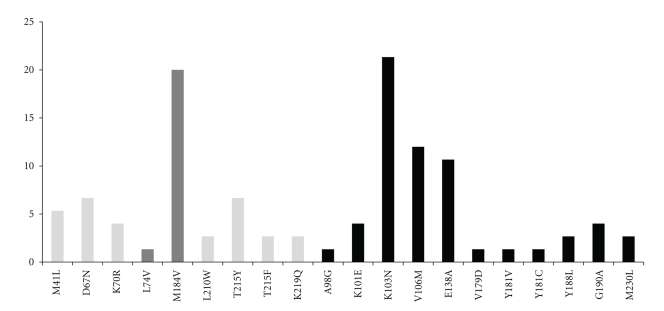
Limited data exist on HIV-1 drug resistance patterns in South Africa following second-line protease-inhibitor containing regimen failure. This study examined drug resistance patterns emerging in 75 HIV-1 infected adults experiencing virologic failure on a second-line regimen containing 2 NRTI and lopinavir/ritonavir. Ninety six percent of patients (n = 72) were infected with HIV-1 subtype C, two patients were infected with HIV-1 subtype D and one with HIV-1 subtype A1. Thirty nine percent (n = 29) of patients had no resistance mutations in protease or reverse transcriptase suggesting that medication non-adherence was a major factor contributing to failure. Major lopinavir resistance mutations were infrequent (5 of 75; 7%), indicating that drug resistance is not the main barrier to future viral suppression.
Figures
References
-
- Wallis CL, Mellors JW, Venter WDF, Sanne I, Stevens W. Varied HIV drug resistance patterns among patients on failing antiretroviral therapy in the South African national roll-out programme. Journal of Acquired Immune Deficiency Syndromes. 2010;53(4):480–484. - PubMed
-
- Masquelier B, Breilh D, Neau D, et al. Human immunodeficiency virus type 1 genotypic and pharmacokinetic determinants of the virological response to lopinavir-ritonavir-containing therapy in protease inhibitor-experienced patients. Antimicrobial Agents and Chemotherapy. 2002;46(9):2926–2932. - PMC - PubMed
Grants and funding
LinkOut - more resources
Full Text Sources
