Overnight closed loop insulin delivery (artificial pancreas) in adults with type 1 diabetes: crossover randomised controlled studies
- PMID: 21493665
- PMCID: PMC3077739
- DOI: 10.1136/bmj.d1855
Overnight closed loop insulin delivery (artificial pancreas) in adults with type 1 diabetes: crossover randomised controlled studies
Abstract
Objective: To compare the safety and efficacy of overnight closed loop delivery of insulin (artificial pancreas) with conventional insulin pump therapy in adults with type 1 diabetes.
Design: Two sequential, open label, randomised controlled crossover, single centre studies.
Setting: Clinical research facility.
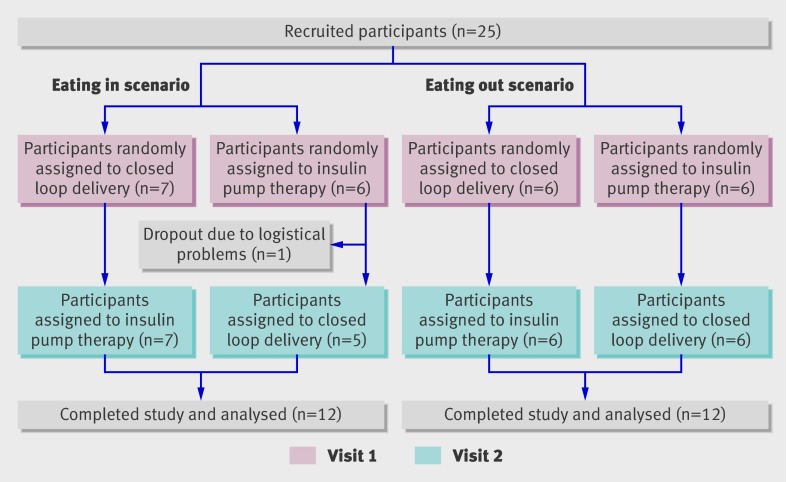
Participants: 24 adults (10 men, 14 women) with type 1 diabetes, aged 18-65, who had used insulin pump therapy for at least three months: 12 were tested after consuming a medium sized meal and the other 12 after consuming a larger meal accompanied by alcohol.
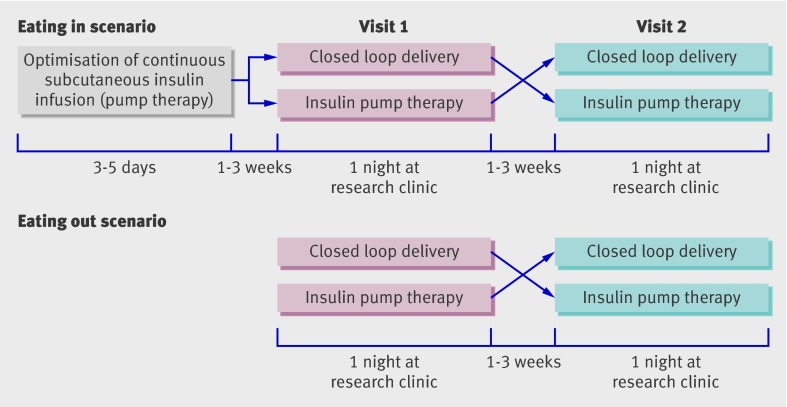
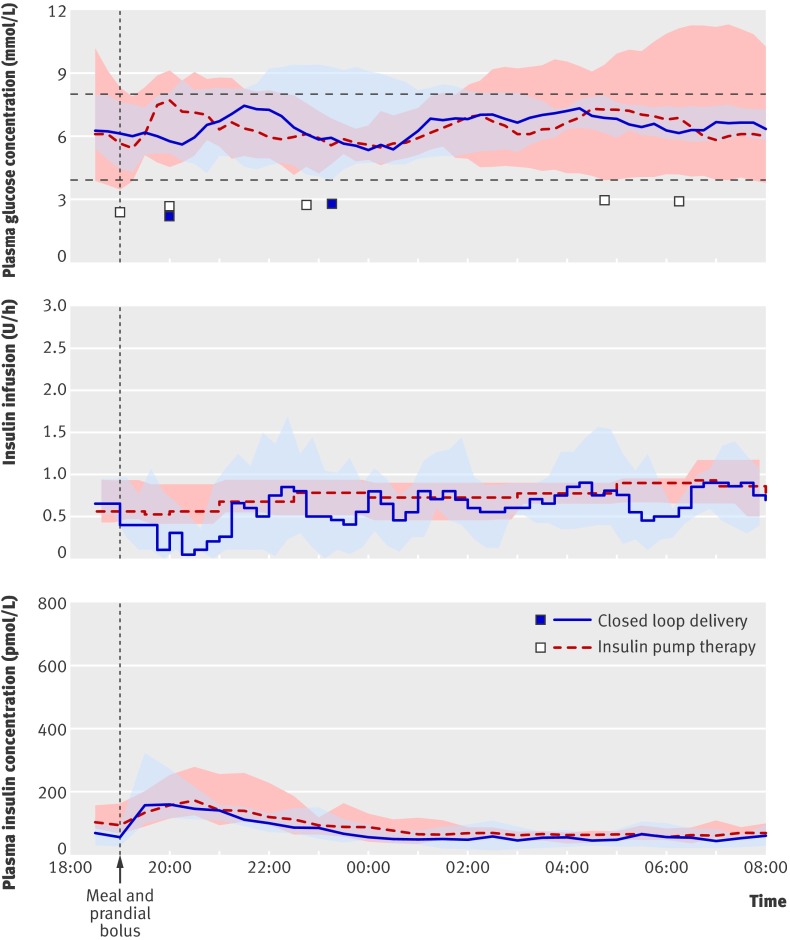
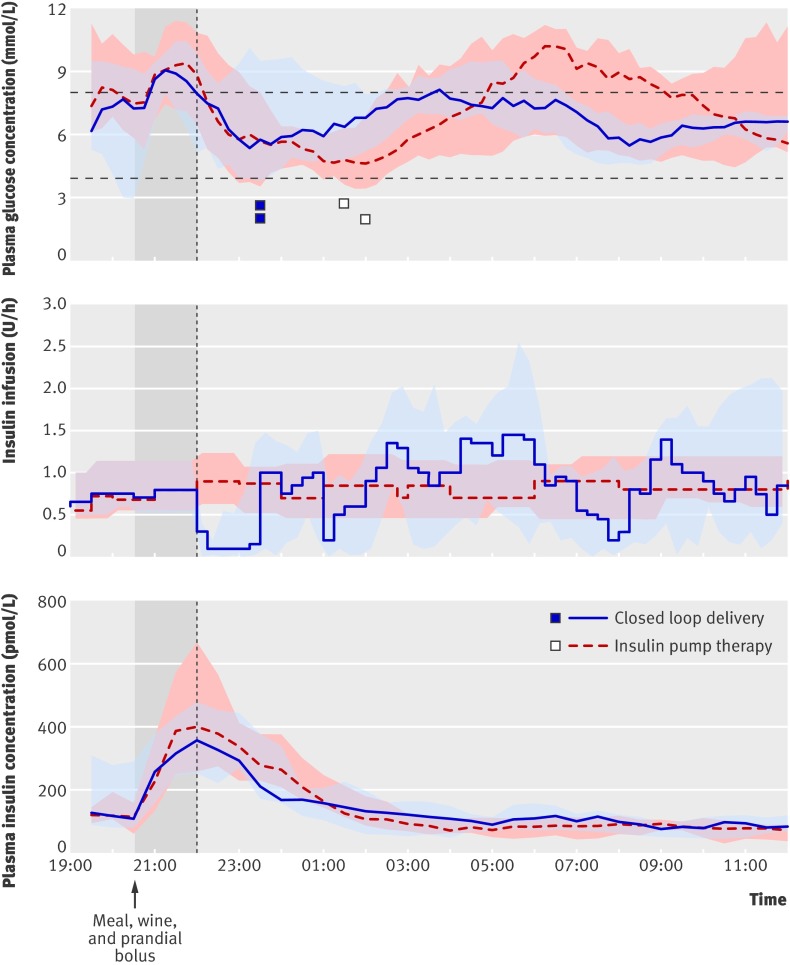
Intervention: During overnight closed loop delivery, sensor measurements of glucose were fed into a computer algorithm, which advised on insulin pump infusion rates at 15 minute intervals. During control nights, conventional insulin pump settings were applied. One study compared closed loop delivery of insulin with conventional pump therapy after a medium sized evening meal (60 g of carbohydrates) at 1900, depicting the scenario of "eating in." The other study was carried out after a later large evening meal (100 g of carbohydrates) at 2030, accompanied by white wine (0.75 g/kg ethanol) and depicted the scenario of "eating out."
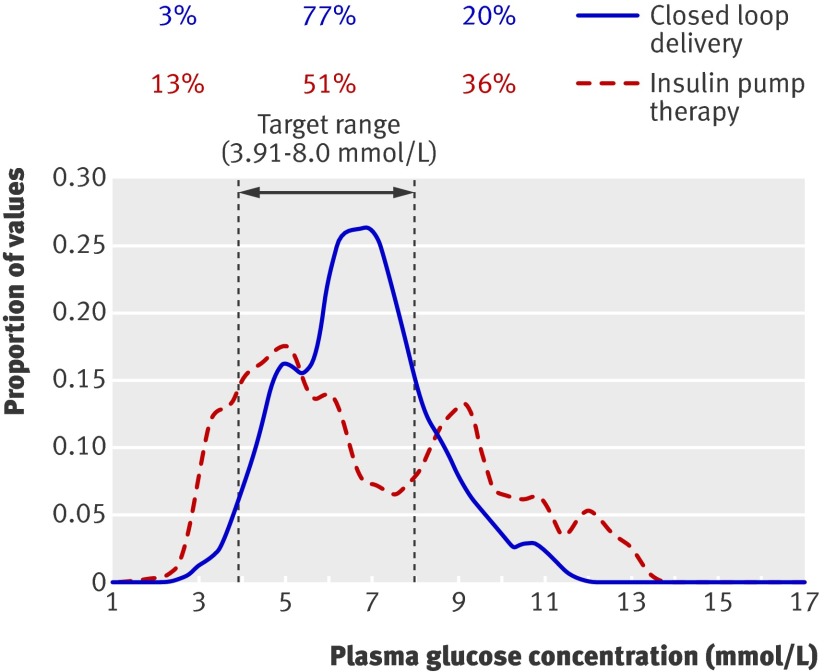
Main outcome measures: The primary outcome was the time plasma glucose levels were in target (3.91-8.0 mmol/L) during closed loop delivery and a comparable control period. Secondary outcomes included pooled data analysis and time plasma glucose levels were below target (≤ 3.9 mmol/L).
Results: For the eating in scenario, overnight closed loop delivery of insulin increased the time plasma glucose levels were in target by a median 15% (interquartile range 3-35%), P = 0.002. For the eating out scenario, closed loop delivery increased the time plasma glucose levels were in target by a median 28% (2-39%), P = 0.01. Analysis of pooled data showed that the overall time plasma glucose was in target increased by a median 22% (3-37%) with closed loop delivery (P < 0.001). Closed loop delivery reduced overnight time spent hypoglycaemic (plasma glucose ≤ 3.9 mmol/L) by a median 3% (0-20%), P=0.04, and eliminated plasma glucose concentrations below 3.0 mmol/L after midnight.
Conclusion: These two small crossover trials suggest that closed loop delivery of insulin may improve overnight control of glucose levels and reduce the risk of nocturnal hypoglycaemia in adults with type 1 diabetes. Trial registration ClinicalTrials.gov NCT00910767 and NCT00944619.
Conflict of interest statement
Competing interests: All authors have completed the Unified Competing Interest form at
Figures
Comment in
-
Closed loop control for type 1 diabetes.BMJ. 2011 Apr 13;342:d1911. doi: 10.1136/bmj.d1911. BMJ. 2011. PMID: 21493666 Free PMC article.
References
-
- World Health Organization. Prevention of diabetes mellitus. Report of a WHO study group. WHO, 1994. - PubMed
-
- Shaw JE, Sicree RA, Zimmet PZ. Global estimates of the prevalence of diabetes for 2010 and 2030. Diabetes Res Clin Pract 2010;87:4-14. - PubMed
-
- Onkamo P, Vaananen S, Karvonen M, Tuomilehto J. Worldwide increase in incidence of type 1 diabetes—the analysis of the data on published incidence trends. Diabetologia 1999;42:1395-403. - PubMed
-
- Diabetic Control and Complications Trial Research Group. The effect of intensive treatment of diabetes on the development and progression of long term complications in insulin-dependent diabetes mellitus. N Engl J Med 1993;329:977-86. - PubMed
Publication types
MeSH terms
Substances
Associated data
Grants and funding
LinkOut - more resources
Full Text Sources
Other Literature Sources
Medical