Pituitary stem cell update and potential implications for treating hypopituitarism
- PMID: 21493869
- PMCID: PMC3369576
- DOI: 10.1210/er.2010-0011
Pituitary stem cell update and potential implications for treating hypopituitarism
Abstract
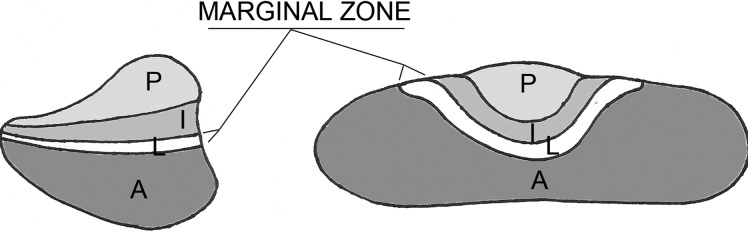
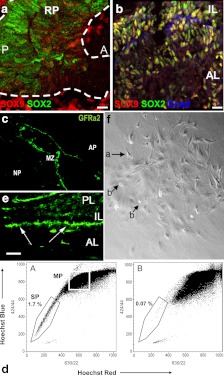
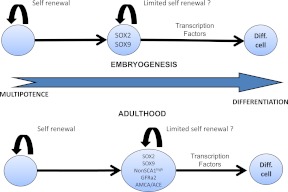
Stem cells have been identified in organs with both low and high cell turnover rates. They are characterized by the expression of key marker genes for undifferentiated cells, the ability to self-renew, and the ability to regenerate tissue after cell loss. Several recent reports present evidence for the presence of pituitary stem cells. Here we offer a critical review of the field and suggest additional studies that could resolve points of debate. Recent reports have relied on different markers, including SOX2, nestin, GFRa2, and SCA1, to identify pituitary stem cells and progenitors. Future studies will be needed to resolve the relationships between cells expressing these markers. Members of the Sox family of transcription factors are likely involved in the earliest steps of pituitary stem cell proliferation and the earliest transitions to differentiation. The transcription factor PROP1 and the NOTCH signaling pathway may regulate the transition to differentiation. Identification of the stem cell niche is an important step in understanding organ development. The niche may be the marginal zone around the lumen of Rathke's pouch, between the anterior and intermediate lobes of mouse pituitary, because cells in this region apparently give birth to all six pituitary hormone cell lineages. Stem cells have been shown to play a role in recurrent malignancies in some tissues, and their role in pituitary hyperplasia, pituitary adenomas, and tumors is an important area for future investigation. From a therapeutic viewpoint, the ability to cultivate and grow stem cells in a pituitary predifferentiation state might also be helpful for the long-term treatment of pituitary deficiencies.
Figures
References
-
- Murry CE, Keller G. 2008. Differentiation of embryonic stem cells to clinically relevant populations: lessons from embryonic development. Cell 132:661–680 - PubMed
-
- Yoshimura F, Harumiya K, Ishikawa H, Otsuka Y. 1969. Differentiation of isolated chromophobes into acidophils or basophils when transplanted into the hypophysiotrophic area of hypothalamus. Endocrinol Jpn 16:531–540 - PubMed
-
- Chen J, Hersmus N, Van Duppen V, Caesens P, Denef C, Vankelecom H. 2005. The adult pituitary contains a cell population displaying stem/progenitor cell and early embryonic characteristics. Endocrinology 146:3985–3998 - PubMed
-
- Vidal S, Horvath E, Kovacs K, Cohen SM, Lloyd RV, Scheithauer BW. 2000. Transdifferentiation of somatotrophs to thyrotrophs in the pituitary of patients with protracted primary hypothyroidism. Virchows Arch 436:43–51 - PubMed
-
- Thodou E, Asa SL, Kontogeorgos G, Kovacs K, Horvath E, Ezzat S. 1995. Clinical case seminar: lymphocytic hypophysitis: clinicopathological findings. J Clin Endocrinol Metab 80:2302–2311 - PubMed
Publication types
MeSH terms
Grants and funding
LinkOut - more resources
Full Text Sources
Miscellaneous