


Establishment and characterization of Prnp knockdown neuroblastoma cells using dual microRNA-mediated RNA interference
- PMID: 21494092
- PMCID: PMC3166508
- DOI: 10.4161/pri.5.2.15621
Establishment and characterization of Prnp knockdown neuroblastoma cells using dual microRNA-mediated RNA interference
Abstract
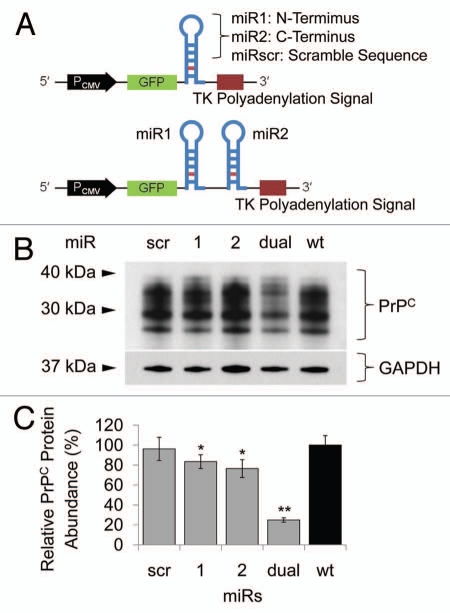
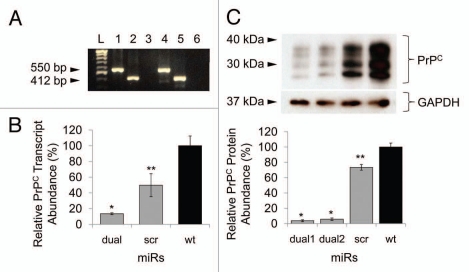
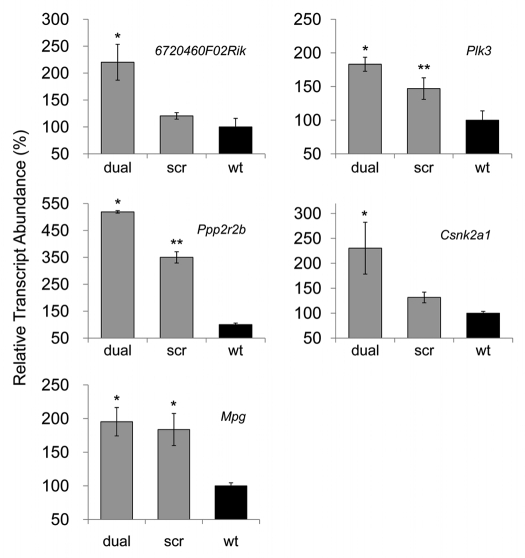
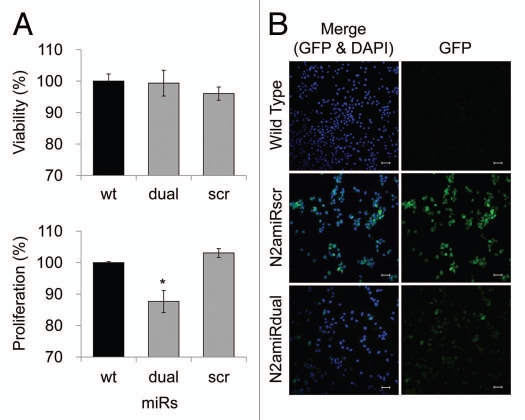
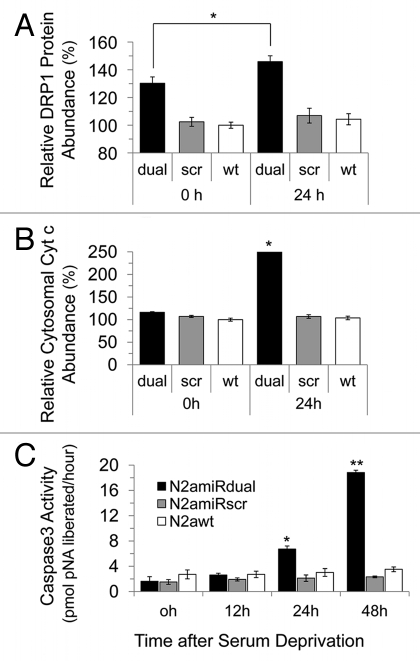
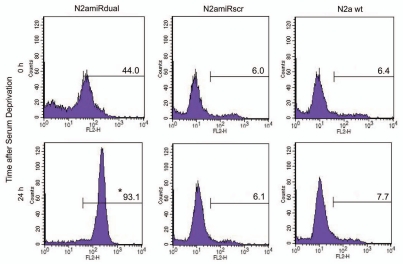
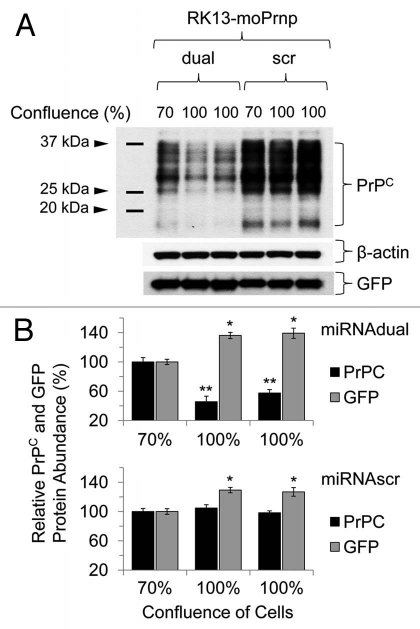
Prion diseases are fatal transmissible neurodegenerative disorders. In the pathogenesis of the disease, the cellular prion protein (PrPC) is required for replication of abnormal prion (PrPSc), which results in accumulation of PrPSc. Although there have been extensive studies using Prnp knockout systems, the normal function of PrPC remains ambiguous. Compared with conventional germline knockout technologies and transient naked siRNA-dependent knockdown systems, newly constructed durable chained-miRNA could provide a cell culture model that is closer to the disease status and easier to achieve with no detrimental sequelae. The selective silencing of a target gene by RNA interference (RNAi) is a powerful approach to investigate the unknown function of genes in vitro and in vivo. To reduce PrPC expression, a novel dual targeting-microRNA (miRdual) was constructed. The miRdual, which targets N- and C- termini of Prnp simultaneously, more effectively suppressed PrPC expression compared with conventional single site targeting. Furthermore, to investigate the cellular change following PrPC depletion, gene expression analysis of PrPC interacting and/or associating genes and several assays including proliferation, viability and apoptosis were performed. The transcripts 670460F02Rik and Plk3, Ppp2r2b and Csnk2a1 increase in abundance and are reported to be involved in cell proliferation and mitochondrial-mediated apoptosis. Dual-targeting RNAi with miRdual against Prnp will be useful for analyzing the physiological function of PrPC in neuronal cell lines and may provide a potential therapeutic intervention for prion diseases in the future.
Figures
References
-
- Basler K, Oesch B, Scott M, Westaway D, Walchli M, Groth DF, et al. Scrapie and cellular PrP isoforms are encoded by the same chromosomal gene. Cell. 1986;46:417–428. - PubMed
-
- Trevitt CR, Collinge J. A systematic review of prion therapeutics in experimental models. Brain. 2006;129:2241–2265. - PubMed
-
- Nuvolone M, Aguzzi A, Heikenwalder M. Cells and prions: a license to replicate. FEBS Lett. 2009;583:2674–2684. - PubMed
Publication types
MeSH terms
Substances
LinkOut - more resources
Full Text Sources
Other Literature Sources
Medical
