


Coronary artery abnormalities in Hyper-IgE syndrome
- PMID: 21494893
- PMCID: PMC4091041
- DOI: 10.1007/s10875-011-9515-9
Coronary artery abnormalities in Hyper-IgE syndrome
Abstract
Objective: Hyper-IgE syndrome (HIES) is a rare primary immunodeficiency caused by autosomal dominant STAT3 mutations resulting in recurrent infections and connective tissue abnormalities. Coronary artery abnormalities have been reported infrequently. We aimed to determine the frequency and characteristics of coronary artery abnormalities.
Design: STAT3-mutated HIES patients (n=38), ranging in age from 8 to 57 years, underwent coronary artery imaging by computed tomography or magnetic resonance imaging. Images were evaluated for tortuosity, dilation, and aneurysm. Charts were reviewed for cardiac risk factors. To allow blinded image interpretation, an age- and gender-matched non-HIES group was also evaluated (n=33).
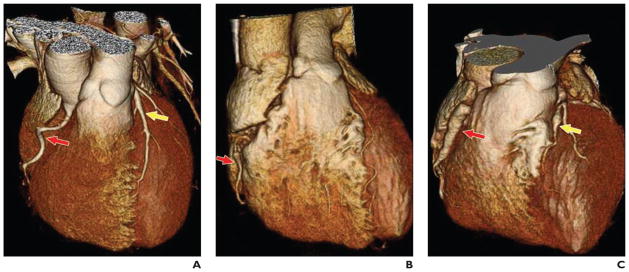
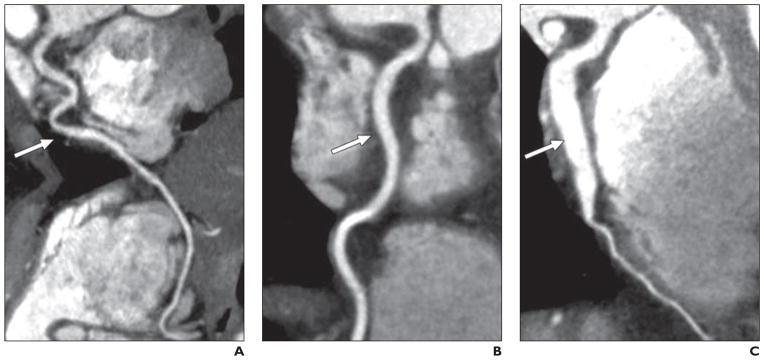
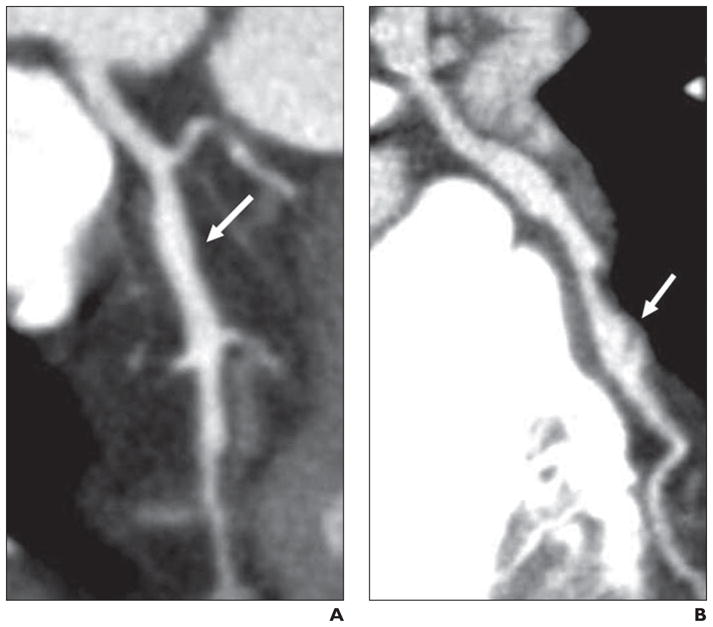
Results: Coronary artery tortuosity or dilation occurred in 70% of HIES patients, with aneurysms present in 37%, incidences much higher than in the literature and in our non-HIES group, in which 21% had tortuosity or dilation and 3% had aneurysms. Hypertension was more common in the HIES group than in the general population and was associated with vessel abnormalities. Atherosclerosis was uncommon and mild.
Conclusions: Coronary artery aneurysms and tortuosity are common in HIES, despite a paucity of atherosclerosis, suggesting that STAT3 plays an integral role in human vascular remodeling and atherosclerosis.
Figures
References
-
- Garcia MJ, Lessick J, Hoffmann MH. Accuracy of 16-row multidetector computed tomography for the assessment of coronary artery stenosis. JAMA. 2006;296:403–411. - PubMed
-
- Datta J, White CS, Gilkeson RC, et al. Anomalous coronary arteries in adults: depiction at multi-detector row CT angiography. Radiology. 2005;235:812–818. - PubMed
-
- Grimbacher B, Holland SM, Gallin JI, et al. Hyper-IgE syndrome with recurrent infections: an autosomal dominant multisystem disorder. N Engl J Med. 1999;340:692–702. - PubMed
-
- Minegishi Y, Saito M, Tsuchiya S, et al. Dominant-negative mutations in the DNA-binding domain of STAT3 cause hyper-IgE syndrome. Nature. 2007;448:1058–1062. - PubMed
-
- Holland SM, DeLeo FR, Elloumi HZ, et al. STAT3 mutations in the hyper-IgE syndrome. N Engl J Med. 2007;357:1608–1619. - PubMed
Publication types
MeSH terms
Substances
Grants and funding
LinkOut - more resources
Full Text Sources
Medical
Miscellaneous
