


Direct ethanol production from cellulosic materials using a diploid strain of Saccharomyces cerevisiae with optimized cellulase expression
- PMID: 21496218
- PMCID: PMC3095537
- DOI: 10.1186/1754-6834-4-8
Direct ethanol production from cellulosic materials using a diploid strain of Saccharomyces cerevisiae with optimized cellulase expression
Abstract
Background: Hydrolysis of cellulose requires the action of the cellulolytic enzymes endoglucanase, cellobiohydrolase and β-glucosidase. The expression ratios and synergetic effects of these enzymes significantly influence the extent and specific rate of cellulose degradation. In this study, using our previously developed method to optimize cellulase-expression levels in yeast, we constructed a diploid Saccharomyces cerevisiae strain optimized for expression of cellulolytic enzymes, and attempted to improve the cellulose-degradation activity and enable direct ethanol production from rice straw, one of the most abundant sources of lignocellulosic biomass.
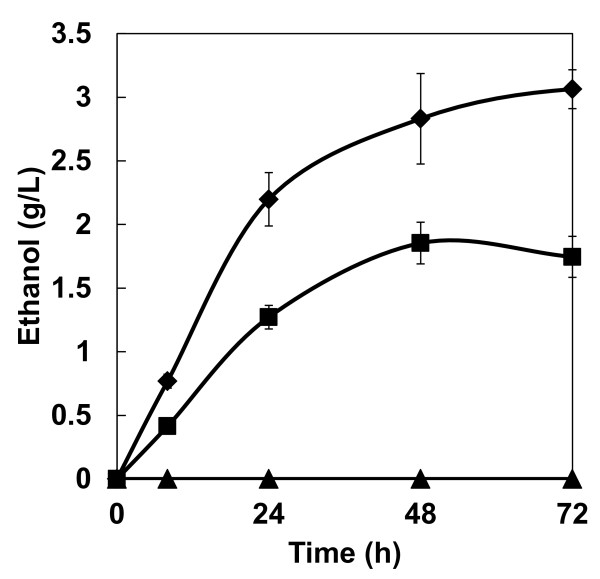
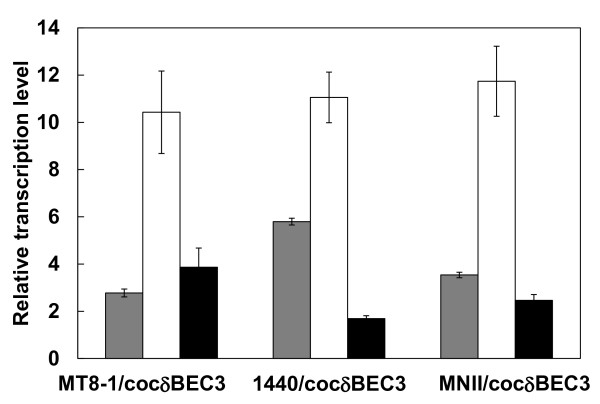
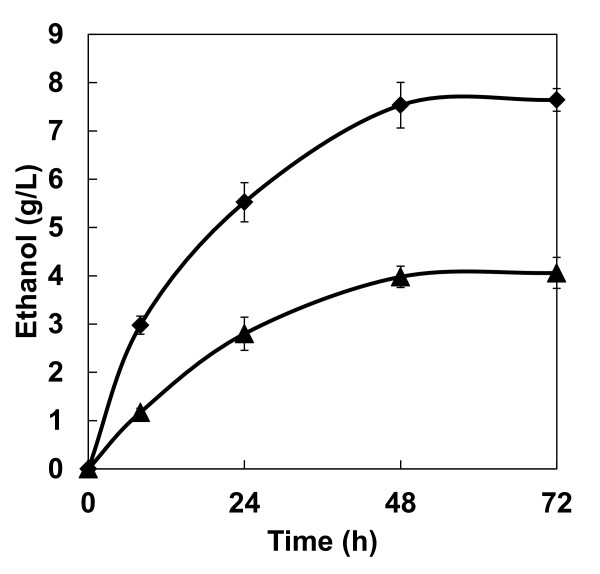
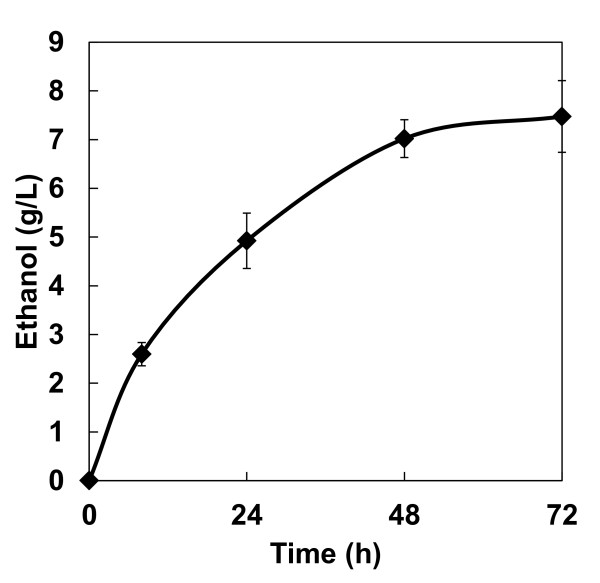
Results: The engineered diploid strain, which contained multiple copies of three cellulase genes integrated into its genome, was precultured in molasses medium (381.4 mU/g wet cell), and displayed approximately six-fold higher phosphoric acid swollen cellulose (PASC) degradation activity than the parent haploid strain (63.5 mU/g wet cell). When used to ferment PASC, the diploid strain produced 7.6 g/l ethanol in 72 hours, with an ethanol yield that achieved 75% of the theoretical value, and also produced 7.5 g/l ethanol from pretreated rice straw in 72 hours.
Conclusions: We have developed diploid yeast strain optimized for expression of cellulolytic enzymes, which is capable of directly fermenting from cellulosic materials. Although this is a proof-of-concept study, it is to our knowledge, the first report of ethanol production from agricultural waste biomass using cellulolytic enzyme-expressing yeast without the addition of exogenous enzymes. Our results suggest that combining multigene expression optimization and diploidization in yeast is a promising approach for enhancing ethanol production from various types of lignocellulosic biomass.
Figures
References
-
- Sánchez OJ, Cardona CA. Trends in biotechnological production of fuel ethanol from different feedstocks. Bioresour Technol. 2008;99:5270–5295. - PubMed
-
- Fujita Y, Ito J, Ueda M, Fukuda H, Kondo A. Synergistic saccharification, and direct fermentation to ethanol, of amorphous cellulose by use of an engineered yeast strain codisplaying three types of cellulolytic enzyme. Appl Environ Microbiol. 2004;70:1207–1212. doi: 10.1128/AEM.70.2.1207-1212.2004. - DOI - PMC - PubMed
LinkOut - more resources
Full Text Sources
Other Literature Sources
Molecular Biology Databases
Research Materials
