


Cooperation of the HDAC inhibitor vorinostat and radiation in metastatic neuroblastoma: efficacy and underlying mechanisms
- PMID: 21497989
- PMCID: PMC3244077
- DOI: 10.1016/j.canlet.2011.03.010
Cooperation of the HDAC inhibitor vorinostat and radiation in metastatic neuroblastoma: efficacy and underlying mechanisms
Abstract
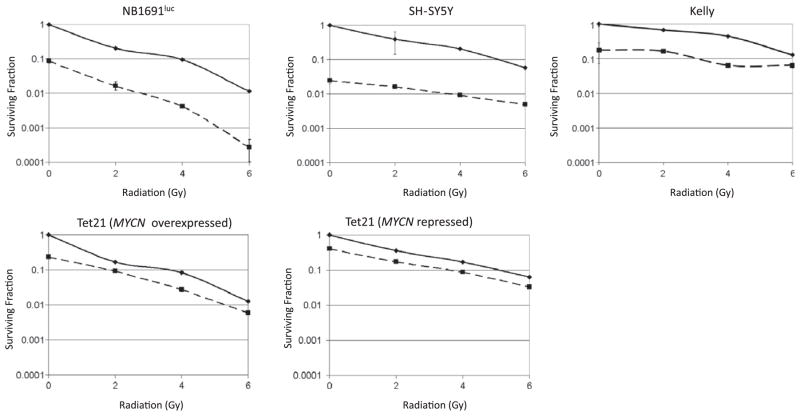
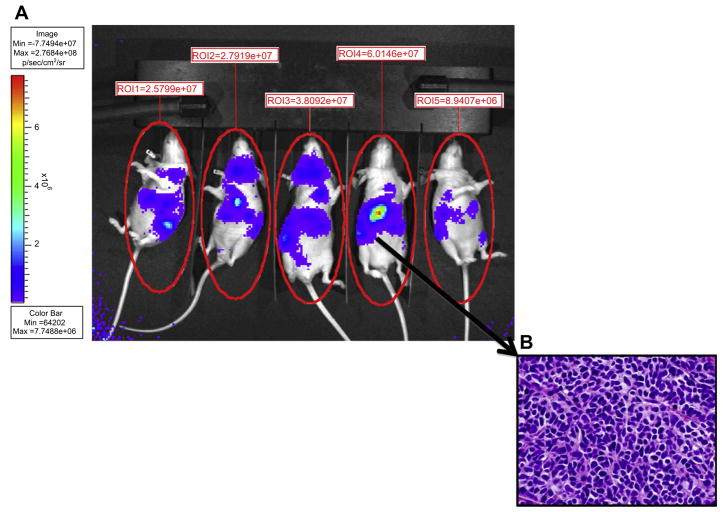
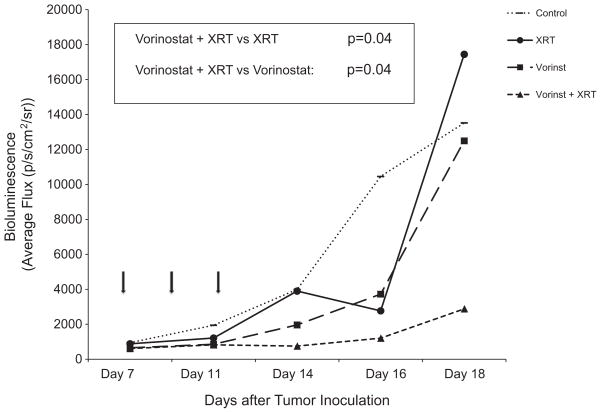
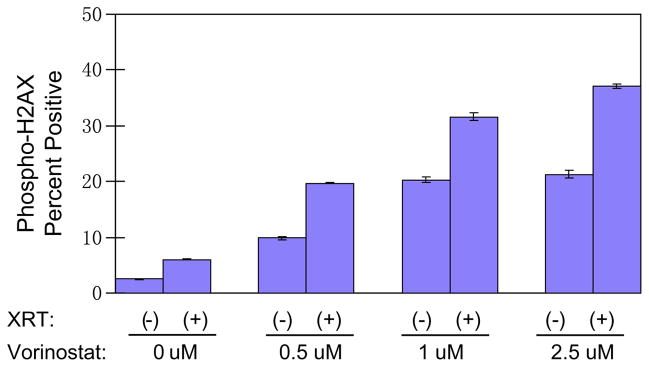
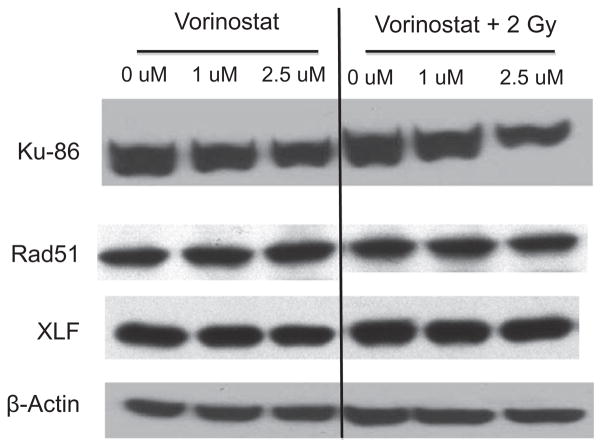
Histone deacetylase (HDAC) inhibitors can radiosensitize cancer cells. Radiation is critical in high-risk neuroblastoma treatment, and combinations of HDAC inhibitor vorinostat and radiation are proposed for neuroblastoma trials. Therefore, we investigated radiosensitizing effects of vorinostat in neuroblastoma. Treatment of neuroblastoma cell lines decreased cell viability and resulted in additive effects with radiation. In a murine metastatic neuroblastoma in vivo model vorinostat and radiation combinations decreased tumor volumes compared to single modality. DNA repair enzyme Ku-86 was reduced in several neuroblastoma cells treated with vorinostat. Thus, vorinostat potentiates anti-neoplastic effects of radiation in neuroblastoma possibly due to down-regulation of DNA repair enzyme Ku-86.
Copyright © 2011 Elsevier Ireland Ltd. All rights reserved.
Conflict of interest statement
None of the authors have any conflicts of interest to report.
Figures
References
-
- Matthay KK, Yanik G, Messina J, Quach A, Huberty J, Cheng SC, Veatch J, Goldsby R, Brophy P, Kersun LS, Hawkins RA, Maris JM. Phase II study on the effect of disease sites, age, and prior therapy on response to iodine-131-metaiodobenzylguanidine therapy in refractory neuroblastoma. J Clin Oncol. 2007;25:1054–1060. - PubMed
-
- Munshi A, Tanaka T, Hobbs ML, Tucker SL, Richon VM, Meyn RE. Vorinostat, a histone deacetylase inhibitor, enhances the response of human tumor cells to ionizing radiation through prolongation of gamma-H2AX foci. Mol Cancer Ther. 2006;5:1967–1974. - PubMed
-
- Chinnaiyan P, Vallabhaneni G, Armstrong E, Huang SM, Harari PM. Modulation of radiation response by histone deacetylase inhibition. Int J Radiat Oncol Biol Phys. 2005;62:223–229. - PubMed
-
- Entin-Meer M, Rephaeli A, Yang X, Nudelman A, VandenBerg SR, Haas-Kogan DA. Butyric acid prodrugs are histone deacetylase inhibitors that show antineoplastic activity and radiosensitizing capacity in the treatment of malignant gliomas. Mol Cancer Ther. 2005;4:1952–1961. - PubMed
Publication types
MeSH terms
Substances
Grants and funding
- R01 CA102321/CA/NCI NIH HHS/United States
- R01 CA133091/CA/NCI NIH HHS/United States
- P01 CA081403/CA/NCI NIH HHS/United States
- KL2 RR024130/RR/NCRR NIH HHS/United States
- P01 CA81403/CA/NCI NIH HHS/United States
- R01CA133091/CA/NCI NIH HHS/United States
- P50 CA097257/CA/NCI NIH HHS/United States
- K12 NS001692/NS/NINDS NIH HHS/United States
- T32 HD044331/HD/NICHD NIH HHS/United States
- P01 NS-42927-27A2/NS/NINDS NIH HHS/United States
- P01 NS042927/NS/NINDS NIH HHS/United States
- L30 CA124156/CA/NCI NIH HHS/United States
LinkOut - more resources
Full Text Sources
Medical
Research Materials
