


A comparison of PBDE serum concentrations in Mexican and Mexican-American children living in California
- PMID: 21498147
- PMCID: PMC3230428
- DOI: 10.1289/ehp.1002874
A comparison of PBDE serum concentrations in Mexican and Mexican-American children living in California
Abstract
Background: Polybrominated diphenyl ethers (PBDE), which are used as flame retardants, have been found to be higher in residents of California than of other parts of the United States.
Objectives: We aimed to investigate the role of immigration to California on PBDE levels in Latino children.
Methods: We compared serum PBDE concentrations in a population of first-generation Mexican-American 7-year-old children (n = 264), who were born and raised in California [Center for Health Analysis of Mothers and Children of Salinas (CHAMACOS) study], with 5-year-old Mexican children (n = 283), who were raised in the states in Mexico where most CHAMACOS mothers had originated (Proyecto Mariposa).
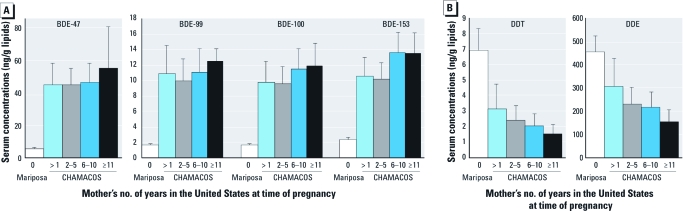
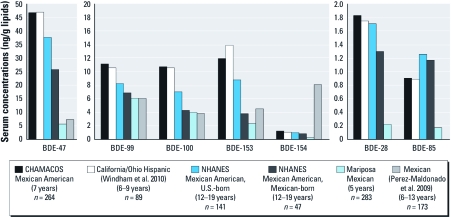
Results: On average, PBDE serum concentrations in the California Mexican-American children were three times higher than their mothers' levels during pregnancy and seven times higher than concentrations in the children living in Mexico. The PBDE serum concentrations were higher in the Mexican-American children regardless of length of time their mother had resided in California or the duration of the child's breast-feeding. These data suggest that PBDE serum concentrations in these children resulted primarily from postnatal exposure.
Conclusions: Latino children living in California have much higher PBDE serum levels than their Mexican counterparts. Given the growing evidence documenting potential health effects of PBDE exposure, the levels in young children noted in this study potentially present a major public health challenge, especially in California. In addition, as PBDEs are being phased out and replaced by other flame retardants, the health consequences of these chemical replacements should be investigated and weighed against their purported fire safety benefits.
Conflict of interest statement
The authors declare they have no actual or potential competing financial interests.
Figures
Comment in
-
Children's exposure to PBDEs: binational comparison highlights dramatic differences.Environ Health Perspect. 2011 Oct;119(10):A442. doi: 10.1289/ehp.119-a442a. Environ Health Perspect. 2011. PMID: 22069781 Free PMC article. No abstract available.
References
-
- Akutsu K, Takatori S, Nozawa S, Yoshiike M, Nakazawa H, Hayakawa K, et al. Polybrominated diphenyl ethers in human serum and sperm quality. Bull Environ Contam Toxicol. 2008;80(4):345–350. - PubMed
-
- Annie E. Casey Foundation. Baltimore, MD: Annie E. Casey Foundation; 2003. Kids Count: Latino Children Pocket Guide: State-Level Measures of Child Well-Being From the 2000 Census.
-
- California Bureau of Electronic and Appliance Repair, Home Furnishings and Thermal Insulation (BEARHFTI) Technical Bulletin 117: Requirements, Test Procedure and Apparatus for Testing the Flame Retardance of Resilient Filling Materials Used in Upholstered Furniture. 2000. Available: http://www.bhfti.ca.gov/industry/117.pdf [accessed 23 June 2010]