


Competing interactions stabilize pro- and anti-aggregant conformations of human Tau
- PMID: 21498513
- PMCID: PMC3121454
- DOI: 10.1074/jbc.M111.237875
Competing interactions stabilize pro- and anti-aggregant conformations of human Tau
Abstract
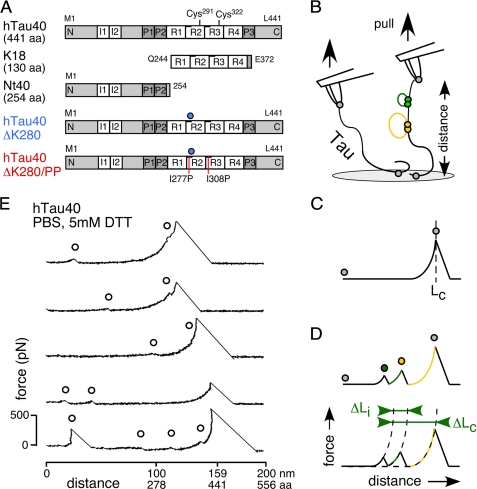
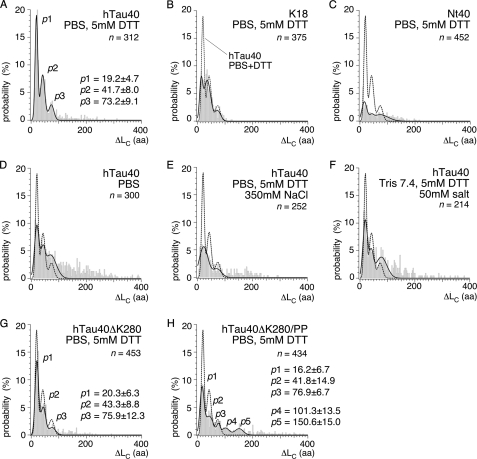
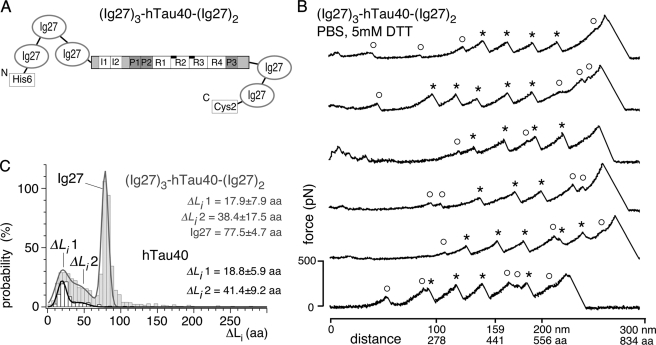
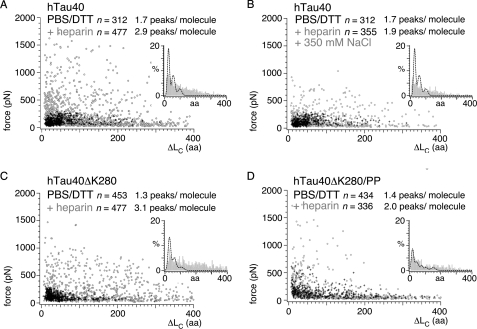
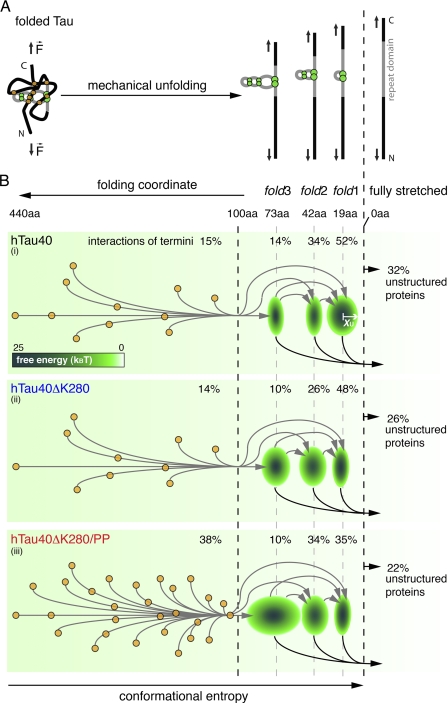
Aggregation of Tau into amyloid-like fibrils is a key process in neurodegenerative diseases such as Alzheimer. To understand how natively disordered Tau stabilizes conformations that favor pathological aggregation, we applied single-molecule force spectroscopy. Intramolecular interactions that fold polypeptide stretches of ~19 and ~42 amino acids in the functionally important repeat domain of full-length human Tau (hTau40) support aggregation. In contrast, the unstructured N terminus randomly folds long polypeptide stretches >100 amino acids that prevent aggregation. The pro-aggregant mutant hTau40ΔK280 observed in frontotemporal dementia favored the folding of short polypeptide stretches and suppressed the folding of long ones. This trend was reversed in the anti-aggregant mutant hTau40ΔK280/PP. The aggregation inducer heparin introduced strong interactions in hTau40 and hTau40ΔK280 that stabilized aggregation-prone conformations. We show that the conformation and aggregation of Tau are regulated through a complex balance of different intra- and intermolecular interactions.
Figures
References
Publication types
MeSH terms
Substances
LinkOut - more resources
Full Text Sources
Miscellaneous
