


Temperature profile and outcomes of neonates undergoing whole body hypothermia for neonatal hypoxic-ischemic encephalopathy
- PMID: 21499182
- PMCID: PMC3161166
- DOI: 10.1097/PCC.0b013e31821926bc
Temperature profile and outcomes of neonates undergoing whole body hypothermia for neonatal hypoxic-ischemic encephalopathy
Abstract
Background: Decreases below the target temperature were noted among neonates undergoing cooling in the Eunice Kennedy Shriver National Institute of Child Health and Human Development Neonatal Research Network Trial of whole body hypothermia for neonatal hypoxic-ischemic encephalopathy.
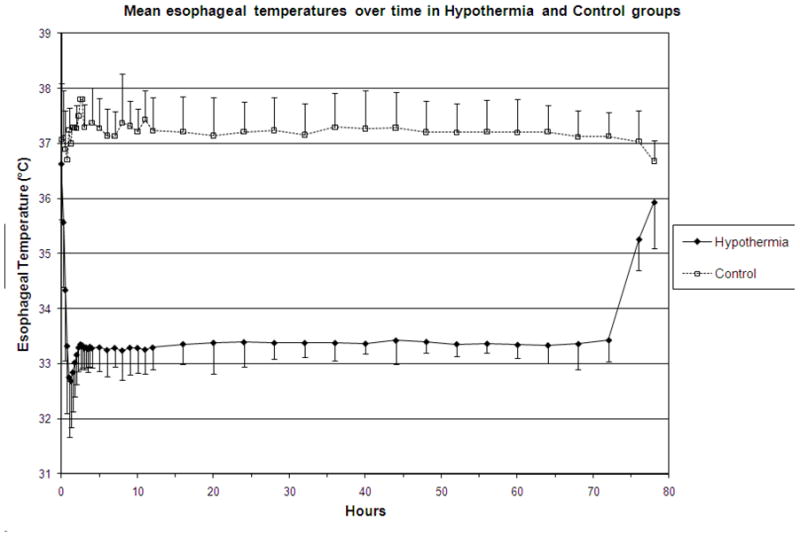
Objective: To examine the temperature profile and impact on outcome among ≥ 36 wk gestation neonates randomized at ≤ 6 hrs of age targeting an esophageal temperature of 33.5°C for 72 hrs.
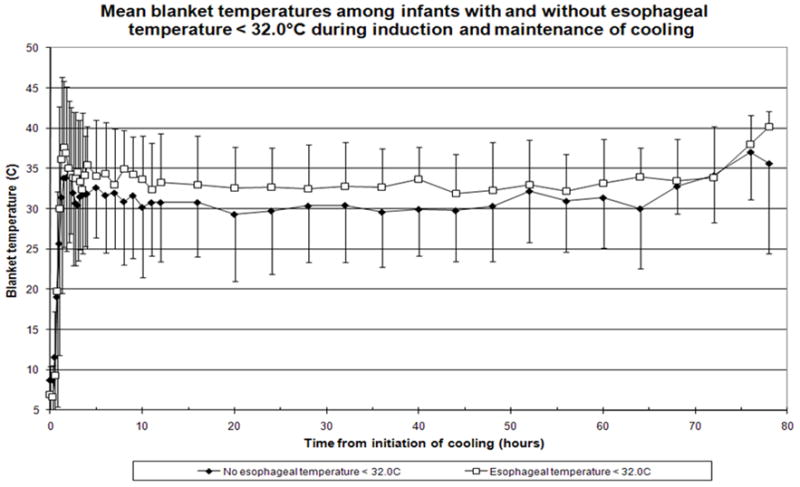
Design, setting, patients: Infants with intermittent temperatures recorded of <32.0°C during induction and maintenance of cooling were compared to all other cooled infants, and the relationship with outcome at 18 months was evaluated.
Interventions: None.
Measurements and main results: There were no differences in the stage of encephalopathy, acidosis, or 10 min Apgar scores between infants with temperatures of <32.0°C during induction (n = 33) or maintenance (n = 10) and all other infants who were cooled (n = 58); however, birth weight was lower and the need for blood pressure support higher among infants with temperatures of <32.0°C compared to all other cooled infants. No increase in acute adverse events was noted among infants with temperatures of <32.0°C, and hours spent at <32°C was not associated with the primary outcome of death or moderate/severe disability or the Bayley II Mental Developmental Index at 18 months.
Conclusions: Term infants with a lower birth weight are at risk for decreasing temperatures of <32.0°C while undergoing body cooling using a servo-controlled system. This information suggests extra caution during the application of hypothermia as these lower birth weight infants are at risk for overcooling. Our findings may assist in planning additional trials of lower target temperature for neonatal hypoxic-ischemic encephalopathy.
Figures
References
-
- Gluckman PD, Wyatt JS, Azzopardi D, et al. Selective head cooling with mild systemic hypothermia after neonatal encephalopathy: multicentre randomised trial. Lancet. 2005 Feb 19–25;365(9460):663–70. - PubMed
-
- Eicher DJ, Wagner CL, Katikaneni LP, et al. Moderate hypothermia in neonatal encephalopathy: Efficacy outcomes. Pediatr Neurol. 2005;32:11–17. - PubMed
-
- Shankaran S, Laptook AR, Ehrenkranz RA, et al. Whole-body Hypothermia for Neonates with Hypoxic-Ischemic Encephalopathy. N Engl J Med. 2005;353:1574–1584. - PubMed
-
- Azzopardi DV, Strohm B, Edwards AD, et al. Moderate hypothermia to treat perinatal asphyxial encephalopathy. N Engl J Med. 2009;361(14):1349–58. - PubMed
-
- Polderman KH. Mechanisms of action, physiological effects, and complications of hypothermia. Crit Care Med. 2009;37(7 Suppl):S186–202. - PubMed
Publication types
MeSH terms
Grants and funding
- U10 HD27851/HD/NICHD NIH HHS/United States
- U10 HD021385/HD/NICHD NIH HHS/United States
- U10 HD40492/HD/NICHD NIH HHS/United States
- U10 HD021364/HD/NICHD NIH HHS/United States
- U10 HD040492/HD/NICHD NIH HHS/United States
- U10 HD027871/HD/NICHD NIH HHS/United States
- U10 HD027851/HD/NICHD NIH HHS/United States
- U10 HD21397/HD/NICHD NIH HHS/United States
- U10 HD21373/HD/NICHD NIH HHS/United States
- U10 HD21385/HD/NICHD NIH HHS/United States
- U10 HD040498/HD/NICHD NIH HHS/United States
- U10 HD027856/HD/NICHD NIH HHS/United States
- U10 HD021373/HD/NICHD NIH HHS/United States
- U10 HD21364/HD/NICHD NIH HHS/United States
- U10 HD34216/HD/NICHD NIH HHS/United States
- U10 HD027880/HD/NICHD NIH HHS/United States
- U10 HD36790/HD/NICHD NIH HHS/United States
- U10 HD27880/HD/NICHD NIH HHS/United States
- U10 HD27904/HD/NICHD NIH HHS/United States
- U10 HD040461/HD/NICHD NIH HHS/United States
- U10 HD40498/HD/NICHD NIH HHS/United States
- U10 HD27871/HD/NICHD NIH HHS/United States
- U10 HD027853/HD/NICHD NIH HHS/United States
- U10 HD027904/HD/NICHD NIH HHS/United States
- U10 HD021397/HD/NICHD NIH HHS/United States
- U10 HD27856/HD/NICHD NIH HHS/United States
- U10 HD40461/HD/NICHD NIH HHS/United States
- U10 HD27853/HD/NICHD NIH HHS/United States
- U10 HD034216/HD/NICHD NIH HHS/United States
- U10 HD036790/HD/NICHD NIH HHS/United States
LinkOut - more resources
Full Text Sources
Medical
