


Modulation of ammonium perfluorooctanoate-induced hepatic damage by genetically different PPARα in mice
- PMID: 21499893
- PMCID: PMC6594146
- DOI: 10.1007/s00204-011-0704-3
Modulation of ammonium perfluorooctanoate-induced hepatic damage by genetically different PPARα in mice
Abstract
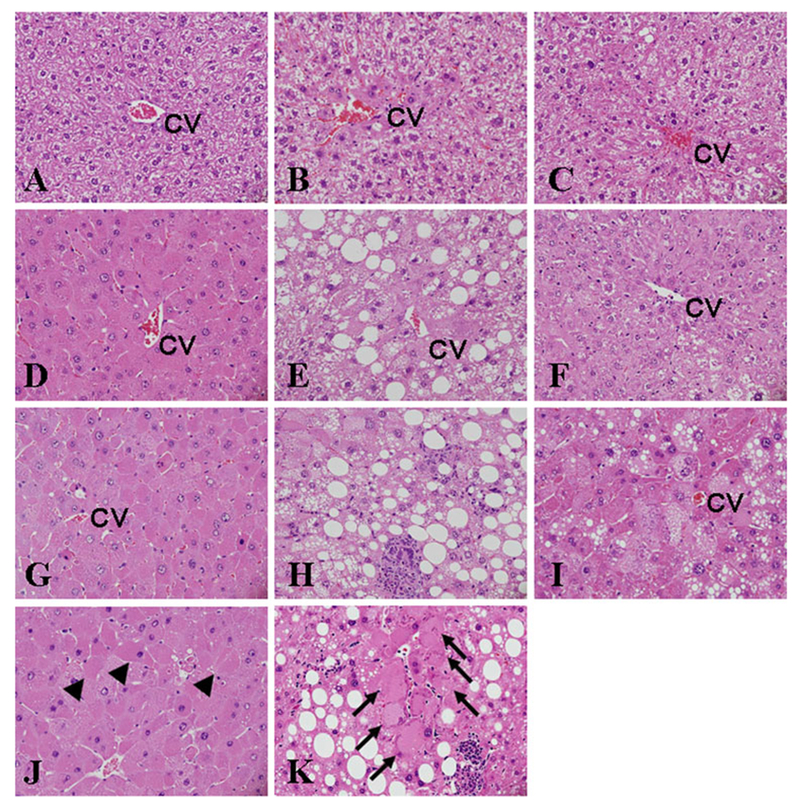
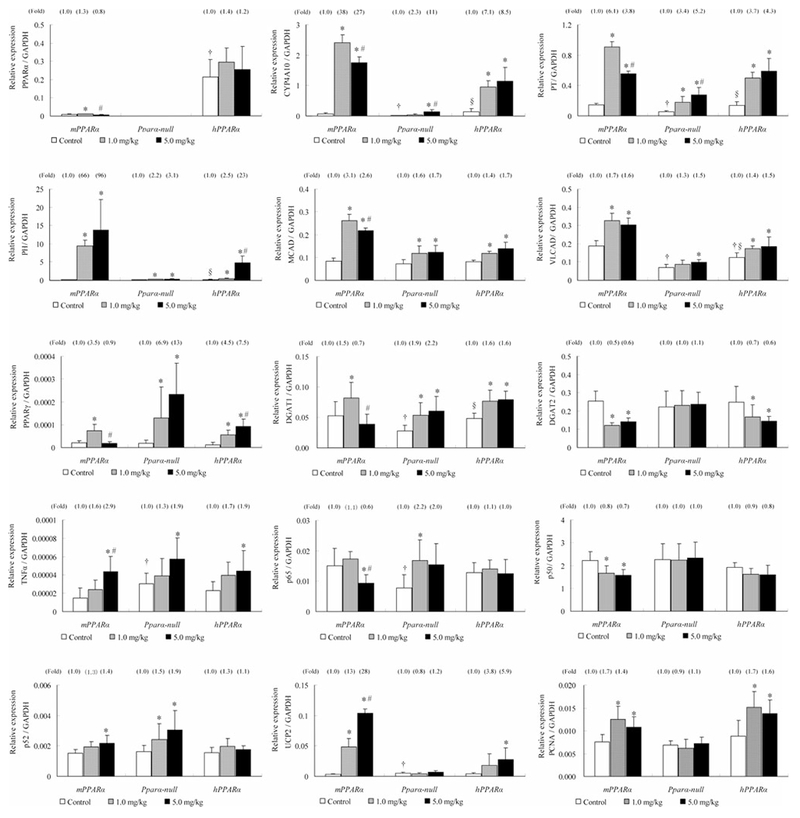
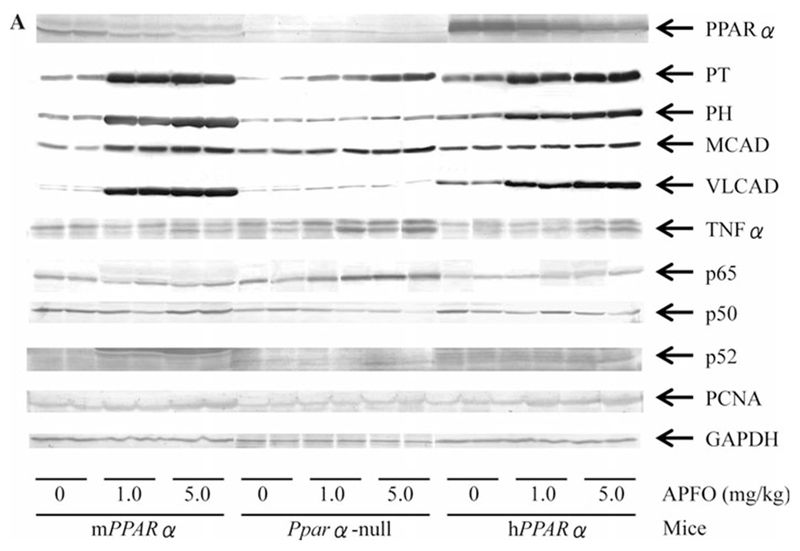
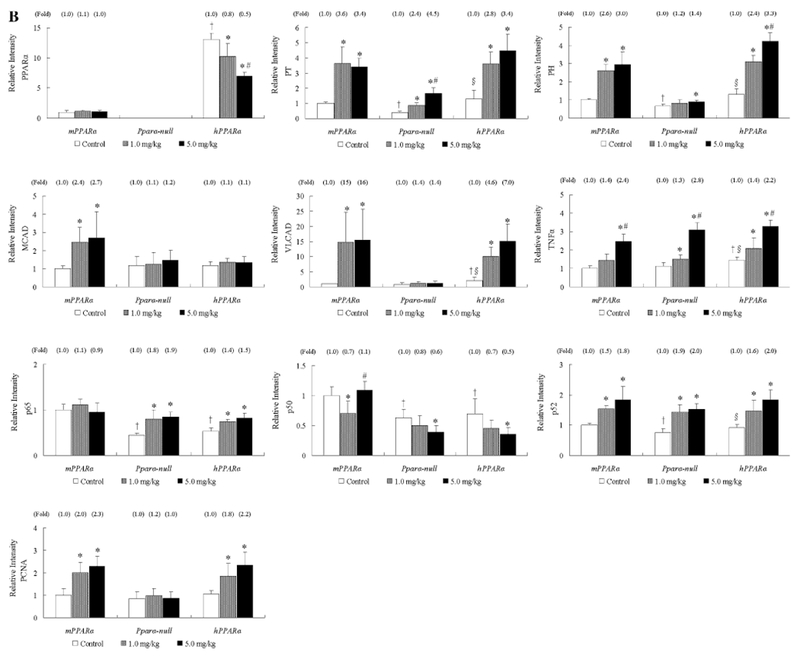
Perfluorooctanoic acid is a ligand for peroxisome proliferator-activated receptor (PPARα). Ammonium perfluorooctanoate (APFO) at 0.1 and 0.3 mg/kg doses activated mouse PPARα, but not human PPARα. This study aimed to clarify whether milligram-order APFO can activate human PPARα, and the receptor is involved in APFO-induced chronic hepatic damage. Male Sv/129 wild-type (mPPARα), Pparα-null, and humanized PPARα (hPPARα) mice (8 weeks old) were divided into three groups. The first was treated with water and the other two with 1.0 and 5.0 mg/kg APFO for 6 weeks, orally, respectively. Both doses activated mouse and human PPARα to a similar or lower degree in the latter. APFO dose dependently increased hepatic triglyceride levels in Pparα-null and hPPARα mice, but conversely decreased those in mPPARα ones. APFO-induced hepatic damage differed markedly among the three genotyped groups: single-cell necrosis was observed in all genotyped mice; inflammatory cells and macrovesicular steatosis only in Pparα-null mice; and microvesicular steatosis and hydropic degenerations in hPPARα and Pparα-null mice. The molecular mechanism underlying these differences may be attributable to those of gene expressions involved in lipid homeostasis (PPARα, β- and ω-oxidation enzymes, and diacylglycerol acyltransferases) and uncoupling protein 2. Thus, milligram-order APFO activated both mouse and human PPARα in a different manner, which may reflect histopathologically different types of hepatic damage.
Conflict of interest statement
Figures
References
-
- Aoyama T, Peters JM, Iritani N, Nakajima T, Furihata K, Hashimoto T, Gonzalez FJ (1998) Altered constitutive expression of fatty acid-metabolizing enzymes in mice lacking the peroxisome proliferator-activated receptor α (PPARα). J Biol Chem 273:5678–5684 - PubMed
-
- Berthiaume J, Wallace KB (2002) Perfluorooctanoate, perflourooc-tanesulfonate, and N-ethyl perfluorooctanesulfonamido ethanol: peroxisome proliferation and mitochondrial biogenesis. Toxicol Lett 129:23–32 - PubMed
-
- Biegel LB, Hurtt ME, Frame SR, O’Connor JC, Cook JC (2001) Mechanisms of extrahepatic tumor induction by peroxisome proliferators in male CD rats. Toxicol Sci 60:44–55 - PubMed
-
- Brunt EM, Janney CG, Di Bisceglie AM, Neuschwander-Tetri BA, Bacon BR (1999) Nonalcoholic steatohepatitis: a proposal for grading and staging the histological lesions. Am J Gastroenterol 94:2467–2474 - PubMed
-
- Butenhoff J, Costa G, Elcombe C, Farrar D, Hansen K, Iwai H, Jung R, Kennedy G Jr, Lieder P, Olsen G, Thomford P (2002) Toxicity of ammonium perfluorooctanoate in male cynomolgus monkeys after oral dosing for 6 months. Toxicol Sci 69:244–257 - PubMed
Publication types
MeSH terms
Substances
Grants and funding
LinkOut - more resources
Full Text Sources
Medical
