


How parents cope with their child's diagnosis and treatment of an embryonal tumor: results of a prospective and longitudinal study
- PMID: 21499990
- PMCID: PMC3537225
- DOI: 10.1007/s11060-011-0574-9
How parents cope with their child's diagnosis and treatment of an embryonal tumor: results of a prospective and longitudinal study
Abstract
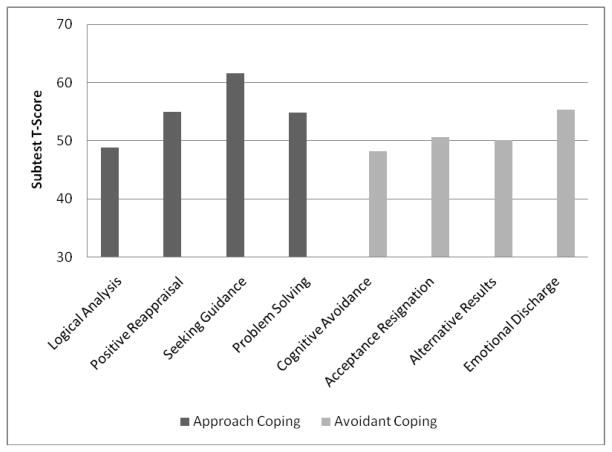
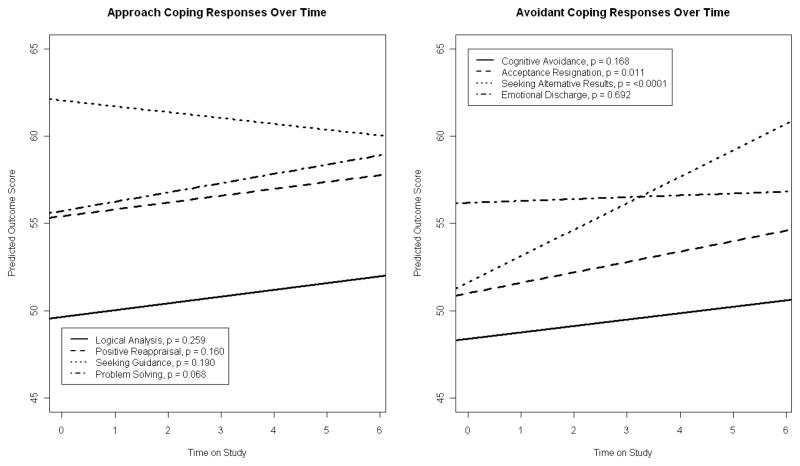
The current study reports longitudinal coping responses among parents of children diagnosed with an embryonal brain tumor. Patients (n = 219) were enrolled on a treatment protocol for a pediatric embryonal brain tumor. Their parents (n = 251) completed the Coping Response Inventory at time of their child's diagnosis and yearly thereafter, resulting in 502 observations. Outcomes were examined with patient and parent age at diagnosis, patient risk, parent gender and education as covariates. At the time of diagnosis, the highest observed coping method was seeking guidance with well above average scores (T = 61.6). Over time, younger parents were found to seek guidance at a significantly higher rate than older parents (P = .016) and the use of acceptance resignation and seeking alternative results by all parents significantly increased (P = .011 and P < .0001 respectively). The use of emotional discharge was also observed above average at time of diagnosis (T = 55.4) with younger fathers being more likely to exhibit emotional discharge than older fathers (P = .002). Differences in coping according to age of the patient and parent education level are also discussed. Results show a high need for guidance, and above average emotional discharge, especially among younger parents. It is imperative for the healthcare team to lead with accurate information so that these parents may make informed decisions about the care of their child. This need remains high years after diagnosis. Therefore it is critical to continue a consistent level of effective communication and support, even following treatment.
Conflict of interest statement
Conflict of Interest: None
Figures
References
-
- Vrijmoet-Wiersma CM, van Klink JM, Kolk AM, et al. Assessment of parental psychological stress in pediatric cancer: a review. J Pediatr Psychol. 2008;33:694–706. - PubMed
-
- Greening L, Stoppelbein L. Brief report: pediatric cancer, parental coping style, and risk for depressive, posttraumatic stress, and anxiety symptoms. J Pediatr Psychol. 2007;32:1272–7. - PubMed
-
- Gajjar A, Chintagumpala M, Ashley D, et al. Risk-adapted craniospinal radiotherapy followed by high-dose chemotherapy and stem-cell rescue in children with newly diagnosed medulloblastoma (St Jude Medulloblastoma-96): long-term results from a prospective, multicentre trial. Lancet Oncol. 2006;7:813–20. - PubMed
-
- Sloper P. Predictors of distress in parents of children with cancer: a prospective study. J Pediatr Psychol. 2000;25:79–91. - PubMed
-
- Goldbeck L. The impact of newly diagnosed chronic paediatric conditions on parental quality of life. Qual Life Res. 2006;15:1121–31. - PubMed
Publication types
MeSH terms
Grants and funding
LinkOut - more resources
Full Text Sources
Medical
