


Leukemic mutations in the methylation-associated genes DNMT3A and IDH2 are rare events in pediatric AML: a report from the Children's Oncology Group
- PMID: 21504050
- PMCID: PMC3115394
- DOI: 10.1002/pbc.23179
Leukemic mutations in the methylation-associated genes DNMT3A and IDH2 are rare events in pediatric AML: a report from the Children's Oncology Group
Abstract
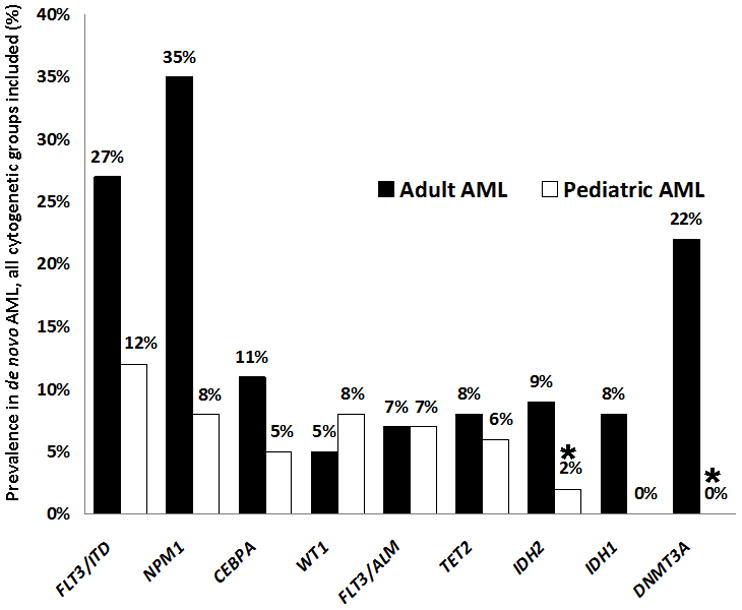
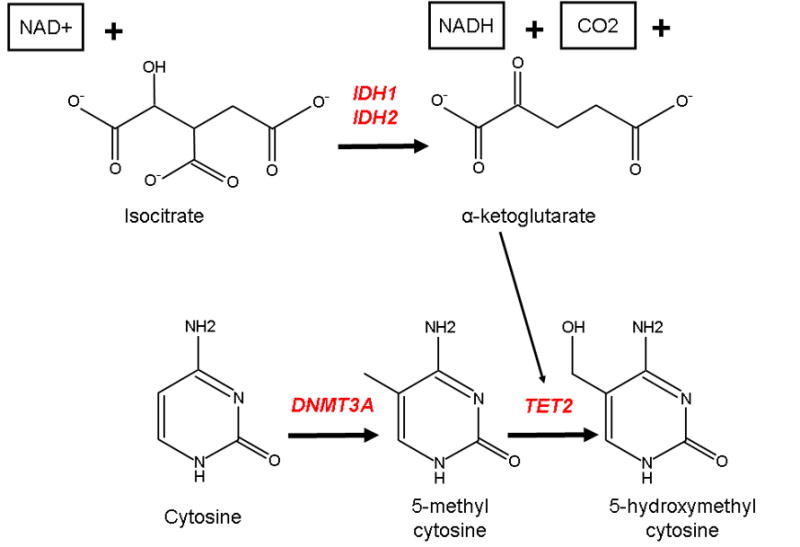
Background: Mutations in the DNMT3A, TET2, IDH1, and IDH2 genes carry prognostic significance and occur frequently in adult acute myeloid leukemia (AML). Leukemic mutations in all four genes have recently been implicated in aberrant DNA methylation, a hallmark of neoplasia. We previously reported that IDH1 mutations were absent, whereas TET2 mutations were present in 6%, of pediatric AML patients; in the present study, we determined the prevalence of DNMT3A and IDH2 mutations in pediatric AML.
Methods: We screened for DNMT3A and IDH2 mutations by direct sequencing of diagnostic specimens from 180 children treated on the Children's Oncology Group clinical trial AAML03P1. Clinical characteristics, the presence of other leukemic mutations, and survival outcome was determined for mutation-positive patients.
Results: No disease-associated DNMT3A mutations were detected. IDH2 mutations were detected in 4/180 patients (2.2%), affecting codons R140 (n = 3) and R172 (n = 1). Two patients with IDH2 mutations harbored t(8;21), one patient harbored an MLL translocation, and one patient had a concomitant NPM1 mutation. FLT3, CEBPA, and WT1 mutations did not occur together with IDH2 mutations in our study.
Conclusion: DNMT3A and IDH2 mutations are uncommon in pediatric AML. The low prevalence of methylation-associated mutations in our study highlights the differences in the pathogenesis of pediatric versus adult AML, at the genetic as well as potentially at the epigenetic level. The age-specific characteristics of AML underscore the importance of studying the molecular biology of both childhood and adult forms of this leukemia in parallel, as the development of novel therapeutics should account for these biologic differences.
Copyright © 2011 Wiley-Liss, Inc.
Conflict of interest statement
The authors declare no relevant conflicts of interest.
Figures
References
Publication types
MeSH terms
Substances
Grants and funding
LinkOut - more resources
Full Text Sources
Other Literature Sources
Medical
Miscellaneous
