


Enrollment into a time sensitive clinical study in the critical care setting: results from computerized septic shock sniffer implementation
- PMID: 21508415
- PMCID: PMC3168322
- DOI: 10.1136/amiajnl-2011-000228
Enrollment into a time sensitive clinical study in the critical care setting: results from computerized septic shock sniffer implementation
Abstract
Objective: Recruitment of patients into time sensitive clinical trials in intensive care units (ICU) poses a significant challenge. Enrollment is limited by delayed recognition and late notification of research personnel. The objective of the present study was to evaluate the effectiveness of the implementation of electronic screening (septic shock sniffer) regarding enrollment into a time sensitive (24 h after onset) clinical study of echocardiography in severe sepsis and septic shock.
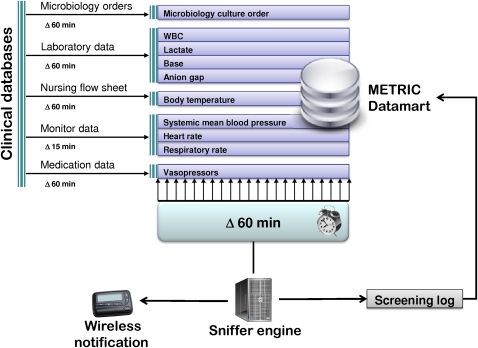
Design: We developed and tested a near-real time computerized alert system, the septic shock sniffer, based on established severe sepsis/septic shock diagnostic criteria. A sniffer scanned patients' data in the electronic medical records and notified the research coordinator on call through an institutional paging system of potentially eligible patients.
Measurement: The performance of the septic shock sniffer was assessed.
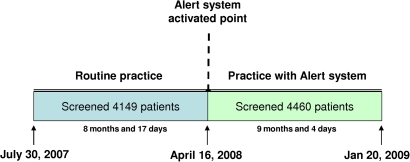
Results: The septic shock sniffer performed well with a positive predictive value of 34%. Electronic screening doubled enrollment, with 68 of 4460 ICU admissions enrolled during the 9 months after implementation versus 37 of 4149 ICU admissions before sniffer implementation (p<0.05). Efficiency was limited by study coordinator availability (not available at nights or weekends).
Conclusions: Automated electronic medical records screening improves the efficiency of enrollment and should be a routine tool for the recruitment of patients into time sensitive clinical trials in the ICU setting.
Conflict of interest statement
Figures
References
-
- Scales DC, Kahn JM. Tracheostomy timing, enrollment and power in ICU clinical trials. Intensive Care Med 2008;34:1743–5 - PubMed
-
- Montfoort I, Frens MA, Koes BW, et al. Tragedy of conducting a clinical trial; generic alert system needed. J Clin Epidemiol 2008;61:415–18 - PubMed
-
- Campbell MK, Snowdon C, Francis D, et al. Recruitment to randomised trials: strategies for trial enrollment and participation study. The STEPS study. Health Technol Assess 2007;11:iii, ix–105. - PubMed
-
- Kirkpatrick F. Rev Up Patient Recruitment. Pharmaceutical Executive 2002;2002:60–6
-
- Winn RJ. Obstacles to the accrual of patients to clinical trials in the community setting. Semin Oncol 1994;21(4 Suppl. 7):112–17 - PubMed
Publication types
MeSH terms
Grants and funding
LinkOut - more resources
Full Text Sources
Other Literature Sources
Miscellaneous
