


Duration of menopausal hot flushes and associated risk factors
- PMID: 21508748
- PMCID: PMC3085137
- DOI: 10.1097/AOG.0b013e318214f0de
Duration of menopausal hot flushes and associated risk factors
Abstract
Objective: To estimate the duration of moderate-to-severe menopausal hot flushes and identify potential risk factors for hot flush duration.
Methods: The Penn Ovarian Aging Study cohort was monitored for 13 years. Hot flushes were evaluated at 9-month to 12-month intervals through in-person interviews. The primary outcome was the duration of moderate-to-severe hot flushes estimated by survival analysis (n=259). Potential risk factors included menopausal stage, age, race, reproductive hormone levels, body mass index (BMI), and current smoking. A secondary analysis included women who reported any hot flushes (n=349).
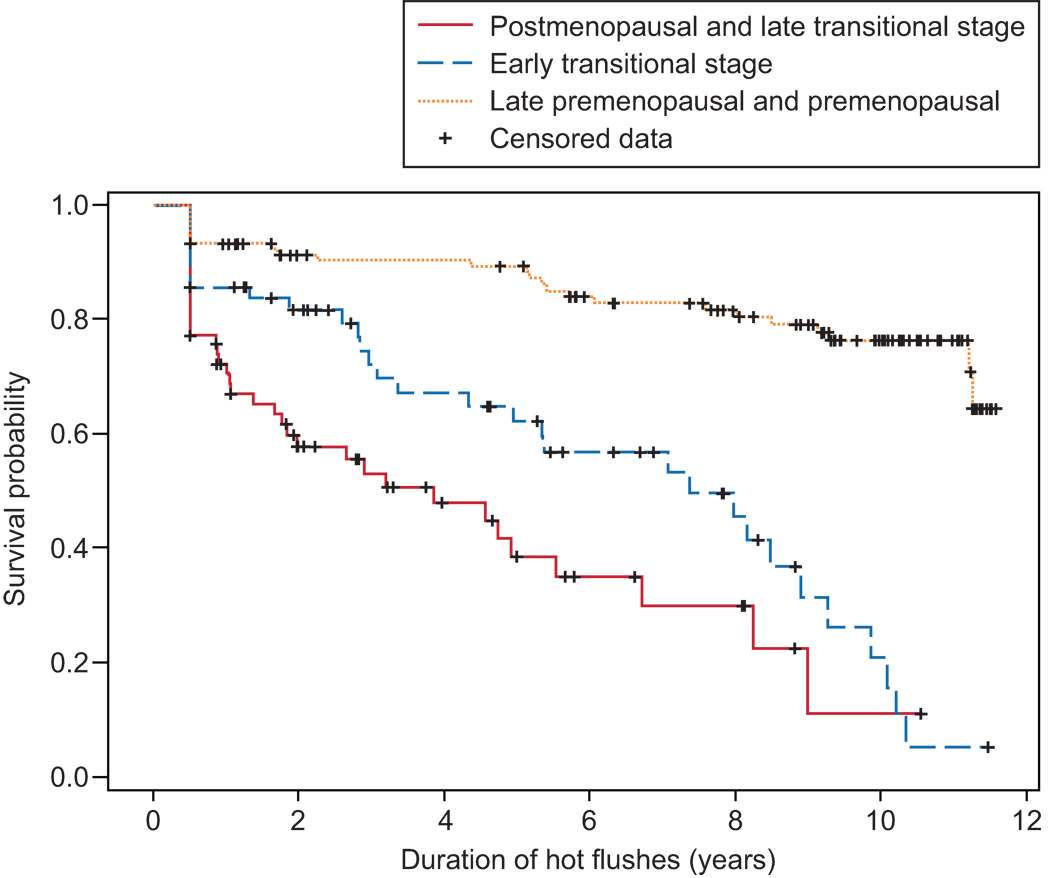
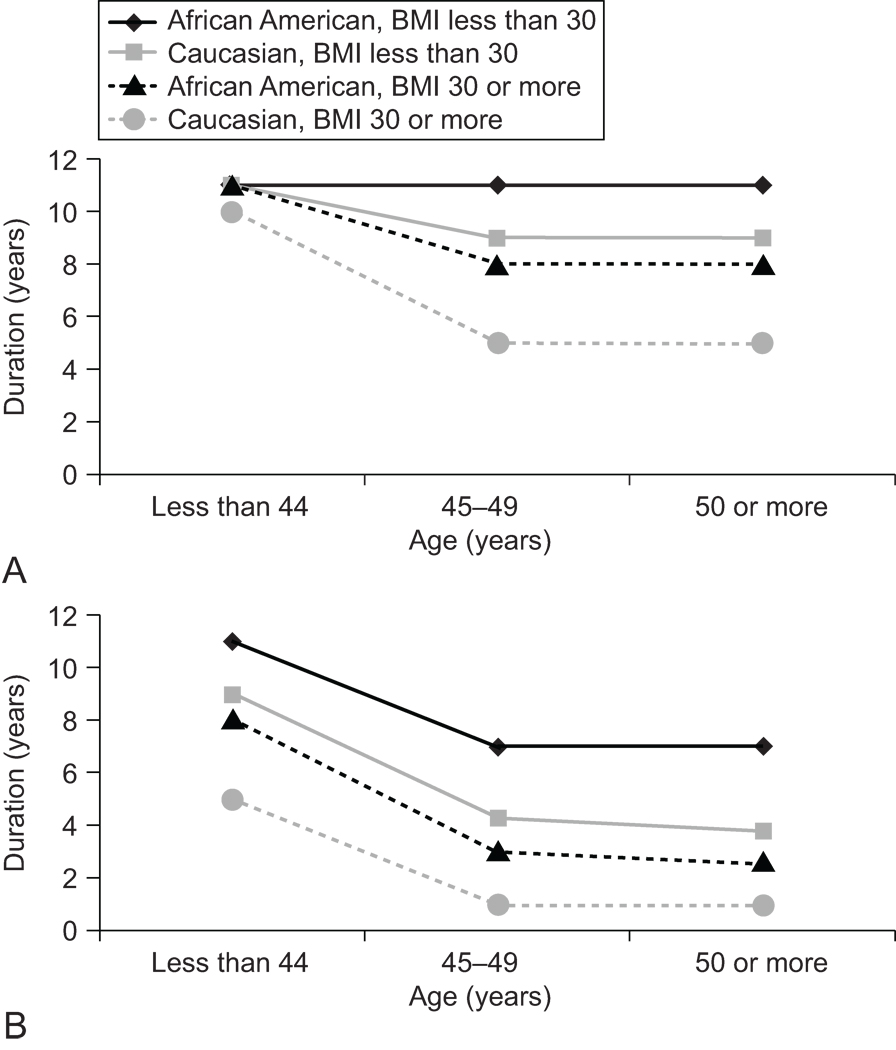
Results: The median duration of moderate-to-severe hot flushes was 10.2 years and was strongly associated with menopausal stage at onset. Hot flushes that started near entry into the menopause transition had a median duration greater than 11.57 years; onset in the early transition stage had a median duration of 7.35 years (95% confidence interval [CI] 4.94-8.89; P<.001); and onset in the late transition to postmenopausal stages had a median duration of 3.84 years (95% CI 1.77-5.52; P<.001). The most common ages at onset of moderate-to-severe hot flushes were 45-49 years (median duration, 8.1 years; 95% CI 5.12-9.28). African American women had a longer duration of hot flushes than white women in adjusted analysis.
Conclusion: The median duration of hot flushes considerably exceeded the timeframe that is generally accepted in clinical practice. The identified risk factors, particularly menopausal stage, race, and BMI, are important to consider in individualizing treatment and evaluating the risk-to-benefit ratio of hormones and other therapies.
Conflict of interest statement
The other authors did not disclose any potential conflicts of interest.
Figures
References
-
- Williams RE, Kalilani L, DiBenedetti DB, Zhou X, Granger AL, Fehnel SE, et al. Frequency and severity of vasomotor symptoms among peri- and postmenopausal women in the United States. Climacteric. 2008;11:32–43. - PubMed
-
- Guthrie JR, Dennerstein L, Taffe JR, Donnelly V. Health care-seeking for menopausal problems. Climacteric. 2003;6:112–117. - PubMed
-
- Hoerger TJ, Downs KE, Lakshmanan MC, Lindrooth RC, Plouffe L, Jr, Wendling B, et al. Healthcare use among U.S. women aged 45 and older: total costs and costs for selected postmenopausal health risks. J Womens Health Gend Based Med. 1999;8:1077–1089. - PubMed
Publication types
MeSH terms
Grants and funding
LinkOut - more resources
Full Text Sources
Medical
