


Treatment of lateral knee pain by addressing tibiofibular hypomobility in a recreational runner
- PMID: 21509117
- PMCID: PMC2953316
Treatment of lateral knee pain by addressing tibiofibular hypomobility in a recreational runner
Abstract
Background: Altered joint arthrokinematics can affect structures distal and proximal to the site of dysfunction. Hypomobility of the proximal tibiofibular joint may limit ankle dorsiflexion and indirectly alter stresses about the knee.
Objectives: To examine the effect of addressing hypomobility of the proximal tibiofibular joint in an individual with lateral knee pain.
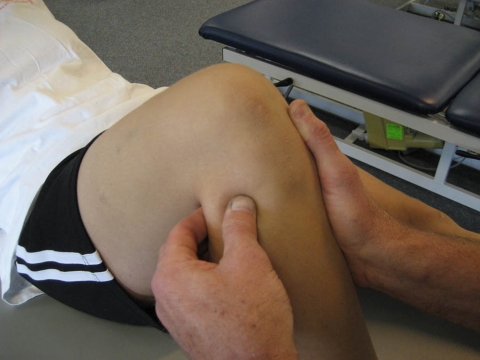
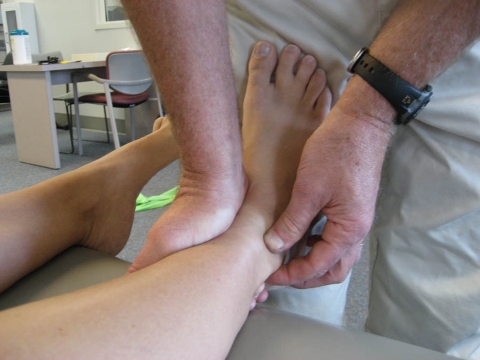
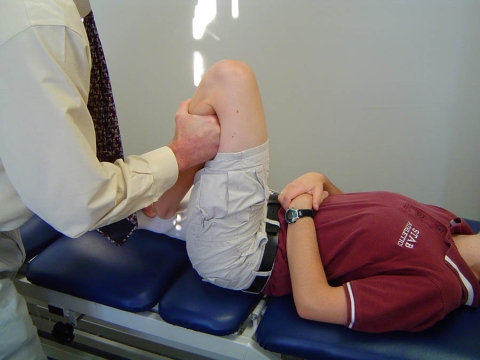
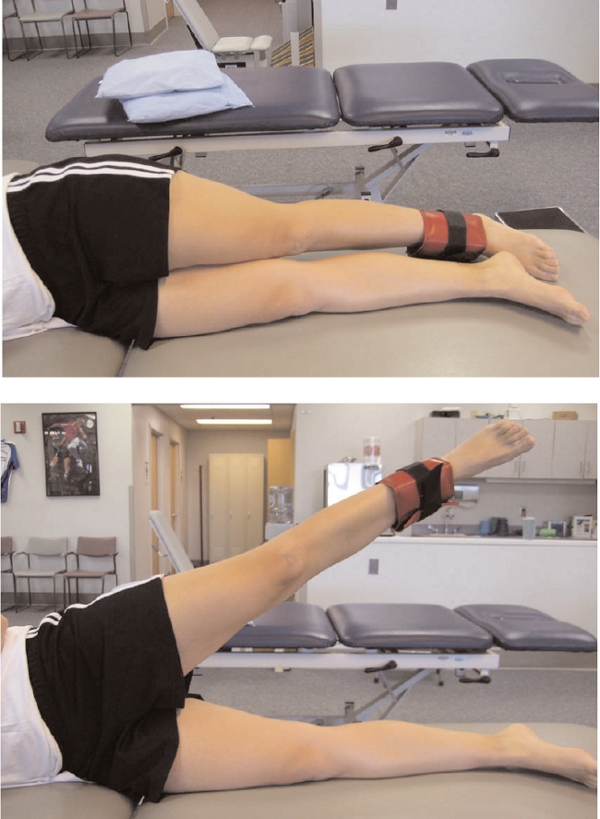
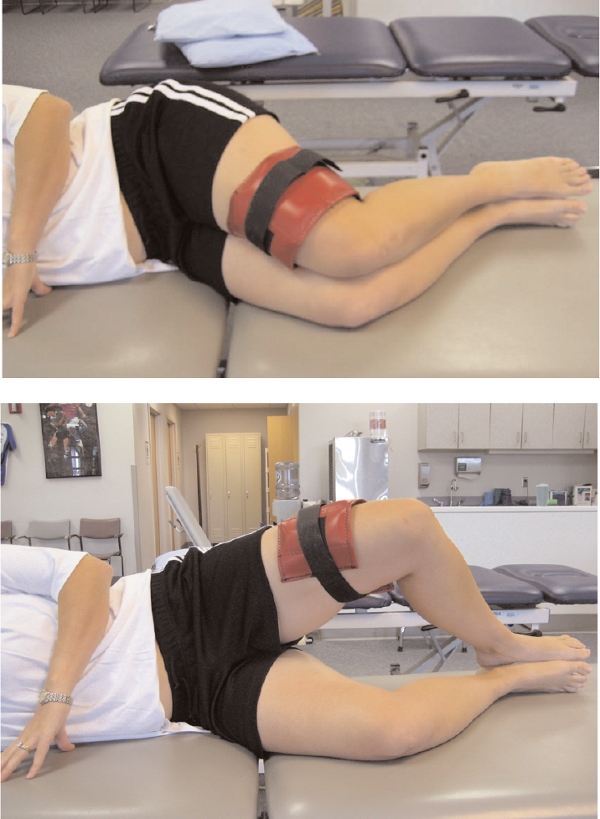
Case description: A 24 year old female recreational runner presented with a three month history of right lateral knee pain. Limited right ankle dorsiflexion was noted and determined to be related to decreased mobility of the proximal tibiofibular joint, as well as, the talocrural and distal tibiofibular joints. Functional movement deficits were noted during the squat test and step down test. Treatment was performed three times over the course of two weeks which included proximal tibiofibular joint manipulation and an exercise program consisting of hip strengthening, balance, and gastrocnemius/soleus muscle complex stretching.
Outcomes: Immediately following intervention, improvements were noted for ankle dorsiflexion, squat test, and step down test. One week following the initial intervention the patient reported she was able to run pain free.
Discussion: Addressing impairments distant to the site of dysfunction, such as the proximal tibiofibular joint, may be indicated in individuals with lateral knee pain.
Figures

References
-
- Fredericson M, Cookingham CL, Chaudhari AM, et al. Hip abductor weakness in distance runners with iliotibial band syndrome. Clin J Sport Med. 2000;10:169–175 - PubMed
-
- Eren OT, Kucukkaya M, Kabukcuoglu Y, Kuzgun U. The role of a posteriorly positioned fibula in ankle sprain. Am J Sports Med. 2003;31:995–998 - PubMed
-
- Ogden JA. Subluxation of the proximal tibiofibular joint. Clin Orthop Relat Res. 1974;101 - PubMed
-
- Radakovich M, Malone T. The superior tibiofibular joint: The forgotten joint. J Orthop Sports Phys Ther. 1982;3:129–132 - PubMed
Publication types
LinkOut - more resources
Full Text Sources