Diffusion-weighted imaging of hyperacute cerebral hypoglycemia
- PMID: 21511866
- PMCID: PMC7966062
- DOI: 10.3174/ajnr.A2464
Diffusion-weighted imaging of hyperacute cerebral hypoglycemia
Abstract
Background and purpose: Cerebral hypoglycemia can result in reversible metabolic brain insults and can be associated with impaired diffusion disturbances. Our aim was to evaluate possible changes in DWI of the human brain during hyperacute short-term severe hypoglycemia.
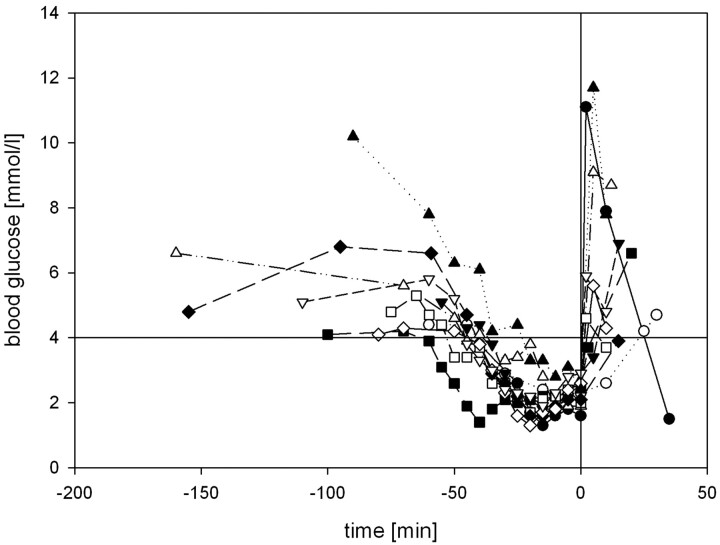
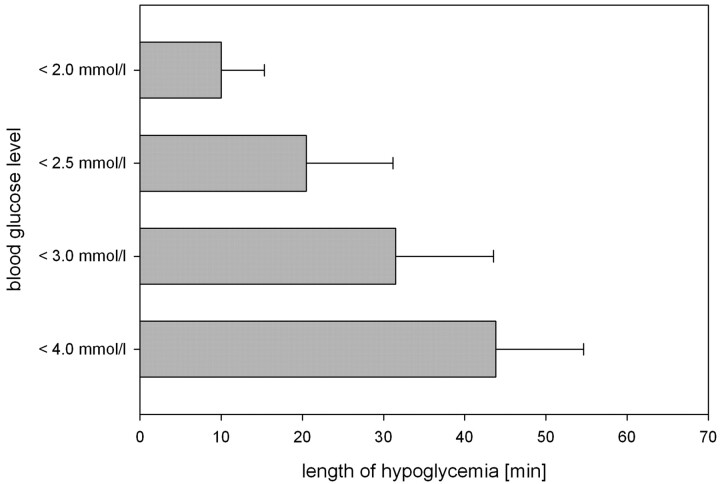
Materials and methods: Ten individuals scheduled for a clinical IST were examined with DWI while the test was performed. Venous blood glucose was continuously measured, and sequential DWI sequences were performed without interruption. Hypoglycemia was terminated with intravenous glucose administration when glucose levels were at ≤2.0 mmol/L.
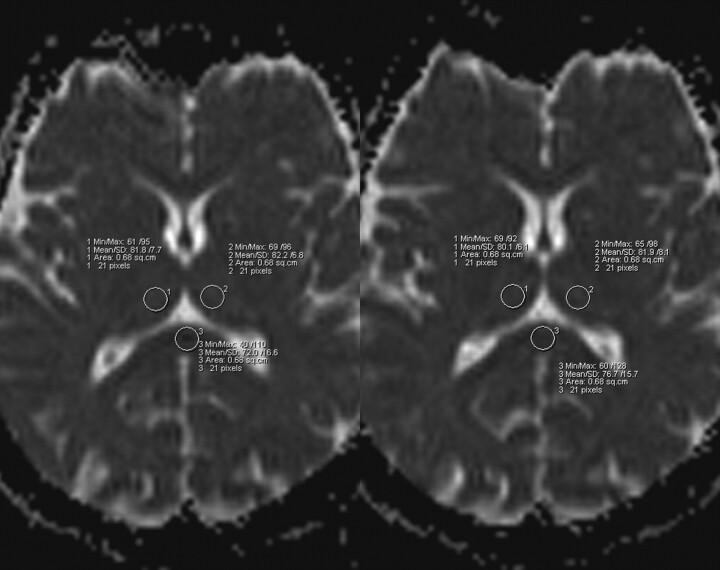
Results: Blood glucose levels were lowered to a mean nadir of 1.75 ± 0.38 mmol/L. No alterations of cerebral diffusion could be observed in any individuals on DWI.
Conclusions: Hyperacute short-term severe hypoglycemia does not induce visible changes in DWI of the human brain.
Figures
References
-
- Laing SP, Swerdlow AJ, Slater SD, et al. . The British Diabetic Association Cohort Study. II. Cause-specific mortality in patients with insulin-treated diabetes mellitus. Diabet Med 1999;16:466–71 - PubMed
-
- Cryer PE. Iatrogenic hypoglycemia as a cause of hypoglycemia-associated autonomic failure in IDDM: a vicious cycle. Diabetes 1992;41:255–60 - PubMed
-
- The effect of intensive treatment of diabetes on the development and progression of long-term complications in insulin-dependent diabetes mellitus: The Diabetes Control and Complications Trial Research Group. N Engl J Med 1993;329:977–86 - PubMed
-
- Cryer PE, Davis SN, Shamoon H. Hypoglycemia in diabetes. Diabetes Care 2003;26:1902–12 - PubMed
-
- U.K. Prospective Diabetes Study 16: overview of 6 years' therapy of type II diabetes—a progressive disease. U.K. Prospective Diabetes Study Group. Diabetes 1995;44:1249–58 - PubMed
Publication types
MeSH terms
Substances
LinkOut - more resources
Full Text Sources
Medical