


Role of microRNAs in lymphoid biology and disease
- PMID: 21519241
- PMCID: PMC3400499
- DOI: 10.1097/MOH.0b013e3283476012
Role of microRNAs in lymphoid biology and disease
Abstract
Purpose of review: This review provides a state-of-the-art knowledge on the implications of microRNA (miRNA) dysregulation in lymphoid malignancies.
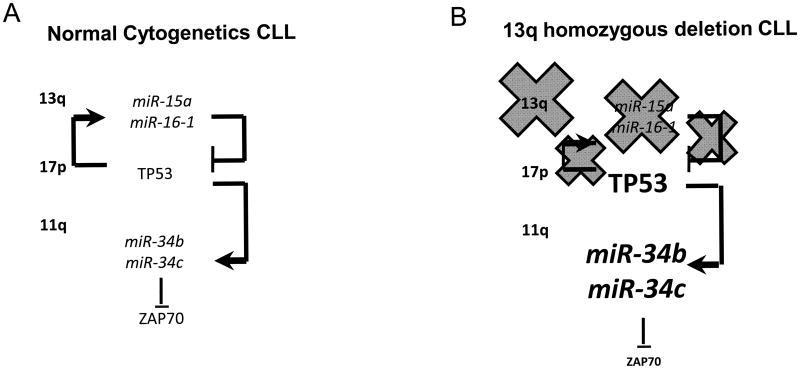
Recent findings: Several new studies have broadened our understanding of how aberrations of the miRNome contribute to the development of a malignant lymphoid phenotype. Recently, a new pathogenetic model involving miRNAs and protein coding genes (such as TP53 and ZAP-70) has been identified and explains the prognostic implications of the most recurrent chromosomal abnormalities in human B-cell chronic lymphocytic leukemia. Moreover, new recent studies have addressed the role of miRNAs in human lymphomas and acute lymphoblastic leukemias.
Summary: The recent advances in our understanding of the role of miRNAs in lymphoid malignancies demonstrate that miRNAs can effectively be used as tumoral biomarkers with implications for diagnosis, prognosis, and prediction of response to therapy.
Figures
References
-
- Bartel DP. MicroRNAs: genomics, biogenesis, mechanism, and function. Cell. 2004;116(2):281–97. - PubMed
-
- Pasquinelli AE, Hunter S, Bracht J. MicroRNAs: a developing story. Curr Opin Genet Dev. 2005;15:200–5. - PubMed
-
- Harfe BD. MicroRNAs in vertebrate development. Curr Opin Genet Dev. 2005;15(4):410–5. - PubMed
-
- Carleton M, Cleary MA, Linsley PS. Cell cycle. 17. Vol. 6. Georgetown, Tex: 2007. Sep 1, MicroRNAs and cell cycle regulation; pp. 2127–32. - PubMed
-
- Boehm M, Slack FJ. Cell cycle. 8. Vol. 5. Georgetown, Tex: 2006. Apr, MicroRNA control of lifespan and metabolism; pp. 837–40. - PubMed
Publication types
MeSH terms
Substances
Grants and funding
LinkOut - more resources
Full Text Sources
Medical
Research Materials
Miscellaneous
