. 2011 Jul;254(1):73-82.
doi: 10.1097/SLA.0b013e3182197035.

Assessment of different bariatric surgeries in the treatment of obesity and insulin resistance in mice

Affiliations

Assessment of different bariatric surgeries in the treatment of obesity and insulin resistance in mice

Deng Ping Yin et al. Ann Surg. 2011 Jul.

Abstract

Objective: To assess the effects of different bariatric surgical procedures on the treatment of obesity and insulin resistance in high fat diet-induced obese (DIO) mice.

Background: Bariatric surgery is currently considered the most effective treatment for morbid obesity and its comorbidities; however, a systematic study of their mechanisms is still lacking.

Methods: We developed bariatric surgery models, including gastric banding, sleeve gastrectomy, Roux-en-Y gastric bypass (RYGB), modified RYGB (mRYGB) and biliopancreatic diversion (BPD), in DIO mice. Body weight, body fat and lean mass, liver steatosis, glucose tolerance and pancreatic beta cell function were examined.

Results: All bariatric surgeries resulted in significant weight loss, reduced body fat and improved glucose tolerance in the short term (4 weeks), compared with mice with sham surgery. Of the bariatric surgery models, sleeve gastrectomy and mRYGB had higher success rates and lower mortalities and represent reliable restrictive and gastrointestinal (GI) bypass mouse bariatric surgery models, respectively. In the long term, the GI bypass procedure produced more profound weight loss, significant improvement of glucose tolerance and liver steatosis than the restrictive procedure. DIO mice had increased insulin promoter activity, suggesting overactivation of pancreatic beta cells, which was regulated by the mRYGB procedure. Compared with the restrictive procedure, the GI bypass procedure showed more severe symptoms of malnutrition following bariatric surgery.

Discussions: Both restrictive and GI bypass procedures provide positive effects on weight loss, fat composition, liver steatosis and glucose tolerance; however, in the long term, the GI bypass shows better results than restrictive procedures.


Figures
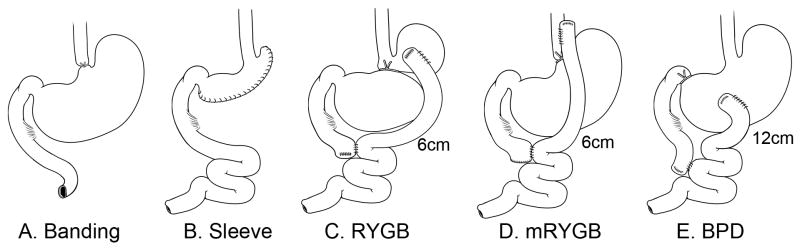
Figure 1
Figure 1. Mouse bariatric surgery models
Bariatric surgeries include: A. gastric banding (Banding); sleeve gastrectomy (Sleeve); C. Roux-en Y gastric bypass (RYGB); D. modified RYGB (mRYGB); and E. biliopancreatic diversion (BPD). Surgical procedures were described in the Methods.
Figure 2
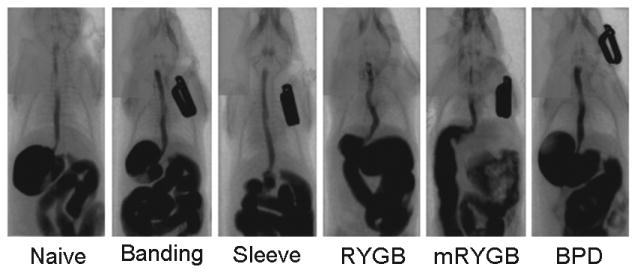
Figure 2. Imaging of bariatric surgery
After 7 to 10 days of bariatric surgery, imaging was performed using MicroCat-II. The contrast (Optiray 320, 0.8ml) was administered into the mouse by gavage. Continuous photos were taken every 4 seconds, for a total of 16 photos per mouse. Each figure represents one of 16 photos.
Figure 3
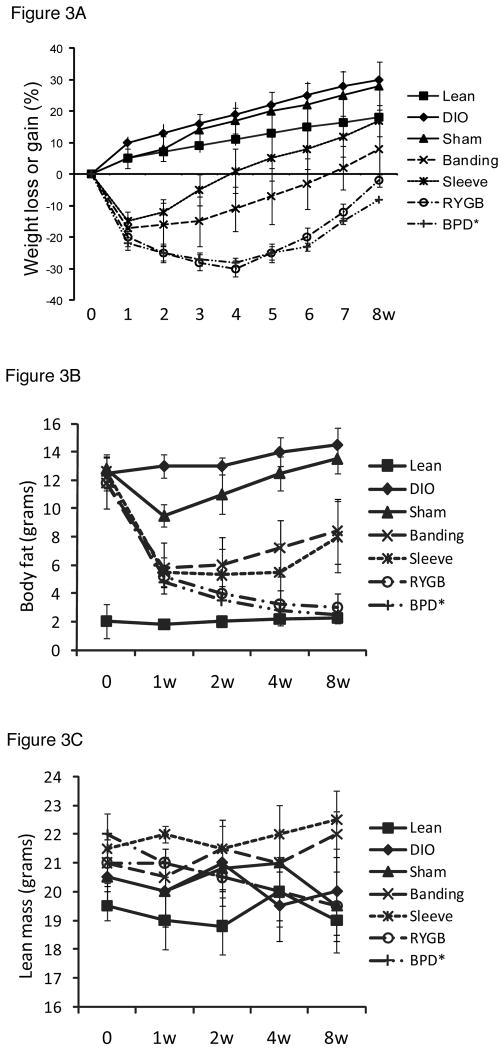
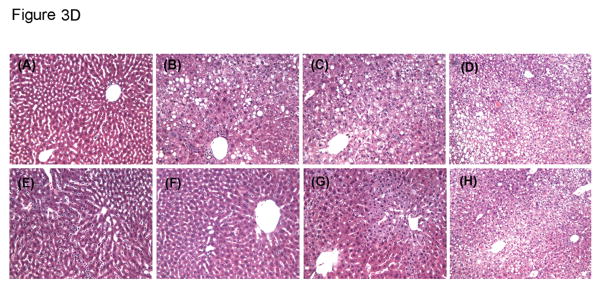
Figure 3. Body weight and composition
A. Weight loss and gain. DIO mice were weighed after bariatric and sham surgeries (n = 5 in each group except BPD* that only one mouse was alive at 8 weeks). All mice lost weight in a few days after surgeries; however, mice with sham surgeries gained weight after one week of surgery, and mice with bariatric surgeries maintained their weight loss for more than one month. B. Body composition was measured by a NMR analyzer, as described in the Methods. Fat composition was expressed as grams per body weight (n = 4 in each group except BPD* that only one mouse was alive at 8 weeks). C. Lean mass was also measured by a NMR analyzer (N = 4 in each group except BPD* that only one mouse was alive at 8 weeks). D. Bariatric surgery improves hepatic steatosis (H&E, × 100, the figure represents one of three pathological examinations in each group). (A), naïve lean mouse; (B), naïve DIO mouse; (C), DIO mouse with sham surgery at 4 weeks; (D), DIO mouse with sham surgery at 8 weeks; (E), DIO mouse with mRYGB at 4 weeks; (F), DIO mouse with mRYGB at 8 weeks; (G), DIO mouse with sleeve gastrectomy at 4 weeks; and (H), DIO mouse with sleeve gastrectomy at 8 weeks.
Figure 3
Figure 3. Body weight and composition
A. Weight loss and gain. DIO mice were weighed after bariatric and sham surgeries (n = 5 in each group except BPD* that only one mouse was alive at 8 weeks). All mice lost weight in a few days after surgeries; however, mice with sham surgeries gained weight after one week of surgery, and mice with bariatric surgeries maintained their weight loss for more than one month. B. Body composition was measured by a NMR analyzer, as described in the Methods. Fat composition was expressed as grams per body weight (n = 4 in each group except BPD* that only one mouse was alive at 8 weeks). C. Lean mass was also measured by a NMR analyzer (N = 4 in each group except BPD* that only one mouse was alive at 8 weeks). D. Bariatric surgery improves hepatic steatosis (H&E, × 100, the figure represents one of three pathological examinations in each group). (A), naïve lean mouse; (B), naïve DIO mouse; (C), DIO mouse with sham surgery at 4 weeks; (D), DIO mouse with sham surgery at 8 weeks; (E), DIO mouse with mRYGB at 4 weeks; (F), DIO mouse with mRYGB at 8 weeks; (G), DIO mouse with sleeve gastrectomy at 4 weeks; and (H), DIO mouse with sleeve gastrectomy at 8 weeks.
Figure 4
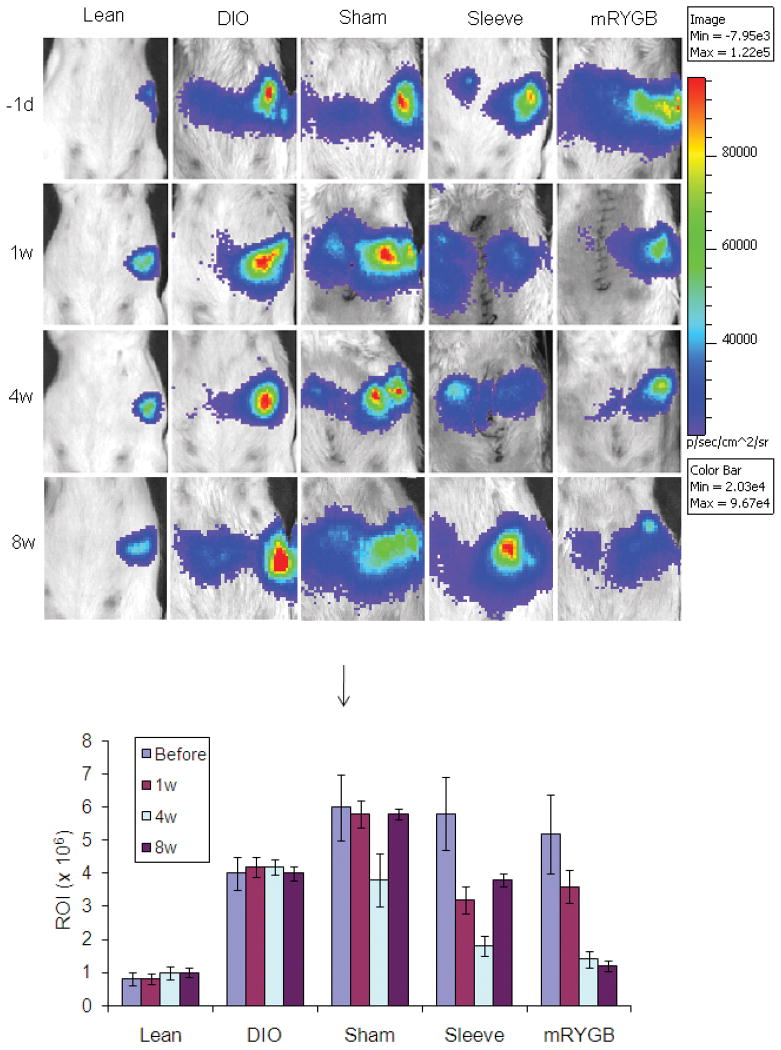
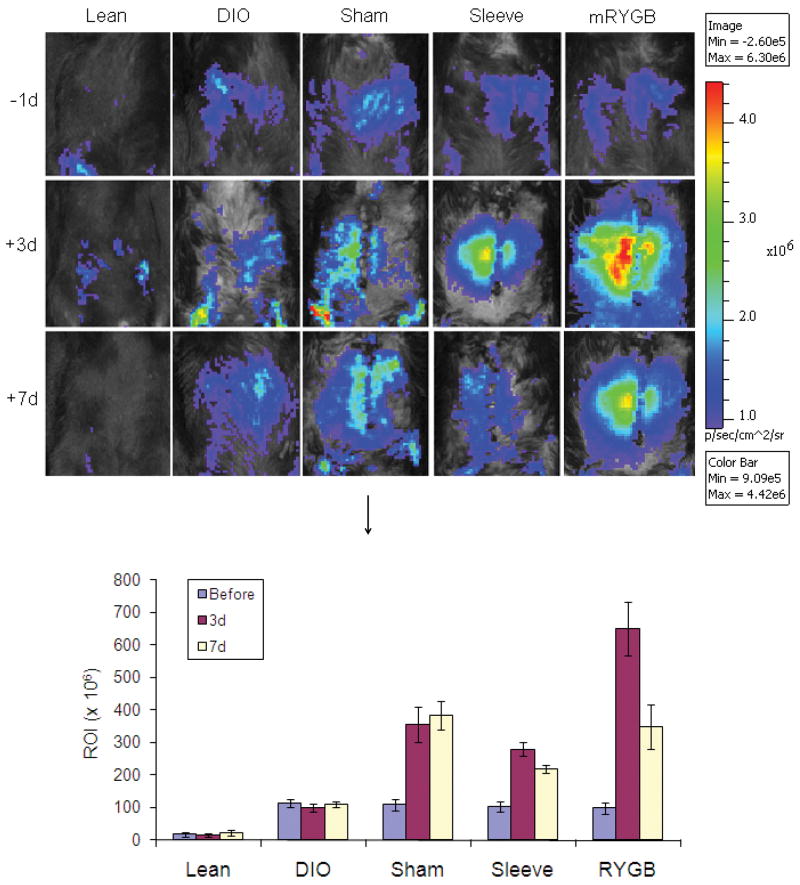
Figure 4. Bioluminescence (BLI) for islet viability
DIO was induced in mice expressing luciferase under the control of an insulin promoter (MIP-luc), and BLI was performed after bariatric surgeries, compared to untreated DIO mice (DIO) and lean mice (Lean). Luciferase was expressed as the regions of interest (ROI). The figures represent one of four BLI examinations. Data in the bar chart represent means ± SEM.
Figure 5
Figure 5. Bioluminescence (BLI) for NF-κB activation
DIO was induced in mice expressing luciferase under the control of an NF-κB promoter (NF-κB-luc), and BLI was performed after bariatric surgeries, compared to untreated DIO mice (DIO) and lean mice (Lean). Luciferase was expressed as the regions of interest (ROI). The figures represent one of three BLI examinations. Data in the bar chart represent means ± SEM.
Figure 6
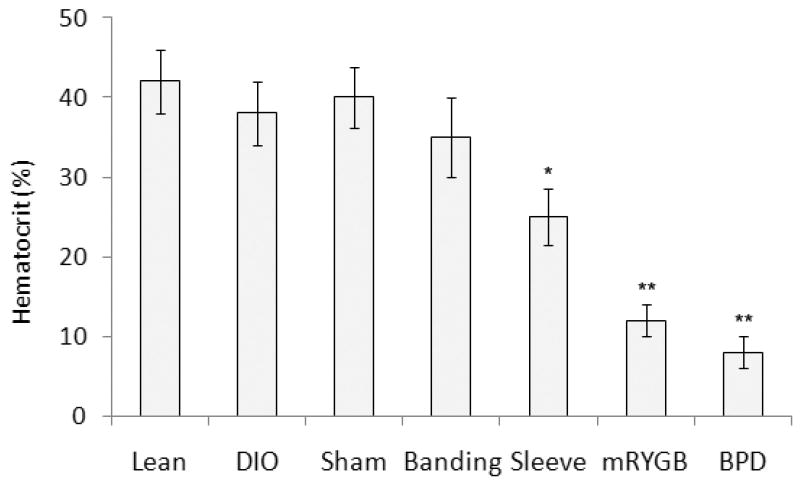
Figure 6. Hematocrit (HCT) levels in bariatric surgery-treated mice
HCT was performed in DIO mice with different bariatric surgeries one month after bariatric surgery, compared to sham surgery (Sham), untreated-DIO (DIO) and untreated-lean mice (Lean, n = 3 - 4 in each group). Data in Figure 6 represent means ± SEM. *: p < 0.05; ** p < 0.01.

References

    1. Frachetti KJ, Goldfine AB. Bariatric surgery for diabetes management. Curr Opin Endocrinol Diabetes Obes. 2009;16(2):119–24. - PubMed
    1. Goldfine AB, Shoelson SE, Aguirre V. Expansion and contraction: treating diabetes with bariatric surgery. Nat Med. 2009;15(6):616–7. - PubMed
    1. Kahn SE, Hull RL, Utzschneider KM. Mechanisms linking obesity to insulin resistance and type 2 diabetes. Nature. 2006;444(7121):840–6. - PubMed
    1. Saber AA, Elgamal MH, McLeod MK. Bariatric surgery: the past, present, and future. Obes Surg. 2008;18(1):121–8. - PubMed
    1. Cunneen SA. Review of meta-analytic comparisons of bariatric surgery with a focus on laparoscopic adjustable gastric banding. Surg Obes Relat Dis. 2008;4(3 Suppl):S47–55. - PubMed

Publication types