


Challenges of global surveillance during an influenza pandemic
- PMID: 21524774
- PMCID: PMC7111716
- DOI: 10.1016/j.puhe.2010.12.007
Challenges of global surveillance during an influenza pandemic
Abstract
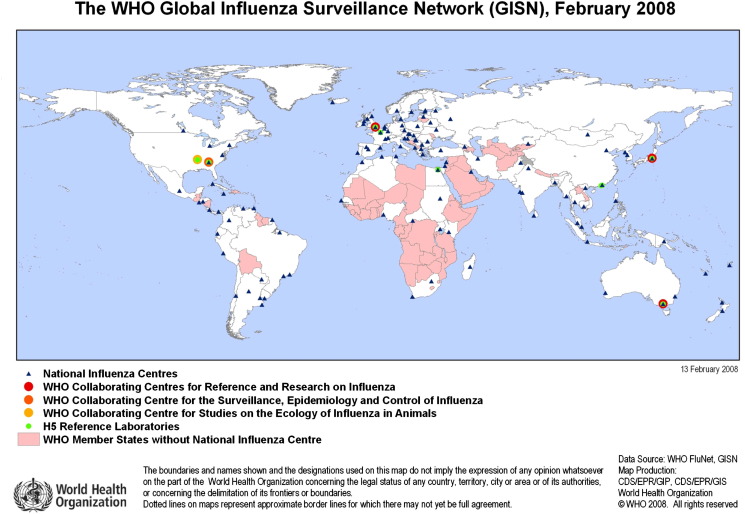
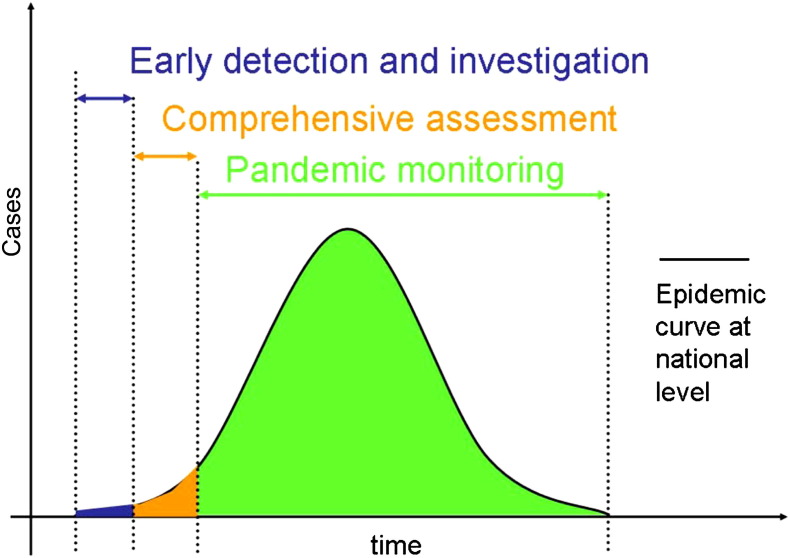
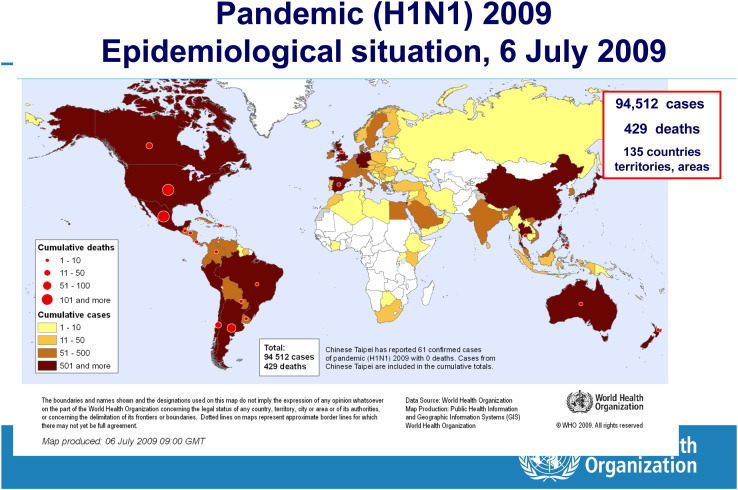
Surveillance is an essential foundation for monitoring and evaluating any disease process, and is especially critical when new disease agents appear. The H1N1 influenza pandemic of 2009 tested the capacities of countries to detect, assess, notify and report events as required by the 2005 International Health Regulations (IHR). As detailed in the IHR, the World Health Organization drew on official reports from Member States as well as unofficial sources (e.g., media alerts) to quickly report and disseminate information about the appearance of the novel influenza virus. The pre-existing Global Influenza Surveillance Network for virological surveillance also provided crucial information for rapid development of a vaccine and for detection of changes in the virus. However, the pandemic also highlighted a number of shortcomings in global epidemiological surveillance for respiratory disease. These included the lack of standards for reporting illness, risk factor and mortality data, and a mechanism for systematic reporting of epidemiological data. Such measures would have facilitated direct comparison of data between countries and improved timely understanding of the characteristics and impact of the pandemic. This paper describes the surveillance strategies in place before the pandemic and the methods that were used at global level to monitor the pandemic. Enhancements of global surveillance are proposed to improve preparedness and response for similar events in the future.
Copyright © 2011 The Royal Society for Public Health. All rights reserved.
Figures
References
-
- World Health Organization Global surveillance during an influenza pandemic. 2009. http://www.who.int/csr/disease/swineflu/global_pandemic_influenza_survei... Geneva: World Health Organization. Available at: (last accessed 09.11.2010)
-
- Markel H., Lipman H.B., Navarro J.A., Sloan A., Michalsen J.R., Stern A.M. Nonpharmaceutical interventions implemented by US cities during the 1918–1919 influenza pandemic. JAMA. 2007;298:644–654. - PubMed
-
- Murray C.J.L., Lopez A.D., Chin B., Feehan D., Hill K.H. Estimation of potential global pandemic influenza mortality on the basis of vital registry data from the 1918–20 pandemic: a quantitative analysis. Lancet. 2006;368:2211–2218. - PubMed
MeSH terms
LinkOut - more resources
Full Text Sources
Medical
Research Materials
