


Fractalkine is a novel human adipochemokine associated with type 2 diabetes
- PMID: 21525510
- PMCID: PMC3292325
- DOI: 10.2337/db10-0956
Fractalkine is a novel human adipochemokine associated with type 2 diabetes
Abstract
Objective: Leukocyte infiltration of adipose is a critical determinant of obesity-related metabolic diseases. Fractalkine (CX3CL1) and its receptor (CX3CR1) comprise a chemokine system involved in leukocyte recruitment and adhesion in atherosclerosis, but its role in adipose inflammation and type 2 diabetes is unknown.
Research design and methods: CX3CL1 mRNA and protein were quantified in subcutaneous adipose and blood during experimental human endotoxemia and in lean and obese human adipose. CX3CL1 cellular source was probed in human adipocytes, monocytes, and macrophages, and CX3CL1-blocking antibodies were used to assess its role in monocyte-adipocyte adhesion. The association of genetic variation in CX3CR1 with metabolic traits was determined in a community-based sample. Finally, plasma CX3CL1 levels were measured in a case-control study of type 2 diabetes.
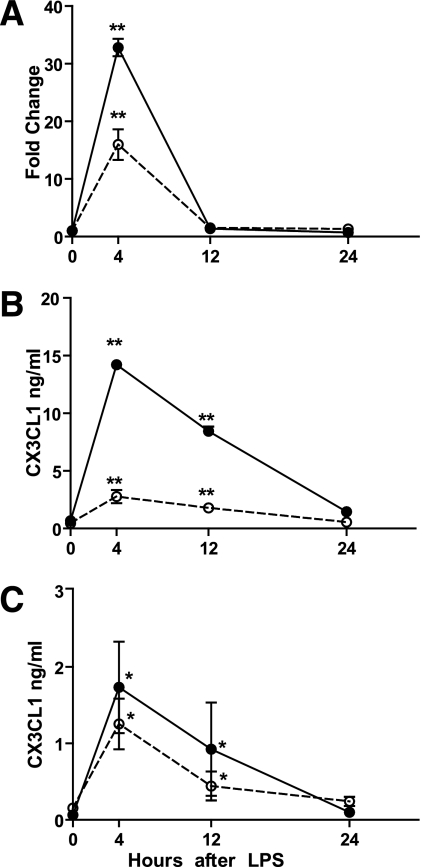
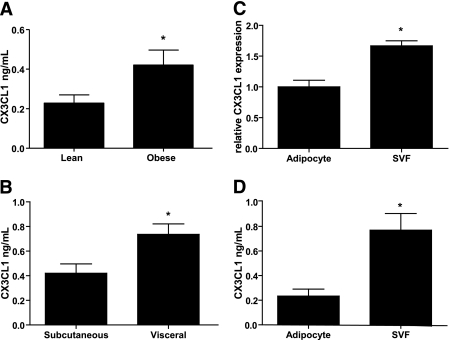
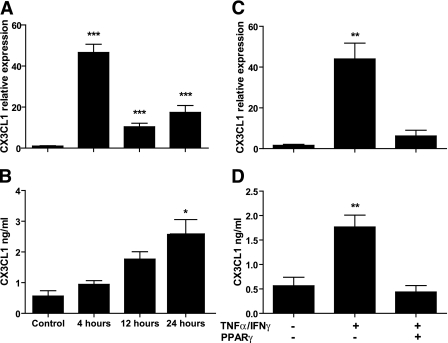
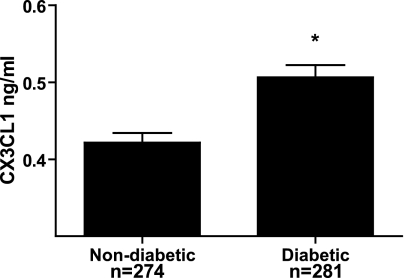
Results: Endotoxemia induced adipose CX3CL1 mRNA (32.7-fold, P < 1 × 10(-5)) and protein (43-fold, P = 0.006). Obese subjects had higher CX3CL1 levels in subcutaneous adipose compared with lean (0.420 ± 0.387 vs. 0.228 ± 0.187 ng/mL, P = 0.04). CX3CL1 was expressed and secreted by human adipocytes and stromal vascular cells. Inflammatory cytokine induction of CX3CL1 in human adipocytes (27.5-fold mRNA and threefold protein) was completely attenuated by pretreatment with a peroxisome proliferator-activated receptor-γ agonist. A putative functional nonsynonymous single nucleotide polymorphism (rs3732378) in CX3CR1 was associated with adipose and metabolic traits, and plasma CX3CL1 levels were increased in patients with type 2 diabetes vs. nondiabetics (0.506 ± 0.262 vs. 0.422 ± 0.210 ng/mL, P < 0.0001).
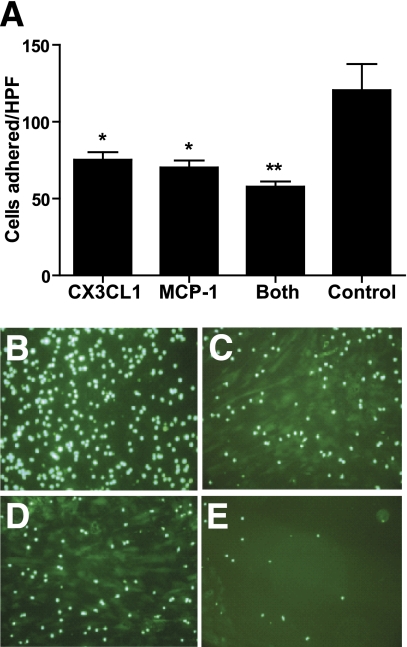
Conclusions: CX3CL1-CX3CR1 is a novel inflammatory adipose chemokine system that modulates monocyte adhesion to adipocytes and is associated with obesity, insulin resistance, and type 2 diabetes. These data provide support for CX3CL1 as a diagnostic and therapeutic target in cardiometabolic disease.
Figures
Comment in
-
Fractalkine: a cellular link between adipose tissue inflammation and vascular pathologies.Diabetes. 2011 May;60(5):1380-2. doi: 10.2337/db11-0239. Diabetes. 2011. PMID: 21525509 Free PMC article. No abstract available.
References
-
- Qatanani M, Lazar MA. Mechanisms of obesity-associated insulin resistance: many choices on the menu. Genes Dev 2007;21:1443–1455 - PubMed
-
- Lumeng CN, Maillard I, Saltiel AR. T-ing up inflammation in fat. Nat Med 2009;15:846–847 - PubMed
-
- Ferrante AW., Jr Obesity-induced inflammation: a metabolic dialogue in the language of inflammation. J Intern Med 2007;262:408–414 - PubMed
-
- Sell H, Eckel J. Chemotactic cytokines, obesity and type 2 diabetes: in vivo and in vitro evidence for a possible causal correlation? Proc Nutr Soc 2009;68:378–384 - PubMed
-
- Dahlman I, Kaaman M, Olsson T, et al. A unique role of monocyte chemoattractant protein 1 among chemokines in adipose tissue of obese subjects. J Clin Endocrinol Metab 2005;90:5834–5840 - PubMed
Publication types
MeSH terms
Substances
Grants and funding
- K12 DK094723/DK/NIDDK NIH HHS/United States
- T32 DK063688/DK/NIDDK NIH HHS/United States
- P50 HL083799/HL/NHLBI NIH HHS/United States
- K23 HL097151/HL/NHLBI NIH HHS/United States
- K12 KL1RR024132/RR/NCRR NIH HHS/United States
- 5K23HL097151/HL/NHLBI NIH HHS/United States
- P50 HL-083799/HL/NHLBI NIH HHS/United States
- KL2 RR024132/RR/NCRR NIH HHS/United States
- UL1RR024134/RR/NCRR NIH HHS/United States
- P30 DK019525/DK/NIDDK NIH HHS/United States
- R01 HL073278/HL/NHLBI NIH HHS/United States
- R01 HL-073278/HL/NHLBI NIH HHS/United States
- UL1 RR024134/RR/NCRR NIH HHS/United States
- P20-DK 019525/DK/NIDDK NIH HHS/United States
LinkOut - more resources
Full Text Sources
Other Literature Sources
Medical
Research Materials
Miscellaneous
