


MMP20 cleaves E-cadherin and influences ameloblast development
- PMID: 21525715
- PMCID: PMC3178082
- DOI: 10.1159/000324205
MMP20 cleaves E-cadherin and influences ameloblast development
Abstract
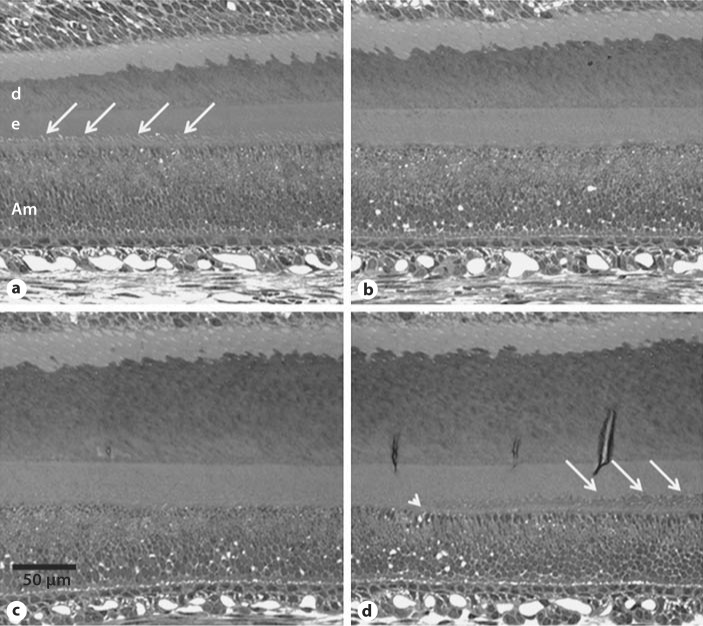
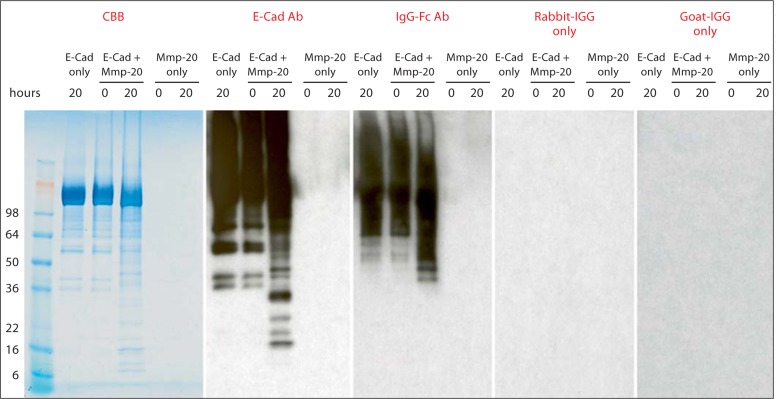
Dental enamel development occurs in stages as observed by the changing morphology of the ameloblasts that are responsible for enamel formation. During the secretory stage of development, proteins including MMP20 are secreted into the enamel matrix. MMP20 is required for proper enamel formation as mutation of the Mmp20 gene causes autosomal recessive amelogenesis imperfecta. Here, we examined in detail the morphology of the Mmp20-null ameloblast cell layer. Intriguingly, we found that the Mmp20-null mouse secretory stage ameloblasts retract their Tomes' processes as if preparing to enter the maturation stage but later reextend their Tomes' processes as if resuming the secretory stage. We also demonstrated that MMP20 cleaves epithelial cadherin, i.e. E-cadherin. Cadherins are transmembrane proteins with extracellular domains that provide adhesive contacts between neighboring cells. Their intracellular domains bind to the cell cytoskeleton through catenins, including β-catenin. When specific MMPs cleave the cadherin extracellular domain, β-catenin is released and may locate to the cell nucleus as a transcription factor. Therefore, MMP20 may influence ameloblast developmental progression through hydrolysis of cadherin extracellular domains with associated release of transcription factor(s).
Copyright © 2011 S. Karger AG, Basel.
Figures
References
-
- Bartlett J.D., Beniash E., Lee D.H., Smith C.E. Decreased mineral content in MMP-20 null mouse enamel is prominent during the maturation stage. J Dent Res. 2004;83:909–913. - PubMed
-
- Bartlett J.D., Skobe Z., Lee D.H., Wright J.T., Li Y., Kulkarni A.B., Gibson C.W. A developmental comparison of matrix metalloproteinase-20 and amelogenin null mouse enamel. Eur J Oral Sci. 2006;114(suppl 1):18–23. - PubMed
-
- Caterina J.J., Skobe Z., Shi J., Ding Y., Simmer J.P., Birkedal-Hansen H., Bartlett J.D. Enamelysin (matrix metalloproteinase 20)-deficient mice display an amelogenesis imperfecta phenotype. J Biol Chem. 2002;277:49598–49604. - PubMed
