


Phosphatase-resistant gap junctions inhibit pathological remodeling and prevent arrhythmias
- PMID: 21527737
- PMCID: PMC3126103
- DOI: 10.1161/CIRCRESAHA.111.244046
Phosphatase-resistant gap junctions inhibit pathological remodeling and prevent arrhythmias
Abstract
Rationale: Posttranslational phosphorylation of connexin43 (Cx43) has been proposed as a key regulatory event in normal cardiac gap junction expression and pathological gap junction remodeling. Nonetheless, the role of Cx43 phosphorylation in the context of the intact organism is poorly understood.
Objective: To establish whether specific Cx43 phosphorylation events influence gap junction expression and pathological remodeling.
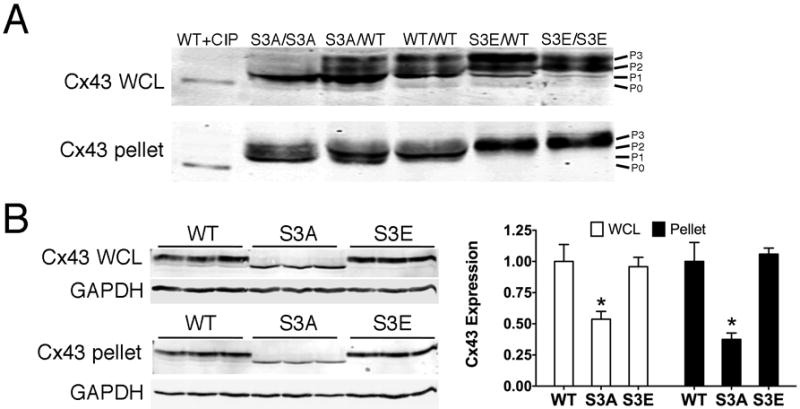
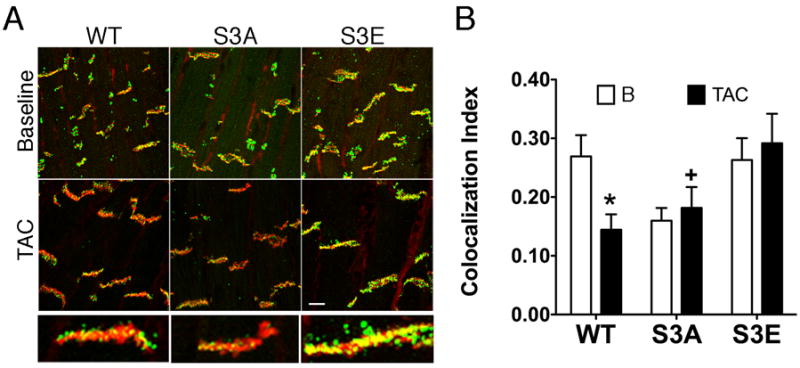
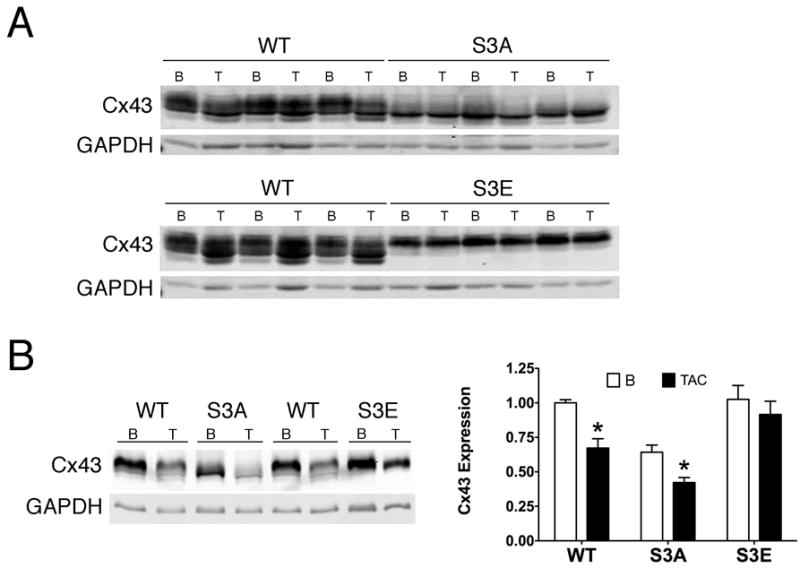
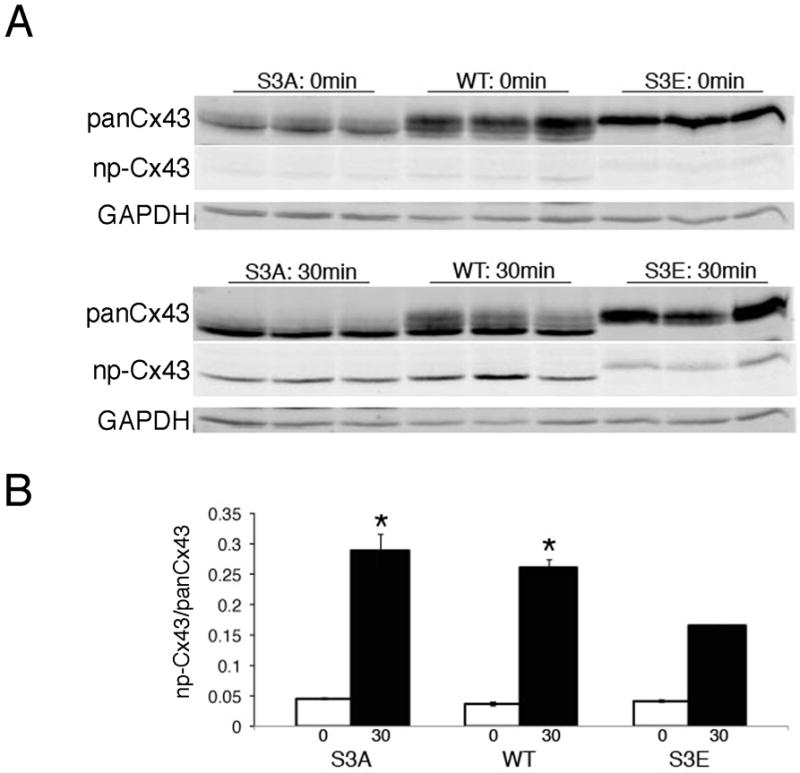
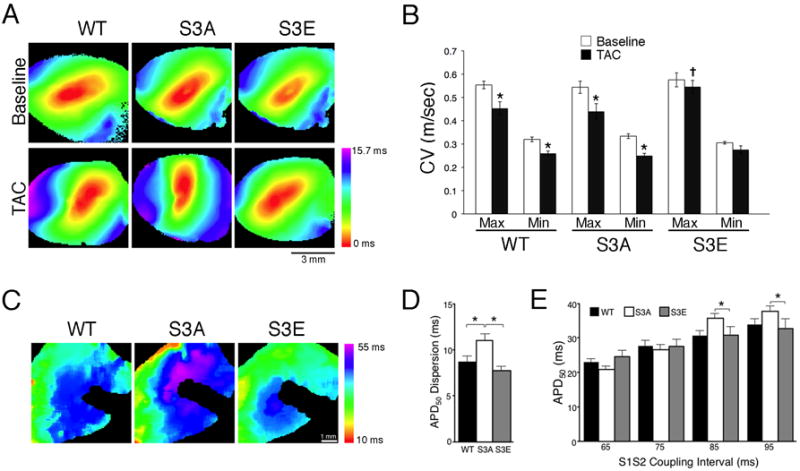
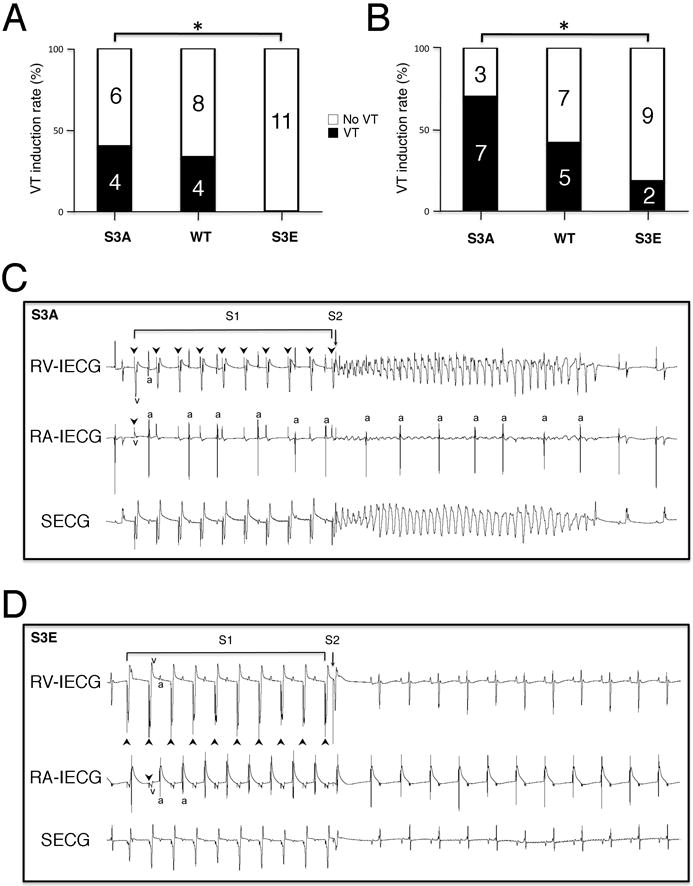
Methods and results: We generated Cx43 germline knock-in mice in which serines 325/328/330 were replaced with phosphomimetic glutamic acids (S3E) or nonphosphorylatable alanines (S3A). The S3E mice were resistant to acute and chronic pathological gap junction remodeling and displayed diminished susceptibility to the induction of ventricular arrhythmias. Conversely, the S3A mice showed deleterious effects on cardiac gap junction formation and function, developed electric remodeling, and were highly susceptible to inducible arrhythmias.
Conclusions: These data demonstrate a mechanistic link between posttranslational phosphorylation of Cx43 and gap junction formation, remodeling, and arrhythmic susceptibility.
Figures
References
-
- Gollob MH, Jones DL, Krahn AD, Danis L, Gong XQ, Shao Q, Liu X, Veinot JP, Tang AS, Stewart AF, Tesson F, Klein GJ, Yee R, Skanes AC, Guiraudon GM, Ebihara L, Bai D. Somatic mutations in the connexin 40 gene (GJA5) in atrial fibrillation. N Engl J Med. 2006;354:2677–2688. - PubMed
Publication types
MeSH terms
Substances
Grants and funding
LinkOut - more resources
Full Text Sources
Other Literature Sources
Medical
Molecular Biology Databases
Miscellaneous
